How Remote Work Improves Diversity
A good question about The Year Without Pants: WordPress.com & The Future of Work from Sibylle, in a comment:
I was wondering how you think Automattic’s model would work for a more diverse workforce. The culture you describe in the book is very much centered on young, male, tech-savvy, western-socialised software developers. I was envisioning myself (female, a generation older, and while working in the tech world, not a technical person myself) in that specific culture and imagined I’d probably be rather miserable. 🙂
Do you think this kind of approach can still be effective with teams from many diverse backgrounds, different ages, cultures, languages, etc.? What would have to be tweaked?
One tradeoff of the book’s intimacy into the team I lead is you learn more about my team than others in the company. Automattic is in fact pretty diverse, at least for a tech company. Perhaps what you learned is you really don’t want to work with me? 🙂 Which is fine of course.
Putting Automattic aside for the moment, remote work has many benefits regarding diversity:
- People see only your output. Most of what I knew of my coworkers was the designs they made, the code they wrote, the blog posts they drafted, and the things they typed or said in conversation. If I had a bias against someone’s age, gender or height, those elements were invisible to me most of the time. Or more powerfully, it was very hard to hold onto bias in the face of unignorable productivity.
- No one hears your accent when you type. Remote work often hinges on written communication. No one can hear your accent when you are typing. While excellent communication skills become critically important in remote organizations, everyones typed words read the same.
- You often discover people’s appearances only after you’ve worked with them. It’s common in remote organizations to spend weeks or months working with someone before you meet them in person. By the time you do, your opinion of them is based on their performance, unbiased by any biases you have.
- Remote workers can be hired from anywhere. Since no relocation is required, anyone can be an employee. If people can work from home or a coffeeshop, they could also work in China or Portugal. Hiring employees from other countries doesn’t guarantee diversity, but it raises the odds significantly, certainly along geographic and cultural diversity lines.
Of course hiring remote workers doesn’t guarantee diversity unless the hiring process minimizes bias.
Specific to Automattic:
- On gender diversity, When they were @ 180 employees, they had 39 female employees, ~21%. (They’re closer to 250 now).
- On age: I was a generation older than most of my team and still not the oldest employee there
- Because they hire by trial, a candidate’s performance is the primary criteria, minimizing the potential for discrimination
- They have employees in over 120 cities, and 30 countries (you can see a map here)
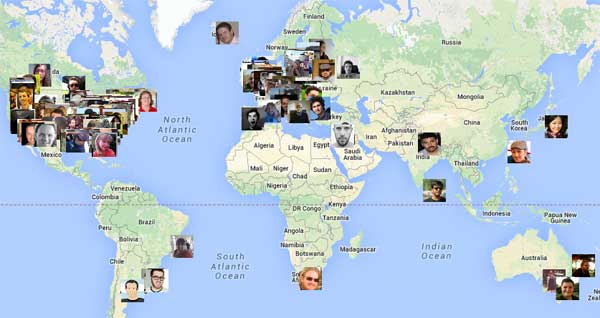
In the section of The Year Without Pants on Results vs. Tradition I strongly make the case that superficials like how we dress, or who works late, are distractions, but I should have driven the point home harder that remote work helps reduce gender, age and other biases, since you see far more of a coworkers output than their outward appearances.
There’s a Free Webinar on Remote Work & The Year Without Pants on 3/27: Register here.