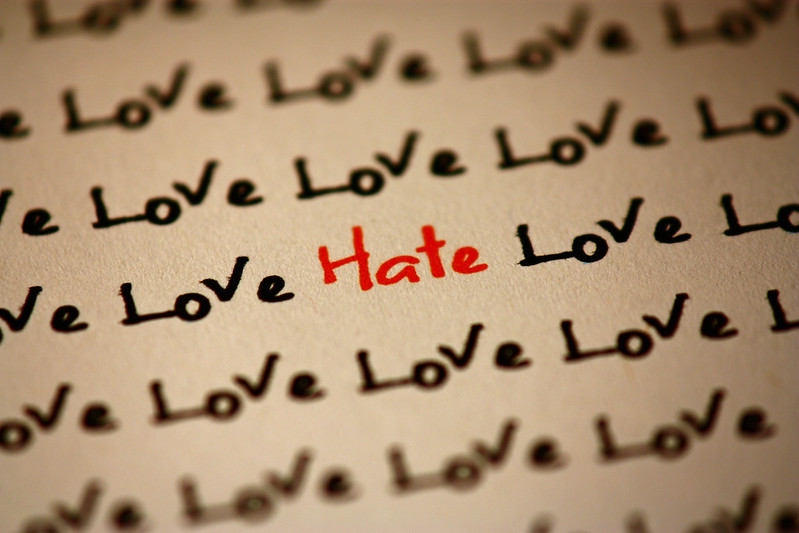
Hating vs. Loving: a personal note
A book that changed my life in 2002 is Living, Loving and Learning, by Leo Buscaglia, which taught my hard-ass, repressed tough guy soul that I was doing things that made me, and those around me, unhappy. My big crime was being more comfortable hating than loving.
Any time you hate something there is a choice. You can focus on the hate, and outrage, and self-righteousness, or you can find the opposite of the thing you hate, and focus on loving that more.
If you betray me as a friend, I can fixate on my anger at you, or I can think about all the friends I have who have never betrayed me, and go thank and honor them. Why focus on how much you hate a book, when you can just as easily go back and remember and share other books that you love? If the friend or book disappointed you so much, why are aren’t using that as fuel to go back and appreciate the good you now realize you’re lucky to have? (An authorial gripe is it’s fine if you hate my books and write negative reviews, but please at least mention a better one so people can get what they were looking for?).
Hate is easy. Destroying things takes much less work than making them, always has and always will. Hate is also less fulfilling and isolating than love, since all it says is what someone or something is not, instead of what it is or could be. Boycotting and banning are attempts to stop something, and stopping bad things is good – but these activities always make me think why not use that energy to go support and promote something good that deserves move love?
In many cultures hate and judgement are safer to express than love (e.g. American men prove we’re close friends by finding funny/mean insults for each other, rarely ever saying out loud how much we care about each other). It’s common in repressed, dysfunctional families or organizations for anger and criticism to be confused with love when it’s the only thing that the parents or leaders provide – anger is still a kind of attention. Kids are genetically programmed to believe their parents love them, so if all they get is negative attention when young, they equate that with what should have been love (and often wander through life confused about what a healthy relationship is like). In some workplaces the dynamics are not that different. If all you know are negative kinds of expression, that’s all you’ll express even when you’re trying to love, and on it goes.
What I got from Buscaglia’s book, which I’d never believed before, was that people who can love more openly, especially in the face of those quick with sarcasm like myself, are the bravest and most positive forces our species probably has (I foolishly assumed they were weak, but yet why did I have so much fear about resistance do doing what they did?). You’ll always find many people happy to hate in the open, but you can’t negate hate with hate. But every now and then you can turn it around, or slow hate down, with the genuine positive expression of love. Only when hate is out of the way can progress start to happen.
I’m not saying not to express hate. I’m still angry now and then. It’s therapeutic, it’s fun and can be a way to bond with someone for the first time – but I’m careful not to let myself end with anger alone. If I hate something, once I’m done tearing tearing it to shreds even if just in my own mind, I force myself to look for something with the opposite traits of the thing I hated and show it some love. I can’t express how profoundly this has changed my life for the better.
[This is one of the 30 essays on philosophy and life found in Mindfire: Big Ideas for Curious Minds]