The Great Gatsby: Book Review
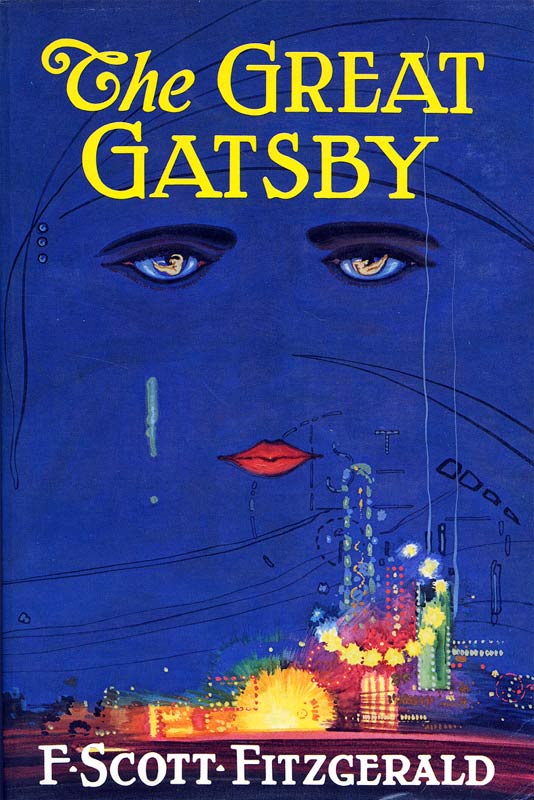 I’ve read the Great Gatsby more than a dozen times. It’s a reference book for me, in that I find I experience the book differently each time I read it. Many people are surprised to learn the book was headed for obscurity until it was chosen as a free book for soldiers during WWII. It was twenty years after its publication in 1925 that it first became a classic. Fitzgerald died in 1940 thinking himself a failure and that his work wouldn’t be remembered. How wrong he was.
As a story outline, The Great Gatsby is simple. There’s nothing that fancy or elaborate going on. It’s a writer’s book in a way, since it’s so simple and in many way obvious, yet works so wonderfully well. It’s constructed as a series of slow burning time bombs that make you simultaneously want them to both go off to relieve the pressure, but not go off, so you can enjoy the way things are slowly unraveling for as long as possible. It’s irresistible as a writer to want to take it apart and see how it works.
What makes the book sing is the first person narration, and how easy Fitzgerald makes it seem to blend internal thoughts with plotting, dialog and observation. He jumps though time and perspective but always makes you, as the reader, feel well cared for by the soft cushion of his narrative powers.
But there are moments that don’t age well: scenes of racism, which, on afterthought, were probably appropriate for 1920s America (and perhaps part of the commentary he was making about society. It’s hard to tell at times what he is criticizing and what he’s simply observing). Some manners of speech feel staged, but not having been born until 50 years after it was written it’s hard to argue whether he got it right or wrong. But none of those complaints stand in the way of what has always been a deeply worthwhile, and easy read.
Some choice non-spoiler quotes from the book:
It was one of those rare smiles with a quality of eternal reassurance in it, that you may come across four or five times in life. It faced — or seemed to face — the whole external world for an instant, and then concentrated on you with an irresistible prejudice in your favor. It understood you just as far as you wanted to be understood, believed in you as you would like to believe in yourself, and assured you that it had precisely the impression of you that, at your best, you hoped to convey. Precisely at that point it vanished
Reserving judgments is a matter of infinite hope. I am still a little afraid of missing something if I forget that, as my father snobbishly suggested, and I snobbishly repeat, a sense of the fundamental decencies is parceled out unequally at birth.
No — Gatsby turned out all right at the end; it is what preyed on Gatsby, what foul dust floated in the wake of his dreams that temporarily closed out my interest in the abortive sorrows and shortwinded elations of men.
Something in his leisurely movements and the secure position of his feet upon the lawn suggested that it was Mr. Gatsby himself, come out to determine what share was his of our local heavens.
The little dog was sitting on the table looking with blind eyes through the smoke, and from time to time groaning faintly. People disappeared, reappeared, made plans to go somewhere, and then lost each other, searched for each other, found each other a few feet away. Some time toward midnight Tom Buchanan and Mrs. Wilson stood face to face, discussing in impassioned voices…
When I saw the latest film version of The Great Gatsby (directed by Baz Luhrmann, of Moulin Rouge fame), I was disappointed and delighted. Baz’s style fits his name, and the movie is grand, dramatic, over the top and nearly absurd, but also beautiful, shocking and intense. It seemed Baz didn’t see the film as a tragic commentary on the misguided capitalistic dream, or at least not enough to prevent the dance numbers and special effects to often take center stage. The revival of Gatsby parties seemed to have missed the point of who Gatsby was.
I’d always thought of the story as more smoldering than explosive, and more lyrical than confrontational. I still prefer the 1974 Redford version of the film, which was more stayed and placed a bigger bet on the strength of the story than on visual storytelling itself. Gatsby is meant to be a sad enigma, and it’s Carraway (played best by Sam Waterston) who has the burden of framing him for us. In the end, the most successful, best looking person in the story is the opposite of what he seems, yet it’s so easy to get lost along the way that this is what the story is truly about. Perhaps Fitzgerald was too soft in his telling of the story, as far too many people take other things away from it.
[updated 4-10-2016]