“Knowledge is a big subject. Ignorance is bigger. And it is more interesting.” – Stuart Firestein
It should be no surprise that creative thinking can be counter-intuitive. Often people use the framework of problem solving when talking about ideas, which is useful, but primarily logical. This means the problem itself (“how can I build a better mousetrap?”) and the desire to solve the problem (“mice keep stealing all of my cheese”) provides the fuel to do the work.
But a more powerful way to think about ideas is that it’s ignorance, the lack of knowledge, that can also be the motivating force. Curiosity is an interest in finding out what you don’t know and you can only be curious if you admit ignorance. When you think you know everything, you’re in the worst kind of creative trap. It explains in part why know-it-alls are so dull to be around. They never leave their safe turf of talking about what is already known.
Science is used as a metaphor for things we completely understand. The common saying “the art and science of…” uses the word science to represent formulas, facts and figures, things that are well understood. But how did we learn those formulas and facts? We forget there must have been a time when we were ignorant of those things, and someone, a scientist perhaps, was curious enough to try and figure them out.
Shoshin (初心) is a term from Buddhism that means beginners mind. The notion is that everything, even things we know best, can be reexamined with fresh eyes and that allows us to find new ways of looking. It’s always possible to ask why is it this way? What don’t I see? What other perspective can I explore? The trap is our culture pushes us to believe in the certainty of knowledge and to become bored with the basics. And this is why older generations often can’t see new ideas – their preconceptions and ego in feeling like a master block healthy kinds of ignorance.
In Stuart Firestein’s wonderfully compact book Ignorance: how it drives science, he explores the central role that ignorance, and curiosity, play in developing all of the knowledge that we take for granted today (He did a TED talk on this topic as well).
There are strong parallels in his book to any kind of creative work, such as projects where the goal is to do something new, solve an unsolved problem or to work on anything challenging at all. For many it’s a surprise to think of ignorance being central to science, much less creativity. But if science can be thought of in this way, then so can any field or profession, including the one you work in too.
Here are some favorite quotes from the book:
Questions are more relevant than answers. Questions are bigger than answers. One good question can give rise to several layers of answers, can inspire decades-long searches for solutions, can generate whole new fields of inquiry, and can prompt changes in entrenched thinking. Answers, on the other hand, often end the process.
When I sit down with colleagues over a beer at a meeting, we don’t go over the facts, we don’t talk about what’s known; we talk about what we’d like to figure out, about what needs to be done.
What if we cultivated ignorance instead of fearing it, what if we controlled neglect instead of feeling guilty about it, what if we understood the power of not knowing in a world dominated by information? As the first philosopher, Socrates, said, “I know one thing, that I know nothing.”
There is no surer way to screw up an experiment than to be certain of its outcome.
Here are some examples of what have turned out to be good questions in my class: Do you think things are unknowable in your field? What? What are the current technological limits in your work? Can you see solutions? Where are you currently stuck? How do you talk about what you don’t know? What was the main thrust of your last grant proposal? What will be the main thrust of your next grant proposal? Is there something you would like to work on knowing but can’t? Because of technical limitations? Money, manpower? What was the state of ignorance in your field 10, 15, or 25 years ago, and how has that changed? Are there data from other labs that don’t agree with yours? How often do you guess? Are you often surprised? When? Do things come undone? What questions are you generating? What ignorance are you generating?
Almost everyone believes that the tongue has regional sensitivities— sweet is sensed on the tip, bitter on the back, salt and sour on the sides. Pictures of “tongue maps” continue to appear not only in popular books on taste and cooking but in medical textbooks as well. The only problem is that it’s not true. The whole thing arose from the mistranslation of a German physiology textbook by a Professor D. P. Hanig,
So some things can never be known and, get this, it doesn’t matter. We cannot know the exact value of pi. That has little practical effect on doing geometry.
Thomas Huxley once bemoaned the great tragedy of science as the slaying of a beautiful hypothesis by an ugly fact.
Faraday, by the way, had no idea what electricity might be good for and responded to a question about the possible use of electromagnetic fields with the retort, “Of what use is a newborn baby?” This phrase he apparently borrowed from Benjamin Franklin, no less, who was the first to make the analogy in his response to someone asking him what good flight would ever be after witnessing the first demonstration of hot air balloons.
wrong. Great scientists, the pioneers that we admire, are not concerned with results but with the next questions. The eminent physicist Enrico Fermi told his students that an experiment that successfully proves a hypothesis is a measurement; one that doesn’t is a discovery. A discovery, an uncovering— of new ignorance.
George Box, noted that “All models are wrong, but some are useful.”
Despite our cultural obsession with new technology, we forget that the idea of new technology is old. We also overlook that there are patterns for how new technologies impact cultures and societies that technologists are often ignorant of. Without understanding the social impact of past technologies, we’re more likely to repeat mistakes, since we don’t even know what to look for.
Recently I read The Real World of Technology, a short book by Ursula Franklin (Thanks Deb Chachra for the recommendation). It’s more academic in style than other culture/technology books I recommend, like my favorite book on the subject, Technopoly, but it had insights that were new to me. In a series of short chapters she identifies and addresses important observations about the sociology of technological change, and how, without us noticing, our choices have impacted us more than we think.
One of her primary observations is the distinction between holistic and prescriptive technology. A holistic technology means the person using the technology to create something controls the process of their own work from beginning to end:
Their hands and minds make situational decisions as the work proceeds, be it on the thickness of the pot, or the shape of the knife edge, or the doneness of the roast. These are decisions that only they can make while they are working. And they draw on their own experience, each time applying it to a unique situation.
Whereas a prescriptive technology is bound in defined steps and rules, with an obvious example being the assembly lines found at any factory in the last 150 years:
When work is organized as a sequence of separately executable steps, the control over the work moves to the organizer, the boss or manager. The process itself has to be prescribed with sufficient precision to make each step fit into the preceding and the following steps. Only in that manner can the final product be satisfactory. The work is orchestrated like a piece of music — it needs the competence of the instrumentalists, but it also needs strict adherence to the score in order to let the final piece sound like music.
Many technologies, like a guitar or a word processor, involve holistic and prescriptive elements. To play a song on a guitar I’m confined to six strings and 19 frets, and to write a poem, I’m confined to a language (and a keyboard of a specific design). But within those constraints I’d be free to work holistically, or even, to the core of Franklin’s point, decide on my own if I’d prefer a different tool (perhaps a fretless guitar).
But her primary point in the distinction is that is often technology, is especially as applied by organizations, is prescriptive by design or accident. And that corporations and bureaucracies can use technologies in prescriptive ways that only serve their own longevity.
More salient quotes from the book:
“Any tasks that require caring, whether for people or nature, and any tasks that require immediate feedback and adjustment, are best done holistically. Such tasks cannot be planned, coordinated, and controlled the way prescriptive tasks must be.”
“Today’s real world of technology is characterized by the dominance of prescriptive technologies. Prescriptive technologies are not restricted to materials production. They are used in administrative and economic activities and in many aspects of governance, and on them rests the real world of technology in which we live. While we should not forget that these prescriptive technologies are often exceedingly effective and efficient, they come with an enormous social mortgage. The mortgage means that we live in a culture of compliance, that we are ever more conditioned to accept orthodoxy as normal, and to accept that there is only one way of doing it.”
“Size is a natural result of growth, but growth itself cannot be commandeered; it can only be nurtured and encouraged by providing a suitable environment. Growth occurs; it is not made. Within a growth model, all that human intervention can do is to discover the best conditions for growth and then try to meet them. In any given environment, the growing organism.”
“Production, then, is predictable, while growth is not. There is something comforting in a production model — everything seems in hand, nothing is left to chance — while growth is always chancy.”
“The unchallenged prevalence of the production model in the mindset and political discourse of our time, and the model’s misapplication to blatantly inappropriate situations, seems to me an indication of just how far technology as practice has modified our culture.”
“Yet for people all around the world the image of what is going on, of what is important, is primarily shaped by the pseudo-realities of images. The selective fragments that become a story on radio and television are chosen to highlight particular events. The selection is usually intended to attract and to retain the attention of an audience. Consequently, the unusual has preference over the usual.”
“Anyone who has ever been at a demonstration and then seen their own experience played back on television knows what I mean. Frequently a small counter-demonstration to a large demonstration is treated as if it were the main event. Side-shows move into the centre and the central issues become peripheral.”
“I find it hard to imagine anyone actually standing next to a person who is being hurt or abused and enjoying the sight and sound of the experience, nor can I imagine such a direct observer not intervening or at least feeling guilty for having failed to do so. On the other hand, violence depicted on a screen appears to be acceptable and entertaining.”
It’s a good and important book. I’d recommend it for anyone trying to understand what is going on in America and to sharpen their own thinking about who to vote for. Kirkus reviews called it “An amiable tour of the socio-scientific evidence that accounts for our political miscalculations” and that’s a good summary.
The book aims at four observations:
Many of us frequently disengage, becoming apathetic.
We often don’t correctly size up our leaders.
We punish politicians who tell us hard truths.
We often fail to show empathy in circumstances that clearly cry out for it.
And the chapters of the book try to answer four questions:
Why aren’t voters more curious and knowledgeable?
Why do we find reading politicians so difficult?
Why aren’t we more realistic?
Why does our empathy for people in trouble often seem in such short supply?
A central theme of the book is cognitive bias, and how our brains are poorly designed for certain kinds of problem solving (e.g. evaluating candidates). Our brains are designed for life 20,000 years ago, and our natural skills for evaluating leaders don’t work very well at the scale of national governments.
We also have great faith in why we make our own choices, despite the powerful evidence we’re mostly irrational and heavily influenced by superficials. We see this flaw more easily in people who vote differently than we do than in ourselves. Shenkman sites many studies that expose the irrational and biased nature of our psychology as it relates to voting. It’s an eye-opening read in many ways, as it’s shocking to read so many stories from American history of our citizen’s absurd and subconscious motivations.
The weakness of the book is it is mildly repetitive at times. It’s well written and provocative, but some points are made multiple times and a tighter edit would have made it a smoother read. Like many books about culture, his arguments depend heavily on social psychology studies, which are easy to interpret in different ways (to his credit the Notes section is a thorough referencing of every study mentioned). It’d be easy to accuse the book of a liberal bias (Nixon and Reagan are used as negative examples), but that would miss the point. Most of his observations and evidence apply to our species in general, rather than a point of view. Swap out some examples and his points still resonate.
“We possess dozens of instincts— perhaps even thousands depending on your definition— and they involve virtually any human activity you can think of. William James, the father of American psychology, held that instincts guide us from birth. He even included crying and sneezing as instincts. You don’t have to be taught to cry or sneeze, after all.”
“The key to understanding how the modern mind works is to realize that its circuits were not designed to solve the day-to-day problems of a modern American— they were designed to solve the day-to-day problems of our hunter-gatherer ancestors. These stone age priorities produced a brain far better at solving some problems than others.”
“Bartels and Achen found, adverse weather conditions cost the incumbent party 1.5 percentage points. In close elections, that could spell the difference between a win and a loss. (More than half of presidential elections since 1900 have been won by five points or less.)”
“How can we tell when we should follow our instincts and when we should not?”
“Our evolved mechanisms, as Michael Bang Petersen points out, are designed to help us evaluate people in our midst. They are less good at helping us evaluate people at a distance. Our natural gifts of reading people are largely neutralized when we are reading politicians. The circumstances in which we get to know them are so artificial, it’s impossible most of the time to get a whiff of the real person beneath the fictional character created for public consumption. We think we know our politicians well. But we barely know them at all.”
“Like most elections, 1980 was a referendum on the past. People generally don’t vote on the basis of what they expect will happen in the future. The future is abstract. The past, in contrast, is concrete. As emotional human beings we respond most forcefully to the concrete. People didn’t vote for Reagan so much as vote against Carter.”
“As the Harvard psychologist Steven Pinker has observed, we don’t want the truth to prevail, we want our version of the truth to prevail.”
“So who paid the most attention? Who, in other words, formed the main audience for the election? This was perhaps the study’s central finding. It was partisans— the people who had already made up their minds. The key audience wasn’t the people who had an open mind. It was the people who had closed minds. They didn’t follow the news to get educated. They followed the news because they found it interesting. The media had virtually no impact on their views. When they heard what they wanted to hear, they cheered.”
“We all remember the parts of the past that help us connect with the future.”
– David Carr, The Night of the Gun, pg. 40
I picked up a copy of David Carr’s Night of The Gun in 2009 because of the unusual offer the book made to readers. It wasn’t just a memoir. It was a memoir written with a daring interest in the truth. The book details the harrowing years of his addiction, and the horrors he created for his wife, friends and young children, but it was his pursuit of challenging his own memories that fascinated me. Carr interviewed his friends and family about their experiences with him in the past to develop the book and writes about them. Asking these questions and honoring the answers is uncommon in memoirs, and in most lives.
Memoirs are a curious form of writing. Unlike autobiographies where there is the suggestion of completeness, and novels where the assumption is invention, memoirs hover in the middle ground. They are often focused on just one element or time in a person’s life, and shift in style from essays to novelistic accounts of important events. Memoirists are granted wide latitudes – it’s assumed they’re telling their story, in their way, with subjective truths taking more of the foreground than objective ones. Carr put a heavy stake in the ground in asserting for the reader what kind of memoir he was writing and what kind of truth he was after.
Night of the Gun is a tough book. There are many horrible things that happen and Carr, the author, is their protagonist. You can’t read it without asking yourself how honest you are about who you are, and the bad things you’ve done that you rarely remember anymore. Would you be brave enough to interview your own family about your past? Ex-boyfriends or former friends? This was by far the most compelling element of the book for me. It was an inspiration for writing The Ghost of My Father, where, like Carr, I did interview my family for the project, as hard as it was to do.
I’m very sad that David Carr is gone. His book was an influence on my ideas for my own writing. While I wasn’t a regular reader of his work, I noticed the intelligence and braveness he had about the craft and it inspired me.
Many people will be interested in his book for autobiographical reasons: Who was this man? they’ll ask. But I hope if you read the book you’ll tend to the braveness of craft he demonstrates, as the pursuit of honesty with ourselves and each other is perhaps the great challenge of the human race.
“Faith in a holy cause is… a substitute for the lost faith in ourselves” -Eric Hoffer, The True Believer (#)
One foundation of philosophy is the question “Why do you believe what you believe?” it’s a core part of epistemology, yet rarely do we slow down enough in daily life to follow that question all the way down. We expect that the deeper we go, the firmer the answers become, but the opposite is true. Any child who continually asks “Why?” demonstrates, to the frustration of their parents, the further you go the fuzzier the answers get. It’s easy to discover, if you’re willing to dig, that many of our beliefs are absorbed socially. We simply believe what we believe because we’re around people who believe those things. Or we explicitly were told what to believe by parents or teachers early in our lives.
Belief might be primarily a social function, a matter of psychology and culture, rather than intelligence. And if it’s a social function, how can anyone who believes anything be sure it’s worth believing in? That a particular belief is morally, or even selfishly, good? Especially if they’ve never believed anything else? Are there different kinds of faith? How do you know what kind you have? These are dangerous questions. Questions most people don’t want to ask, much less do the hard work of an honest search for answers.
This explains why The True Believer was such an interesting read. Hoffer takes on the entire notion of movements, political and religious, and attempts to cast a single net over the lot of them. It’s a challenging read not because of the writing, Hoffer writes simply and clearly, but because of the sizable questions he packs into each page.
The problem with, and the delight of, the the book is it’s written in a style rarely seen anymore. There aren’t ten rules or six pillars. He doesn’t spoon feed solutions or meanings. Instead he sweeps over history, sometimes making unfair generalizations or skipping past obvious counterarguments. The book is a polemic, although he quotes enough history, when convenient, to pretend otherwise. As someone who has never been formally part of a religious group even I had trouble with some of what he says. Not because I disagreed with the negative light he puts over his subject, but because I found the way he made his points unfair. I had similar feelings about the opening chapters of Sam Harris’ The End of Faith. Hoffer writes concisely and you’ll need to do some legwork to vet his claims and references as it’s not always a fair playing field, but that’s part of the fun of polemics. They are great to read with friends, especially friends with different points of view.
The core theme of the book is a scathing view of human nature and the dangerous patterns of how we unite in society. It’s no accident Hitler is shown on the book’s cover, as Hoffer’s demonstrates how we, as a species, are prone towards mass movements (Freud’s Civilization and Its Discontents has a similar thesis). He explores the patterns and elements that build them, the psychological drives they satisfy, and the blind spots we have against reason while we’re in a mass movement. This has implications for everything: organizations, governments, religions, corporations and more. Consider sports teams, fandom of rock stars, nationalism,political campaigns and on it goes. The patterns he describe are offered as universal, suggesting this is simply part of who we are. Is it morally good to have 50,000 followers on twitter? Is the ambition to create a corporate brand known, or worshipped, by millions much different from a cult? All these questions came to my mind while reading this book.
He never gets around to exploring the upsides of mass movements (or declaring he thinks there aren’t any. The book was written in 1951, before the U.S. Civil Rights Movement). Nor does he offer antidotes or countermeasures, which makes the book feel like a warning bell. Can a mass movement be moral? Can it have leaders who don’t, as he identifies, use the movement for their own advantages? He never gets that far, but perhaps he doesn’t need to. Reading the book will leave you with many big questions about who you are, which is all any curious reader can ask from a book.
The meta question: is Hoffer’s book, given its popularity, guilty of the things the book criticizes? Can you have a mass-movement about questioning mass-movements? I’ll be thinking about this for some time.
It is a truism that many who join a rising revolutionary movement are attracted by the prospect of sudden and spectacular change in their conditions of life. A revolutionary movement is a conspicuous instrument of change. pg. 3
“religiofication”—the art of turning practical purposes into holy causes.” pg. 6
Those who would transform a nation… must know how to kindle and fan an extravagant hope. It matters not whether it be hope of a heavenly kingdom, of heaven on earth, of plunder and untold riches, of fabulous achievement or world dominion. pg. 9
The less justified a man is in claiming excellence for his own self, the more ready is he to claim all excellence for his nation, his religion, his race or his holy cause. pg. 14
One of the most potent attractions of a mass movement is its offering of a substitute for individual hope. This attraction is particularly effective in a society imbued with the idea of progress. pg. 15
They who clamor loudest for freedom are often the ones least likely to be happy in a free society. The frustrated, oppressed by their shortcomings, blame their failure on existing restraints. Actually their innermost desire is for an end to the “free for all.” They want to eliminate free competition and the ruthless testing to which the individual is continually subjected in a free society. pg. 33
If a doctrine is not unintelligible, it has to be vague; and if neither unintelligible nor vague, it has to be unverifiable. One has to get to heaven or the distant future to determine the truth of an effective doctrine. When some part of a doctrine is relatively simple, there is a tendency among the faithful to complicate and obscure it. Simple words are made pregnant with meaning and made to look like symbols in a secret message. There is thus an illiterate air about the most literate true believer. He seems to use words as if he were ignorant of their true meaning. pg. 81
There is also this: when we renounce the self and become part of a compact whole, we not only renounce personal advantage but are also rid of personal responsibility. There is no telling to what extremes of cruelty and ruthlessness a man will go when he is freed from the fears, hesitations, doubts and the vague stirrings of decency that go with individual judgment. Pg. 100
The missionary zeal seems rather an expression of some deep misgiving, some pressing feeling of insufficiency at the center. Proselytizing is more a passionate search for something not yet found than a desire to bestow upon the world something we already have. It is a search for a final and irrefutable demonstration that our absolute truth is indeed the one and only truth. The proselytizing fanatic strengthens his own faith by converting others. Pg. 110
It’s wise to read books with points of view you don’t share. It’s the only way you get exposed to ideas with the power to change your mind. For a long time I’ve been a techno-neutralist. I’m not convinced technology is good or bad, it depends. I know from history how many unintended consequences our inventions have, consequences impossible to predict or prevent.
I read Smarter Than You Think: How Technology is Changing Our Minds For The Better with many doubts in mind. I certainly didn’t buy the premise as stated, but I would give it a run and see where it went. Clive Thompson writes well and thoughtfully in this book. He chose interesting stories to cover. Many of them were new to me and the way he framed them was interesting. He raised good questions I was glad to consider. I took a good number notes which is a strong indicator for me on how engaged I am in reading.
Where I struggled was with the false dichotomy of seeing technology as either good or bad. Too much depends on who you are and what your station in life is. If a new technology takes away your profession (and your home), you feel quite differently than the person whose life is made more convenient by that change. And on the scale of humanity, we’ve been poor at predicting where technological bets lead us. Gas powered automobiles seemed great news in 1945, less so in 2014. DDT was sprayed on people for years, until we learned its dangerous effects if misused. This is why highly polarized books on both sides are often underwhelming. Technology helps and hurts us at the same time, depending on the particulars of what happens and how we choose to use them. Cars bring pollution, phones bring distraction, etc. Technology always has two sides, and you are on one or the other, or a simultaneous combination of both, depending on your circumstances.
Where I struggled with the book was, as expected, the underlying premise. I was never convinced his stories supported it. Most of the stories are about very smart people who are perhaps made smarter by using a technology. These are exceptional people. Gordon Bell’s MyLifeBits project, where he has recorded all audio, video, and images of his life in a searchable database, is one story. Bell is no ordinary man, currently a research emeretus at Microsoft and a winner of the National Medal of Technology. Google Glass is also examined in the story of Thad Starner, but he’s exceptional too, as he’s the director of the Contextual Computing Group at Georgia Tech. Their minds were pretty damn sharp to begin with, challenging the question at the heart of the book: can a technology make anyone smarter who isn’t already smart? Thompson doesn’t say.
The book also avoids defining intelligence or what smart means, which was fine as the book was entertaining without digressions into definitions. But to seriously answer the central premise we need a definition to work. I prefer Gardner’s 9 part definition:
Musical–rhythmic and harmonic
Visual–spatial
Verbal–linguistic
Logical–mathematical
Bodily–kinesthetic
Interpersonal
Intrapersonal
Naturalistic
Existential
With a list like this we have a tool for examining what technologies do for intelligence. Without this list, we tend to bias towards the kinds of intelligence computers are good at as suggested by the cover design (recalling data, storing data) and discounting the ones technology is bad at (interpersonal, naturalistic, intrapersonal, existential). Thompson makes excellent points about kinds of intelligence where computers do wonderful things to help us. But he discounts the importance of the many kinds of intelligence that technology doesn’t help with at all. Things like picking spouses, choosing careers, finding fulfillment, being a good friend and deciding what best to do with our time on earth. Some of this loosely fits into Emotional Intelligence or into Gardner’s list of types of intelligence. A fun follow up to Smarter Than You Think could be to explore, for each type, how technology helps or doesn’t.
My biggest questions run towards the distinction between smarts and wisdom, and the book avoids going down that path. This was fine, but it was also my point of departure. The most important problems we have as a species aren’t problems of intelligence: they’re problems of wisdom, self-awareness, collaboration, and compassion, all things generally discounted since they’re harder to measure and harder to sell technology to solve (See Software Is Not Epic). Productivity is always the promised land in most kinds of tech-centric marketing – which is telling, as productivity is a very corporate, logical view of life. “I was productive today” – but what did you produce? Does what you did have meaning? Were you productive in a way that made your life, or life for other people, better? Did it connect you to other people you care about? And the list of deeper desires technology can’t directly contribute to or directly help us answer goes on.
McArdle writes well but the structure and pacing of this book was uneven. Twice during reading I double checked the title of the book to make sure I hadn’t made some mistake about what the book’s title was. Some chapters go too deep into singular, and not quite interesting enough, examples in a style that had a certain self-centeredness about them, as if they thought they were the star of their own show. I simply asked myself as a reader “where is this going and why are we still talking about this 10 pages later?” too often.
I wasn’t surprised to learn in the acknowledgements that the balance of the book was based on writings previously published for The Atlantic and other magazines. This is not a ding about reusing work, as I don’t care where the pages are born from provided the book works as a coherent whole, or is described as a collection, and neither was the case. There are also many political (Russia, America) and economic failure examples (debt, taxation, regulation, conservatives/liberals), which in retrospect fits McArdles wheelhouse as a journalist, but not my interests as a general audience reader interested in failure (which is what the title suggests is who the book is for).
On the positive side there are pockets of solid storytelling and useful commentary on rethinking failure here, it’s just not consistently delivered and compared to the many excellent books for the general reader already published on rethinking our assumptions about failure (see list below) I can’t justify recommending this book and its narrative wanderings, unless you’re a fan of McArdle’s writing (in which case you may have read some of this before) or you have a primary interest in failure in economics and economic policy.
She does correctly nail certain nuances often overlooked. She observes how we reward pundits for hyperbole rather than accuracy in prediction (A point Nate Silver’s Signal and The Noise also emphasized), and the unavoidable failures of faith in testing of any kind (See Dangers of Faith of Data). She captures how much randomness there is in why things fail or succeed (The films Waterworld vs. Titanic is one example) and points out how the Mona Lisa only rose in popularity after it was stolen (and returned), which has nothing to do with the quality of the painting itself. These points are well made and insightful.
And she explores a standard roster of studies from academia like The Stanford Marshmellow test on self control and the Peter Skillman Spaghetti bridge challenge (which coincidentally also involves a marshmallow) that showed how kindergarden children outperformed adults in a design challenge simply because they were the most willing to fail fast and learn from it. She also references Carol Dweck’s work on Fixed vs. Growth mindsets which is a concept rising fast in the corporate world as the latest panacea (for those wanting to replace their obsession with Myers-Briggs). Cognitive Bias, one of my favorite subjects, gets coverage too. Had these themes been more central to the book it would have faithfully lived up to the title, been a better read and easier to recommend.
Here’s my short list of related books I’d recommend:
Being Wrong Adventures in The Margins of Error, Kathryn Schulz: This is probably the layperson oriented book about how to look at failure differently that you’re looking for, covering most of the bases of stigma of failure, mental models, while keeping the focus on individuals, and ordinary life situations.
To Engineer Is Human: The Role of Failure in Successful Design, Petroski: If you’re an engineer or builder of any kind this book is for you. It’s a short book with case study exploration of several different famous failures (Tacoma Narrows bridge, Challenger space shuttle, etc.). There’s limited analysis of how to prevent failure, but the message of how we primarily learn from failure is made clear.
The Logic of Failure, Dietrich Dörne – If you are a manager or leader Dörne focuses on how data can lead you to the wrong conclusions. It’s not the most entertaining book but it’s one of the deepest for understanding the nuances of how what appears to be reasoned decision making based on data can set you up to fail.
You are Not So Smart, McRaney: The best single book on Cognitive Bias. It’s a series of short articles, each covering a different bias. It doesn’t go into how to overcome them, and he can be loose with the references and supporting arguments, but since Cognitive Bias has a huge role in why we fail understanding them is a great place to start.
Deep Survival, Gonzales: an examination of who survives in disasters and dangerous situations. It’s not specifically about failure, but about how we handle crisis, and what habits and patterns of thinking matter, or can get you killed. McArdle briefly, and positively, mentions it in the Up Side of Down.
The big surprise of this excellent book is that the challenges around modern social media that we assume are new have largely been experienced before by different cultures at different times. Back when technologies like the printing press, pamphlets, newspapers, the telegraph and television were the newest innovations, societies struggled to sort out both how to use them and what the cultural implications would be. I found Writing on The Wall to be a palliative in this sense, showing that while Twitter, Facebook and blogging are new in some ways, the questions and opportunities they raise are fascinatingly old and we can benefit by comparing them the impact of inventions of the past.
Concepts like information overload, being distracted by media, trashy reporting and misinformation, and even questioning who should have the right to publish, and to read, come up continually in each era with each new wave of technology, sometimes repeating the patterns of the past (and predicting patterns for the future).
I strongly recommend the book for anyone professionally involved in social media, as to claim expertise without even a basic understanding of previous social medias is to fall into one of the greatest traps of innovation we have: chronocentrism, the blind faith that what it has happening now is unique in all history and that we have nothing to learn from the past (A term I believe Standage himself coined). Standage writes well and the book balances a focus on historical detail with insights into the present.
Here are some choice quotes from the book:
Gossip is an extraordinarily rich source of social intelligence, both about the person speaking and about whoever is being discussed. And because our brains are wired to process just this kind of information, we find exchanging it extraordinarily compelling.
Benjamin Franklin’s first foray into newspaper writing took the form of a series of fourteen letters, supposedly written by a widow named Silence Dogood, which he submitted anonymously to the New-England Courant’s office, and which were enthusiastically published by his unwitting brother. James was furious when sixteen-year-old Benjamin admitted to having written the letters. This tale does not simply illustrate Benjamin’s ingenuity and writing prowess; it also shows how newspapers at the time were open to submissions from anyone, provided they expressed an interesting opinion. Such newspapers consisted in large part of reprinted letters, speeches, and pamphlets, and thus provided a platform by which people could share and discuss their views with others.
The average number of titles published in print in England during the 1630s was 624 a year, but the figure jumped to more than two thousand in 1641 and more than four thousand in 1642. In all, some forty thousand different titles appeared between 1640 and 1660. Assuming an average print run of one thousand, that amounts to forty million copies, at a time when the population of England was about five million. This outbreak of printed material put even Luther’s campaign in the shade.
The social mixing that took place in coffee houses allowed ideas to leap over the boundaries of England’s class system, as the writer John Aubrey observed when he praised the “modern advantage of coffee houses … before which, men knew not how to be acquainted, but with their own relations, or societies.”
The bewildering variety of new voices and formats made it very difficult to work out what was going on. As one observer put it in November 1641, “ofttimes we have much more printed than is true.”
Newspapers also began to distance themselves from their readers in another way. Under the new penny-press model, advertisers were a more important source of revenue than readers. From a business point of view, the goal of a newspaper was now to gather as large a readership as possible in order to provide an audience for advertisements. Readers were no longer seen as participants in a conversation taking place within the newspaper’s pages; instead they had become purely consumers of information and, potentially, of the products and services offered by advertisers.
After a one-hundred-and-fifty-year hiatus during which the person-to-person aspect of media was overshadowed by centralized mass media operating on a broadcast model, the pendulum has swung back.
In many respects twenty-first-century Internet media has more in common with seventeenth-century pamphlets or eighteenth-century coffee houses than with nineteenth-century newspapers or twentieth-century radio and television.
It’s common in December to see lists of “best of the year” for books and films. I read 20 to 30 books a year but rarely do I read books published in the current year. I don’t have anything against new books, I certainly buy many of them, but I’m drawn to books that have been around awhile and still interest me. Perhaps these books ask deeper questions and provide deeper answers? Or maybe I’m merely trying to combat the cultural pull towards neophillia and the rejection of things purely because of their age.
Since most people read only a handful of books a year it’s silly not to include books simply because of when they were published. Odds are high that even if you check out the NYTimes best books of 2013, you still haven’t read most of the books they recommended from 2012, or 2005, or 1905.
With this in mind, here are the three best books I read in 2013, regardless of when they were published:
The Great Big Book of Horrible Things, by Matthew White (2011) – It sounds like a children’s book, but it’s far from it. With great style and flair White takes an unconventional approach to explaining the history of civilization. He uses the worst atrocities, from genocides to wars, to explore the history of the World. My world history has always been spotty and I found this book to be a tour de force, making a laundry list of facts and events I’d never understood comprehendible and fascinating. The lists of his rankings of the worst atrocities, and their most frequent causes (religious wars? politics?) are worth the price of admission alone (my full review).
We Learn Nothing, by Tim Krieder (2013) – This collection of essays, with a few illustrations, does what all writers wish they could do: invite just about any reader into an intelligent, conversational exploration of some universal themes like friendship, belief and identity. It’s the kind of book you can give to just about any adult and they’ll respond with stories of their own and new questions about various notions they’ve held close, but unexplored until now. (my full review)
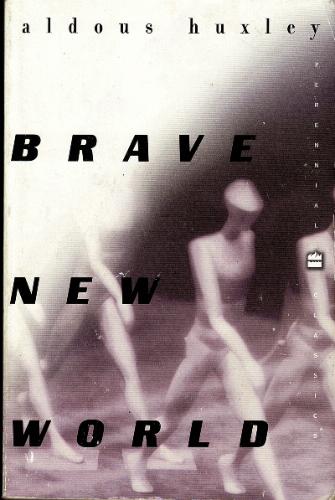
Brave New World, by Aldus Huxley (1931). I am a big fan of dystopian novels, and although I’ve read 1984 many times I’d never read Huxley. I was surprised to learn Brave New World predated 1984, first published in the 1930s, more than a decade before Orwell’s book. It was a true surprise how bold and prescient Huxley was, even though I knew many elements of the story through literary osmosis. And although the structure of BNW can be challenging at times, I’ve found myself thinking about it often since I read it (Related: this fantastic comic comparing the predictions of 1984 with BNW)
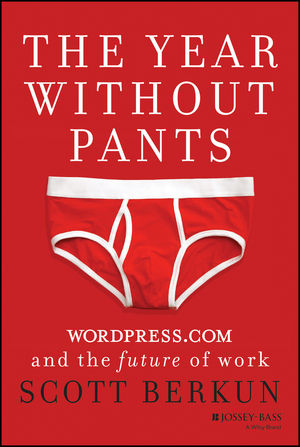
In writing The Year Without Pants, about my year working for the 100% remote organization at WordPress.com, I deliberately avoided exclusively writing a manifesto about remote work. I figured anyone could, and would, write a manifesto style book on the subject, but few would ever have the chance at a deep insider story of the trials and tribulations of a real team, with a real leader, on a real project of WordPress.com’s importance, where 100% remote workers and dozens of other new ideas about work, were in practice simultaneously. That’s the path I chose.
When I heard the founders of 37signals, Jason Fried and David Heinemeier Hansson, were writing a book called Remote: Office Not Required, I was relieved. I finally knew who was writing a manifesto style book on the subject and they’re good folks to do it. I like the spirit of their other books.
I finished Remote last week and I recommend it. I’m happy to say it’s a clear, short, solid book of arguments for using remote work to your advantage. It has a nice section of common excuses, with refutations, and sound arguments about how many opportunities there are to help your company by allowing remote workers. They discuss the unnecessary pain of commuting, the improved access to talent from other places and how the right kinds of employees benefit from greater flexibility. All things I observed at WordPress.com, and which I argue for at times in my own book.
Like their other books they focus heavily on stories from their own experience running 37signals, a very successful software company. There are references and mentions of other data and organizations, but they presume most organizations have the same attitudes, talents and businesses that they do, which I doubt is true. They’re an amazing and compact company, but I would have preferred the story of other companies to have had the central stage. From my recent book tour for The Year Without Pants I’ve learned much of convincing executives to try anything new depends on them seeing an example of a company like their own that has succeeded with the method you’re suggesting. Culture change of any kind is hard, and I’d recommend reading my post How To Change A Company for advice on starting with remote work, or any new idea, in your organization. Books open doors but someone has to lead the charge to open them all the way and keep them open.
It’s a common failing of manifesto type books to presume the world is uniform, and therefore uniformly malleable, but at least in 37signal’s case they are always practicing what they preach, which is commendable. I’d prefer to read what they have to say over “experts” who haven’t managed a team or a business in far too long.
I’m very pleased to say Remote: Office not Required and The Year Without Pants: WordPress.com & The Future of Work make excellent companions. They take complementary approaches (and even have the same colors). Remote has a broad, manifesto style list of proclamations, and The Year Without Pants captures a deep, specific examination of remote work from the perspective of a specific team and team manager in an important company in a fascinating work culture.
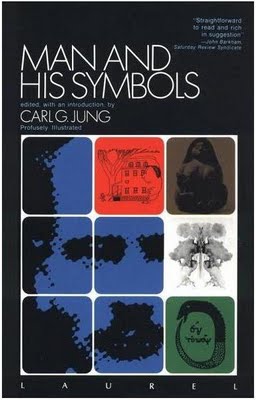
I’d heard of the work of Carl Jung by reference, and despite never reading anything he wrote I knew about archetypes and the abused false dichotomy introvert and extrovert. He’s referenced often, even by the Police in the songs and the title of their popular Synchronicity album. I like to read original sources for ideas, and have had a copy of Man and His Symbols for years. I finally read it last week.
The first disappointment is that although this is one of his more popular books, he only wrote the first chapter. The others are authored by followers and colleagues of his who explore different applications of his ideas. It was no surprise that the first chapter is the best in what can be best described as a muddled read. The chapter on symbolism in art was one of the worst for me as I have basic knowledge in art history and found this a second rate walkthrough of familiar turf.
The writing style is an odd kind of academic writing. Ideas are framed in complicated ways and hinge heavily on anonymous accounts of patient’s dreams and their interpretations. While I concede there is much to learn from dreams, and people who study them professionally are better at analyzing them than others, the hand picked cases and their analysis was rarely convincing. It felt like science by unverifiable anecdote, which is fine if the writer admits this, but no such admissions are found here.
The highlights of the book are the general observations of the disconnect in modern life between our unconscious thoughts and our rational, logical lives. The book points out how primitive societies did a better job of balancing expression of those unconscious feelings, through ritual, religion and the attention to dreams, while modern people, despite our mobile phones and streaming movies, are plagued with anxieties born from a lack of socially acceptable means to explore those energies. Dreams represent one opportunity for us to reconnect with these abandoned parts of ourselves, but there clearly are others.
I’m told Memories, Dreams, Reflections, which was Jung’s last book, is more approachable but my curiosity about his ideas has not recovered sufficiently to give him another try.
Here are some choice quotes from the book:
Most of us have consigned to the unconscious all the fantastic psychic associations that every object or idea possesses. The primitive, on the other hand, is still aware of these psychic properties; he endows animals, plants, or stones with powers that we find strange and unacceptable.
Because there are innumerable things beyond the range of human understanding, we constantly use symbolic terms to represent concepts that we cannot define or fully comprehend. This is one reason why all religions employ symbolic language or images. But this conscious use of symbols is only one aspect of a psychological fact of great importance: Man also produces symbols unconsciously and spontaneously, in the form of dreams.
self-control is a rare and remarkable virtue. We may think we have ourselves under control; yet a friend can easily tell us things about ourselves of which we have no knowledge.
A story told by the conscious mind has a beginning, a development, and an end, but the same is not true of a dream. Its dimensions in time and space are quite different; to understand it you must examine it from every aspect—just as you may take an unknown object in your hands and turn it over and over until you are familiar with every detail of its shape.
It is easy to understand why dreamers tend to ignore and even deny the message of their dreams. Consciousness naturally resists anything unconscious and unknown
I’ve read several books on book marketing and this is the first one that was a pleasure to read. Grahl writes well, makes his points directly and unlike the majority of books written by marketers about marketing is calm, clear, hype-free and honest. Although short, the book doesn’t read as a tease to hire his company (which many books do). He justifies the use of tactics that aren’t sexy or the easiest to try, but the ones that have been the most effective. And most surprising of all (for a marketing book), all of his approaches are founded on treating potential readers with respect.
As far as methods: the central tactic he believes in is email, yes email, and how all his data points to its superiority for authors in maintaining connections with readers and leading to eventual sales. He explains why and how and the book provides many links to his site with his latest answers for the best tools to use for everything he advises (a nicely done win/win for garnering traffic to his site). He offers a sane framing of twitter, Facebook and social media. Minor coverage is provided to blogging, speaking and other common methods.
I was also happy to see his charts that dismiss the singular drive to make bestseller lists, as many books with shallow marketing hit those lists once, and then have sales that plummet, as the marketing wasn’t built to be sustainable. It’s a rarely discussed fact that many books on the bestseller lists are outsold in the long run by books that never come close to having a bestselling week.
Grahl has been heaviliy influenced by Seth Godin, and if you’re familiar with his Tribes ideas, some of Your First 1000 copies will be familiar in philosophy. To market a book you need to build a group of people interested in your work, and the ideas you represent, and the book is simply part of that system of exchange you have with followers. Grahl does detail how to do this, and does it with more precision for authors than you’ve probably seen before. But there’s no gimmick or trick here. This is an authentic permission based marketing approach to marketing books.
The primary weakness of the book, which perhaps isn’t one at all, is the book requires lead time to be of use. It takes time to build a following, time an author whose book comes out in a few weeks will struggle to do. His methods, like most good marketing for books, make the most sense for authors who believe they’ll write more than one book. Marketing books is hard. It’s an extremely competitive landscape. It requires a long term commitment, a commitment most one time authors are unlikely to want to make (or can’t make as all of their available energy goes into the book itself). This is a minor criticism since this is simply a fundamental truth.
The book is short and an easy read. I read the whole thing in an hour. It was a pleasure and was worth the time and money.
I was honored to write the forward for Dan Brown’s new book, Designing Together, because I thought it was excellent. It’s the first book I’ve seen that solves a primary reason why designers fail: we stink at working with each other or other people. Brown’s book is the best, and possibly only, resource I’ve seen for saving design teams everywhere from themselves.
Brown writes in the opening pages: Successful design projects require effective collaboration and healthy conflict.
Everyone agrees with this, yet almost no one experiences it. Why? And why is so little attention paid by designers and team leaders to this fundamental problem? There’s finally a book everyone can use as a stepping stone to solving this perennial and tragic problem in how creative teams work.
If you want to make great things, get excellent work and constructive feedback from your coworkers and finally achieve everything your talents make you capable of, that quest starts with Designing Together.
The forward itself serves as my review. Here it is:
The cliché of Forewords for books is they have a seemingly famous person express how wonderful the book you’re about to read is. But the secret we authors don’t want you to know is often the Foreword is written by a friend who either lost a bar bet or is trading for the destruction of unsavory photos in the author’s possession.This explains why most Forewords are dreadfully dull and unworthy of the book they’re in. I can promise you I’ve only met Dan once and owe him nothing.
I’m writing this Foreword simply because this book is exceptional. It captures the central flaw in the talents of most designers: how to create with other people. And it achieves this without falling victim to the clichés and platitudes that render most books of this kind useless.
Back when I was a student, my vision was a lifetime of making world- changing designs. But in these dreams I always had a starring role, with minions scurrying about, taking every order and doing all the work I didn’t (or couldn’t) do. How naive the dreams of young designers are. No great thing in the history of design and engineering was, or ever will be, made this way.
It always takes a team of craftsmen, working in harmony, to make something great. Working with others has always been ignored in design culture. And the result is that the student fantasy lives on far too long in the careers of creatives, squandering their talent and their happiness, too.
If you pick any great design from today, or in history, and dig into the details of how it was made, you’ll find a team of talented people working well together. Each contributing and building on each other’s work.They didn’t always like each other, but they learned how to put the quality of the results ahead of petty differences. Their ability to do this isn’t magic. Nor is it based on their creative talents. Instead it’s a set of simple attitudes and skills this book clearly explains. While I’ve learned many of these practices along my career, I’d never seen them as clearly named, explained, and taught as they are here.
If you want to escape work that buries you in stress, disrespect from coworkers, or meetings that resemble Custer’s Last Stand, you’ll find solutions in the following pages. I’m jealous of the moments of clarity awaiting you in the chapters ahead.
I gave a talk at WordCamp Seattle recently about writing. One point I made was the limitations for improving writing skills merely by listening or reading. For the same reasons reading about playing guitar or juggling knives is insufficient to learn how to be a great guitar player or fully limbed knife juggler, mere reading is consumption, not practice. Skill development only comes from practice. Over the years I’ve read many books on writing anyway, they do help more if you are practicing the craft, but rarely read any of them now.
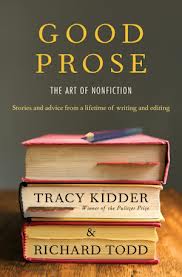
This one, Good Prose, however I had to read. Tracy Kidder is a pioneer of modern narrative writing, especially about technology and entrepreneurship, for his Pulitzer prize winning book Soul of A New Machine. I read it in college as many in my generation did, and it planted seeds for how to write and think about many things. When I heard he’d published a book about writing in collaboration with his long time editor Richard Todd, I had to check it out. And as time would have it, I was working on revising the Year Without Pants just when it came out. The timing could not have been more better.
[Actual review begins here]
Good Prose: The Art of Nonfiction is unusual for its lack of pretense about why you are reading it. It’s not a manual and it’s not a lesson. It’s two masters who have been studying and practicing the craft of journalistic narratives for decades attempting to document what they do and what they know. The essays in the book wind around deep subjects like narrative, honesty, structure and style, frequently referencing stories from Kidder’s book projects as examples for challenges faced and overcome.
Most of Kidder’s work is reportage, long form journalism and the book follows that line. What’s notable for all writers are the hints and nods the book makes to the fact that all writing has a narrative, and all writing is reporting. Even if you blog about your adventures in the kitchen, or post short summaries of your day on Facebook, you are engaging with many of the challenges Kidder and Todd explore in the book.
The biggest surprise for me as an author was how long Kidder’s writing projects take. Research is often years and he explains 8 or 10 complete drafts are not uncommon. As a fan of his work these facts are a reminder there are no shortcuts. Better writing is the result of more work and commitment.
The payoffs for the book are greater for people who write deeply, books and longer narratives, but anyone interested in writing craft will find this book a pleasure. It helps if you’re familiar with Kidder’s work, but that’s far from a requirement.
Here are some choice quotes from Good Prose:
No other art form is so infinitely mutable. Writing is revision. All prose responds to work.
For instance, one sure way to lose the reader is trying to get down everything you know about a person. What the imaginative reader wants is telling details.
Writers want to be engaging, and it is easy to try to purchase charm at the expense of honesty, but the ultimate charm lies in getting the face more right than pretty
Every journalist who is not too stupid or too full of himself to notice what is going on knows that what he does is morally indefensible. He is a kind of confidence man, preying on people’s vanity, ignorance, or loneliness, gaining their trust and betraying them without remorse. Like the credulous widow who wakes up one day to find the charming young man and all her savings gone, so the consenting subject of a piece of nonfiction writing learns—when the book or article appears—his hard lesson. Journalists justify their treachery in various ways according to their temperaments. The more pompous talk about freedom of speech and “the public’s right to know”; the least talented talk about Art; the seemliest murmur about earning a living.
Much overstuffed prose reflects a desire to bully, to impress, or to hide.
It has taken, on average, about three years for me to research and write a book, long enough for each to seem like an occupation in itself.
Every piece of writing, even classic works, can be ridiculed.
Whatever art any book achieves may or may not be rewarded in the marketplace, but art isn’t generally achieved with the market in mind. Every book has to be in part its own reward. In happy moments one realizes that the best work is done when one’s eye is simply on the work, not on its consequences, or on oneself. It is something done for its own sake. It is, in Lewis Hyde’s term, a gift.
I always wince when a reviewer says, “This book needed an editor.” Often it had an editor, but the writer prevailed.
They say the devil is in the details, but the angels are in there too. That is, if you have a clue about what you’re doing. People who want to design things have large egos and presume that they’re skilled enough to work on large, grand ideas. But so rarely do designs in this world get the small things right, and if the small things, the little pieces that get used the most, are broken, what is the point of being large?
Dan Saffer’s book Microinteractions is the best book I’ve read about design in ages. I’ve been working in design for 20 years and often have younger designers ask me for advice, or how to achieve their grand design dreams. Most books about design are similarly grand and presume that everyone knows the basics well enough to do the little things well. The world proves this not to be true. Spend an afternoon strolling around town with a gaggle of caffeinated interaction designers and you’ll hear an endless commentary on the details the designers of the world have gotten wrong.
The book itself is a wonderfully self-consistent: it’s short, concise, well designed and brilliant. The fun and salient examples nail Saffer’s points, and his writing is sharp, incisive and with just enough comedic curmudgeonry to keep you smiling most of the way through. The book’s ambitions, like any good design project, are clear. Saffer’s focus is on the small sequences of interactions he calls, surprise, microinteractions. Ever been frustrated by entering your password? Leaving a comment on a blog? You’ve been let down by a microinteraction design. Perhaps the majority of design frustrations in the technological world are micro, not macro.
This is the book many designers will begrudgingly pick up, thinking it’s beneath them, but by the time they get to page 25 they’ll be thinking “oh, this is fun” and then by page 50 they’ll realize “oh dear, I make that mistake, or have peers that do” and when they’re finished they’ll know “I now have a language to describe these important problems that have bothered people for ages but were hard to describe, and I have the knowledge now to fix them properly”. What more can you ask for from a book about designing things?
We live in a world where the clueless have disturbing amounts of influence. There are no licenses required to use words like design, simplicity and quality, and it should be no surprise we’re often victimized by the engineered junk companies pass off as products. If we want that to change we have to start in the small. Until a designer, or an organization, can consistently get the details right, what hope is there to get the grand things right either?
Please buy this book. I say that selfishly as I want better design in the world. But I also say it generously: so many design books are fluffy affairs, lost in abstraction and ego. Saffer has hit the bullseye of problems the design world desperately needs to solve, and written a book every designer needs to read.
From the title I expected either a manifesto or pragmatic guide to self learning, but that’s not the case. The book centers on interviews with successful individuals who achieved success without following traditional paths. Although I easily read the entire book and recommend it, it’s an oddly shaped reading experience, where the introduction read more to me like a closing summational chapter. Although the book closes with a chapter of tactics and resources, and some interviews provide tips, the book itself is more inspirational than pragmatic.
There are some excellent interviews (Norton, Doctorow, Taylor) but some wander too deeply into personal histories and career specific advice, away from the book’s ambition (Cory Doctorow‘s interview felt as if it were repurposed as he talks more about writing than anything else). Unlike Founders at Work, where the interviews stand alone, or even What Should I Do With My Life?, where the author weaved the stories together, Don’t Go Back to School sits in the middle in structure. It took until I reached the 4th or 5th interview that I settled in to the frame and tone of the book. I’d almost recommend reading the interviews first, and the introduction and closing references last.
And yet one of my favorite lines in the book comes from Stark’s introduction:
A gracefully executed quit is a beautiful thing, opening up more doors than it closes
She also clarifies common strategies her interviewees shared:
Portfolios to show their past projects and demonstrate competence
They show enthusiasm and chutzpah
They are adept at learning on the job
They are meticulous about doing good work
And Stark takes to task the often sited data about the value of a college degree:
…as a historical trend, people with college or graduate degrees have higher lifetime earnings… the problem is that this statistic is based on long-term data, gathere from a period of mderate loan debt. easy employability and annual increases in the value of a college degree.
Some highlights from the interviews include:
Quinn Norton (Journalist):
To this day, lectures are one of the best ways I can learn things, now on my iPod. To really get it, I listen to the same lecture back to back, twice…
I was a very odd teacher… I hated grading. I remember standing up in front of them and telling them grades don’t matter… One of them raised their hand and asked, “Well then Ms. Norton, what matters?” I told them what you learn matters. The skills that you get are useful. Not the grade you get. They were aghast.
Dorian Taylor (Programmer):
At my present age of 33, I suspect I could get into any institution that would take my money. But I couldn’t tell you why I’d go.
Molly Crabapple (Artist):
If you go to a rich people school, in any major, you will get a network of rich people. If you go to a poor people school, you won’t get a network of anyone. I totally understand why people go to Ivy League schools, so that they’ll meet the future power brokers of the world. I just never had the grades or the money for that, so it wasn’t an option for me. I made my own way. I network with people who are outside my field – journalists, writers, performers – and I look for every opportunity in the entire world where there is a blank wall and I can put my work on it.
Christopher Bathgate (Sculptor):
Getting stuck for me has been one of my best teachers. It has taught me the huge difference between just knowing the answer, and knowing how to find the answer
Pablos Holman (Hacker):
A lot of the people I think of as being most capable and accomplished are those that dropped out of college and learned what they do on the job. Learning that way gives you a sense of responsibility and a sense of ownership of your skills and knowledge in a way that a degree doesn’t. You get a degree and it’s an external authority saying you know what you’re doing. The degree abstracts responsibility for learning and the knowledge you have.
Zach Booth Simpson (Researcher):
Don’t bother getting an education: just hang with smart people and ask good questions.
The book is excellent for people who want to break free, and need to connect with stories of those who have done it. Most of the interviews are with independent, freelancer, entrepreneurial professionals and their stories will have the most appeal for those dreaming about similar paths (as opposed to those who dream about middle management and want to get there without going to college).
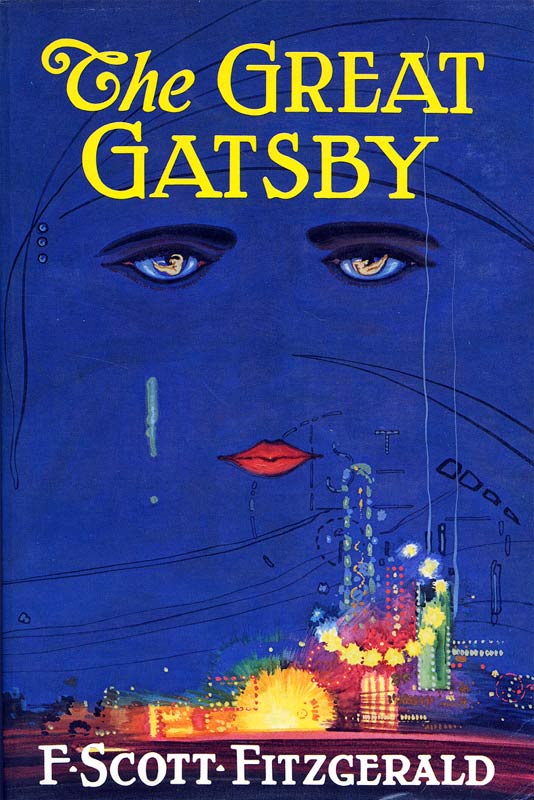
I’ve read the Great Gatsby more than a dozen times. It’s a reference book for me, in that I find I experience the book differently each time I read it. Many people are surprised to learn the book was headed for obscurity until it was chosen as a free book for soldiers during WWII. It was twenty years after its publication in 1925 that it first became a classic. Fitzgerald died in 1940 thinking himself a failure and that his work wouldn’t be remembered. How wrong he was.
As a story outline, The Great Gatsby is simple. There’s nothing that fancy or elaborate going on. It’s a writer’s book in a way, since it’s so simple and in many way obvious, yet works so wonderfully well. It’s constructed as a series of slow burning time bombs that make you simultaneously want them to both go off to relieve the pressure, but not go off, so you can enjoy the way things are slowly unraveling for as long as possible. It’s irresistible as a writer to want to take it apart and see how it works.
What makes the book sing is the first person narration, and how easy Fitzgerald makes it seem to blend internal thoughts with plotting, dialog and observation. He jumps though time and perspective but always makes you, as the reader, feel well cared for by the soft cushion of his narrative powers.
But there are moments that don’t age well: scenes of racism, which, on afterthought, were probably appropriate for 1920s America (and perhaps part of the commentary he was making about society. It’s hard to tell at times what he is criticizing and what he’s simply observing). Some manners of speech feel staged, but not having been born until 50 years after it was written it’s hard to argue whether he got it right or wrong. But none of those complaints stand in the way of what has always been a deeply worthwhile, and easy read.
Some choice non-spoiler quotes from the book:
It was one of those rare smiles with a quality of eternal reassurance in it, that you may come across four or five times in life. It faced — or seemed to face — the whole external world for an instant, and then concentrated on you with an irresistible prejudice in your favor. It understood you just as far as you wanted to be understood, believed in you as you would like to believe in yourself, and assured you that it had precisely the impression of you that, at your best, you hoped to convey. Precisely at that point it vanished
Reserving judgments is a matter of infinite hope. I am still a little afraid of missing something if I forget that, as my father snobbishly suggested, and I snobbishly repeat, a sense of the fundamental decencies is parceled out unequally at birth.
No — Gatsby turned out all right at the end; it is what preyed on Gatsby, what foul dust floated in the wake of his dreams that temporarily closed out my interest in the abortive sorrows and shortwinded elations of men.
Something in his leisurely movements and the secure position of his feet upon the lawn suggested that it was Mr. Gatsby himself, come out to determine what share was his of our local heavens.
The little dog was sitting on the table looking with blind eyes through the smoke, and from time to time groaning faintly. People disappeared, reappeared, made plans to go somewhere, and then lost each other, searched for each other, found each other a few feet away. Some time toward midnight Tom Buchanan and Mrs. Wilson stood face to face, discussing in impassioned voices…
When I saw the latest film version of The Great Gatsby (directed by Baz Luhrmann, of Moulin Rouge fame), I was disappointed and delighted. Baz’s style fits his name, and the movie is grand, dramatic, over the top and nearly absurd, but also beautiful, shocking and intense. It seemed Baz didn’t see the film as a tragic commentary on the misguided capitalistic dream, or at least not enough to prevent the dance numbers and special effects to often take center stage. The revival of Gatsby parties seemed to have missed the point of who Gatsby was.
I’d always thought of the story as more smoldering than explosive, and more lyrical than confrontational. I still prefer the 1974 Redford version of the film, which was more stayed and placed a bigger bet on the strength of the story than on visual storytelling itself. Gatsby is meant to be a sad enigma, and it’s Carraway (played best by Sam Waterston) who has the burden of framing him for us. In the end, the most successful, best looking person in the story is the opposite of what he seems, yet it’s so easy to get lost along the way that this is what the story is truly about. Perhaps Fitzgerald was too soft in his telling of the story, as far too many people take other things away from it.
SB: Your book elegantly frames why we’re attracted to TV shows involving sociopathic behavior. Do you have a theory about when television shifted from more balanced dramas to a world where many of the popular shows involve sociopathy? The Sopranos is often referenced as the show that changed television and (re)introduced moral ambiguity to popular television drama: do you agree?
AK: The Sopranos was definitely a turning point, but I think the ground was actually prepared by reality television. By their very nature, those shows are about scheming and backstabbing — and as interesting and daring as Sopranos is in a lot of ways, it’s fundamentally about just that type of “office politics”-style conflict (although “voting someone off the island” obviously takes a very different form). In terms of a cultural turning point, though, it’s harder to pinpoint. American culture has always been very individualistic, utilitarian, or — to put it bluntly — greedy, but popular culture has most often tended to try to provide some kind of moral veneer or cushion. In many cases that was hypocritical sentimentality, but I’m not sure that the more recent trend toward openly embracing selfishness is to be preferred simply because it’s “more honest” or something.
If I were held at gunpoint and forced to choose a cultural moment that opened up this possibility, though, I’d say it was the end of the Cold War. Suddenly America no longer had a transcendent mission, and it no longer had to pretend that capitalism was some kind of moral force for good against the unmitigated evil of communism. And I think it’s really telling that once another transcendent mission presented itself — in the form of our farcical overreaction to terrorism — the moral sense was totally and radically absent. We perceived ourselves as entitled to openly violate all norms of law and human rights for the sake of facing this “existential threat.” It was as though the nation as a whole was echoing the archetypal reality show contestant who declares, “I’m not here to make friends!”
SB. What motivated you to write this book? There are many popular criticisms of television as both a medium and for its content, but your approach was both novel, approachable and specific. Did you have a personal stake in trying to call attention to this trend?
AK: I did Awkwardness as a kind of experiment with a more popular form of writing. I did Sociopaths because I wanted to go further in that direction — my explicit academic trappings are much more subdued in the second book — and simply because I felt as though I had hit on an interesting cultural trend that no one else was really talking about as such. On a more personal level, I basically didn’t want to let my idea go to waste — and more broadly, I was attracted to the idea that I could “redeem” my time spent watching all these shows by putting that to work in my writing.
SB: Clearly you watched many of these shows. Were, or are you, a fan of any of them? Do you see dangers in enjoying shows centered on individuals with major psychological issues? (or, more broadly, do you believe television has a desensitizing impact on American culture (e.g. Postman’s Amusing Ourselves to Death)?)
It’s probably clear from the book that I’m a big fan of the Wire, which I perhaps spent more time on than is warranted by its popularity. I still watch Mad Men avidly, and I’ve picked up on other shows in the sociopath style — Boardwalk Empire, Justified, etc. I’ve winnowed my TV watching over the years, compared to my more omnivorous habits during graduate school, and so I probably would not have devoted as much time to something like Dexter or stuck with House as long as I did if I were starting them now.
On the issue of how these shows are affecting people, I’m less concerned about that than I am about the culture and institutions that shape them into the kind of person that identifies with the sociopathic social climber. There’s always going to be a certain fascination in the outlaw figure, but the systematic glorification of the sociopath betrays a deeply sick society in my opinion.
Whatever effect TV shows are having on people, I think that the way their workplaces and schools function has a much bigger impact — and both of those institutions are structured increasingly as an ongoing competition where loyalty or morality seems like a liability. If people who live every day in that kind of environment need to let off some steam by identifying with Tony Soprano for a couple hours, I don’t begrudge them.
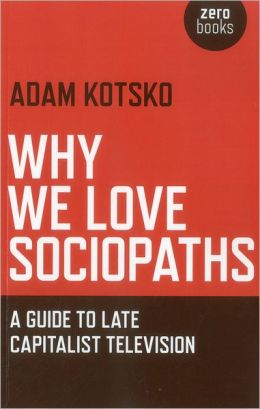
The other day I saw some high school students in a coffeeshop, and on the table was a book titled Why We Love Sociopaths. I laughed when I saw it, thinking it was an excellent book title. Then I looked it up on kindle and read the whole thing that night. At 100 pages it covers a wide range of ideas, questions and criticisms of modern television, a second cousin to Postman’s classic Amusing Ourselves to Death.
While I’m a fan of the high quality of television we’ve seen in the last decade, perhaps the highest of all time, I’m often bothered by how horrible the lead characters are as people. Certainly Shakespeare had some lead characters who were cruel or rotten and it’s not a new structure for drama. But if you run through The Sopranos, The Simpsons, The Wire, Mad Men and even South Park, you find consistent reprehensible behavior among central characters, sometimes played for comedy but often seriously.
Kotsko, a professor of humanities at Shimer college, improved my thinking( and I interviewed him about his book here). He takes many popular shows and breaks them down, exposing, through a conversational and refreshingly non-academic style, deeper questions and theories as to why these characters are popular to modern America.
I didn’t agree with all of his analysis, but that’s part of the fun. What do I believe? His take was consistently interesting enough to provoke me into deeper thought, a compliment for any book.
If you’ve never seen The Wire, House, The Simpsons, Dexter, Breaking Bad or the shows I’ve mentioned above enough to know the main characters and themes, I’d pass on this book. His analysis lands well if you’ve seen the shows, but for shows I didn’t know it was harder to follow.
Here are some good quotes from the book.
On evil sociopathic characters being a form of wish fulfillment of escape from morals:
The sociopath is an individual who transcends the social, who is not bound by it in any gut-level way and who can therefore use it purely as a tool… If only I didn’t give a fuck about anyone or anything, we think—then I would be powerful and free.
On reality TV shows rewarding sociopathic behavior (manipulations and betrayals):
Many of the adult games that Augustine was so skeptical of remain with us today: the quest for wealth or fame, or public debates and trials won by rhetoric and technicalities rather than truth and justice. Since his time, however, at least one new adult game has emerged—the reality TV show.
The centrality of exclusion to the model can be seen in the fact that even apparently skill-based shows, such as America’s Next Top Model or Hell’s Kitchen, with outside judges determining the winner rather than a vote of one’s peers, typically rely on the slow work of “voting people off the island” rather than any kind of positive score-keeping.
On Dan Draper’s inherent sociopathy:
What kind of man’s first thought, in the split second after witnessing a horrific death, is not to panic, not to head for cover, but to consider how he can take advantage of this situation to raise his social standing?
This mercenary approach to human identity is a necessary correlate to his ability to buy his own pitch, showing the thorough inner consistency of his worldview: everyone can be manipulated by the same emotional triggers, including me, and everyone is interchangeable, even me.
I read the whole book in one sitting. If you’re a curious fan of these shows, you’ll enjoy the book.
We think the world is tough right now. But compared to what? If you think things today are upsetting, this book is for you. And if you think things are great, this book is for you too. If you skim even a few chapters you’ll arrive at a profoundly better understanding of what it is to be a person in a “civilized” world.
This book is a tour de force of history, using warfare and atrocity as the thread to understand civilization itself. The author, White, weaves his way through every major conflict with insight, wit, and delicate humor. He takes complex events and explains the causes, however dumb and disappointing, and provides a better understanding of current events and what we should want in the future.
As the title suggests, the book explores warfare, fratricide, genocide, and other terrible collective actions. White provides ranked lists of the most horrible events and the worst leaders, but not for sport. Instead he shows us what people, powerful people, have done in the past out of hope we can do better in the future.
The book provides a list of the worst 100 atrocities of all time. The last 50 pages lists his sources and methods for the historians who want to follow his trail (the references are online too).
Here are some choice quotes:
“People have been killing each other ever since they came down from the trees, and I wouldn’t be surprised to find bodies stashed up in the branches as well.”
“War kills more civilians than soldiers. In fact, the army is usually the safest place to be during a war. Soldiers are protected by thousands of armed men, and they get the first choice of food and medical care. Meanwhile, even if civilians are not systematically massacred, they are usually robbed, evicted, or left to starve; however, their stories are usually left untold. Most military histories skim lightly over the massive suffering of the ordinary, unarmed civilians caught in the middle, even though theirs is the most common experience of war.”
“Civilization before the Enlightenment was rather flexible when it came to historic accuracy, and ancient historians never let the truth get in the way of a good story.”
“Why Did Rome Fall? The best way to understand the fall of Rome is to skip the first half of any book on the subject. Yes, background and long-term trends are important, but some historians go so far back looking for the cause that they make it sound like Rome was tumbling toward its inevitable fall right from the start.”
“If we categorize the entries in this list according to which religions came into conflict, we get this simplified breakdown: Christian vs. Christian: 9 Muslim vs. Christian: 3 Christian vs. Jewish: 3 Eastern vs. Christian: 3 Jewish vs. pagan: 2 Muslim vs. Chinese: 2 Muslim vs. Muslim: 2 Human sacrifice in India: 2 Human sacrifice in Mexico: 1 Ritual killing in Rome: 1 Muslim vs. Hindu: 1 Manichaean vs. Taoist: 1
We can probably go even farther and group them into four larger categories: indigenous human sacrifice (4), monotheistic religions fighting each other (17), heathens fighting monotheistic religions (8), and heathens stirring up trouble all by themselves (1). In early history, the majority of religious killings involved sacrificing people to bribe and placate the dangerous forces of the universe. Then, Judaism and its offshoots, Christianity and Islam, devised a worldview where a single all-powerful god required a strict, uncompromising belief rather than tangible offerings.”
Thanks to Rob Lefferts (of the Lefferts law) for the recommendation.
 It should be no surprise that creative thinking can be counter-intuitive. Often people use the framework of problem solving when talking about ideas, which is useful, but primarily logical. This means the problem itself (“how can I build a better mousetrap?”) and the desire to solve the problem (“mice keep stealing all of my cheese”) provides the fuel to do the work.
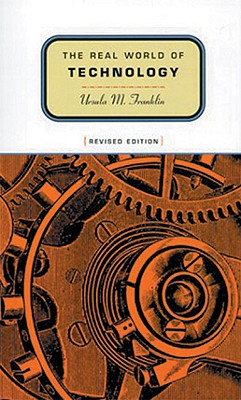
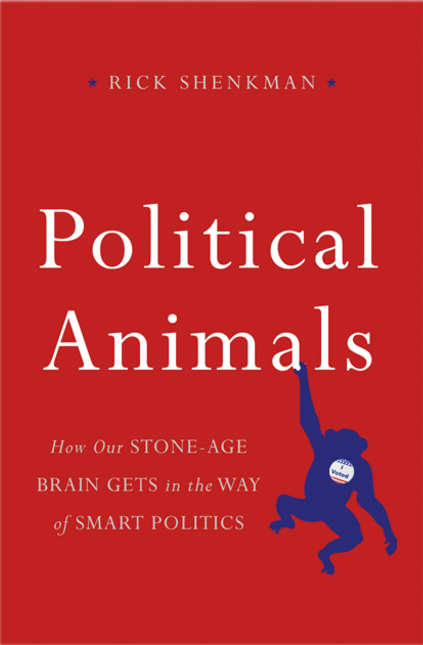
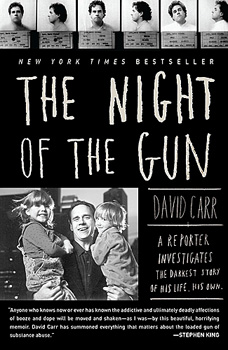
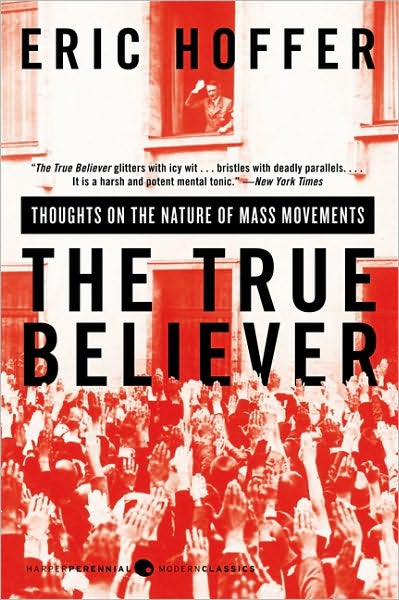
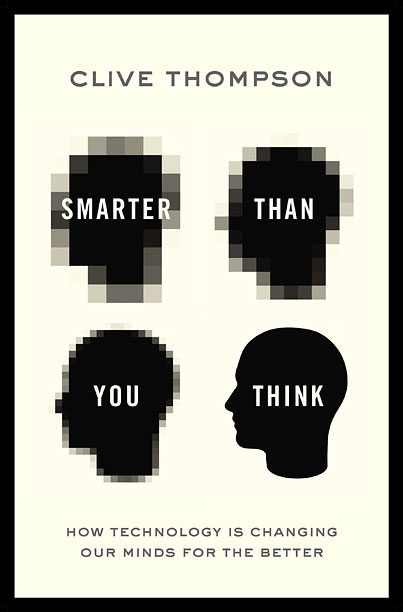
 We Learn Nothing