In 2012 I visited Jerusalem for the first time and had an amazing experience. I’ve long been a student of religious history, as it’s a subject that combines so many fascinating threads about human nature (psychology, culture, philosophy and more). During my visit I was struck by how little information the important sites in Christianity (as well as Judaism and Islam) provided to visitors about what they were seeing, and an idea for a book was born.
The premise: There’s so much arguing between religions, and perhaps even more within them. Wouldn’t it be great if there was some kind of religious referee, a person without any particular faith but knowledge of them, who could help sort things out? Or make interesting observations as an informed, and mostly respectful, outsider? That will be me (or that’s who I will be attempting to be). The book will combine my first person experiences visiting these amazing places, with insights from history, theology and comparative religion. It will be primarily a travel book about these important places, but focused on exploring deep questions about history, humanity, belief, and the past and the future.
The details: I’ll be in Israel in December spending a week in Jerusalem, observing and studying some of the most famous religious sites in the world. Chapters of the book will be subjects such as “Walking The Via Dolorosa“, “Watching at the Church of the Holy Sepulchre” and “Meditating at the Temple of The Mount“. This will be preliminary research and I’m not certain the book will come together, or if this rough outline will hold, but there’s only one way to find out!
Photographer: I’ve hired photographer Itay Cohen to work with me on the project, and we’ll be visiting the sites together. You can see more of his amazing work in his portfolio.
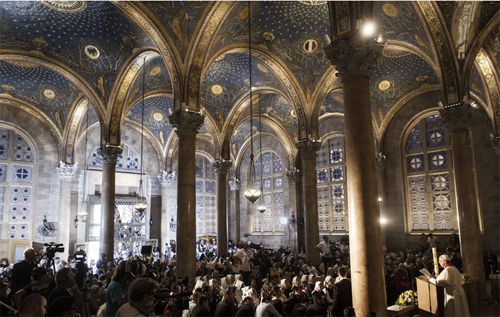
Researchers: The historic and theologic depths involved are enormous and to help me prepare for my visit, and develop the book, I’ve hired Nina Skafte (M.A. Religious History, Oxford) and Margaret Harris (working on PhD in Cultural History). More research volunteers are welcome, and if you have expertise and interest let me know.
Publication: I have no specific plans for how or when the book will be published. I may discover the concept of the book doesn’t hold together at all, who knows? I’ll make decisions about this after the research trip.
If you’re interested in this project, please leave a comment or contact me. It’s another big risk for me as an author and I hope you’ll at least support my willingness to take risks. I may set up a separate blog for the project and leaving a comment is the best way to get invited to follow along.
I’ve written many posts about religion in the past, and you can read some of the best ones here:
What does a good parent do for their children? What specifically, if anything, can only a father do for a child?
It’s an easy question to ask, but complex to answer. Much of what we have in our minds about what good parents do, or don’t do, is based on our own experiences. Since we only have the two parents we’re born with, we depend on secondary sources to evaluate the ones we have: the parents of friends and cousins, television shows, books and movies. And only as we grow into adulthood do we have enough context to see our parents in a broader light, including perhaps the light of the experience of being parents ourselves.
This was research for for my book The Ghost of My Father. Without falling into the traps of genders, many of the things good fathers do fall into the general pile of what any good parents does. In drafting this post I wrote many lists about fathers, but in revising I realized much of these lists were really about parenting, and not gender or role specific.
Things good parents do:
- Keep the family safe
- Provide financial resources
- Provide opportunities for children to learn and grow
- Set examples of good behavior
- Enforce rules that are fair
- Are present and happily available with their time
- Create the first healthy emotional relationships children will have
- Model conflict resolution, introspection, goal setting, patience, civic duty, and more
- Be reliable and committed
Things good parents encourage in their children:
- Developing independence and confidence
- Being trustworthy
- Having self-discipline and commitment
- Desire to be helpful
- Learning useful skills
- Following the child’s own dreams and ambitions
This list applies regardless of gender. A single parent could do these things, or two parents of the same sex. What then is the exclusive domain of fathers? What things can fathers do that mothers can not?
Things good fathers do:
- Teach skills important to boys for becoming a man: self-discipline, sports, grooming, how to make friends. A man or woman could certainly teach these skills if they had them, but perhaps there would be elements missing that only a man would be likely to know?
- Model for girls and boys what a good man is like (trustworthy, respectful, skilled, self-disciplined, confident but humble). But aren’t these just traits of any good person, regardless of gender? Is there some specific element of the idea of man-ness that only a man can demonstrate?
What’s missing from these lists? Or am I wrong and there are more things only fathers can do?
My next book is a departure and a risk. If you want to understand why, read the goal of my life explained.
I’ve been asking questions about fathers and sons my entire life, which makes it no surprise I’ve had a difficult relationship with my father. He is not an easy man to know, but as a child I didn’t know this. And as it is with all families, you can only see your family for what it is once you leave it and look back. It wasn’t until my twenties, when I moved away and started my own life, that I began to understand both myself and my father and began the work of unpacking our relationship, as broken as it was. So many of the feelings I had about myself weren’t really mine, but feelings I learned to have to try and fit into his world.
My next book, titled The Ghost of My Father, is about this relationship. Particularly the events of the last two years where he, at the age of 70, has chosen to abandon his family. It seems he was never quite happy with his life, or with us, observations he never shared until this last chapter where he tried to move away and start a new life. He had an affair once before while I was a child, with disastrous consequences for the family. And now I find waves of memories, feelings and thoughts from that time have been brought back to the present, memories and feelings that demand being reckoned with.
We think memory is stable, but all my memories of my childhood have shifted dramatically. Different stories from my past now seem far more important, and ones I thought were important now don’t seem to matter at all. I’ve returned to my journals, sifting through to look for more insight into why these memories are with me now, and others are not.
“Memory seems to be an independent creature inspired by event, not faithful to it. Maybe memory is what the mind does with it’s free time, decorating itself. Maybe it’s like cave paintings. The thing is, I’m old enough now to know that the past is every bit as unpredictable as the future, and that memory, mine anyway, is not a faithful recording of anything, and truth is not an absolute.” – Abigail Thomas, Thinking About Memoir
Last night I watched the film The Return, about a father who returns to his two young boys from a mysterious ten year disappearance. There was something epic about the tones of the film and how fathers factor in many children’s minds as a powerful, ambiguous, possibly unknowable creatures. Certainly not all fathers are like this, but many are. And few of us have the courage to dig into the hard ground of our childhoods, despite our disappointments with our parents, to sort out who we are and who we want to be now that we’re not children anymore.
This 6th book will be my most personal one so far.
- If you want to be notified when the book is out, signup here.
- You can read more posts about the book.
- If you’re interested in this book, leave a brief comment (“I’m interested – go Scott!” works fine). I’ll be in touch as the book develops and is published. This blog won’t be shifting to be primarily about this project, so leaving a comment makes it easy to stay in touch with you.
- And of course films, books, and other stories you recommend I read are welcome too.
- If you have a related story to share about your relationship with your father, good or bad, I’d be grateful if you left a comment or sent me an email.