On Tuesdays I write about the top voted question on Ask Berkun (see the lovely archive). This week’s question came via email from Dennis S.:
What makes a book a good read?
Great question, but there’s no easy answer! Which is true for most great questions.
The simplest answer is “are they engaged enough to want to know what happens next instead of doing one of the 100 other interesting things in their lives they don’t have enough time for?” which sounds nice, but what engages one person can turn off another. Which is why there are so many genres, styles and types of books. For fun, go read the 1 star Amazon reviews for your favorite popular book. Many people hated it and couldn’t finish it! Does this mean the book is actually terrible? Maybe, it depends on your preferences and opinions. Art is highly subjective.
This fact is both wonderful and horrible. Wonderful because it means if you can find an audience for your particular approach to writing, you can be successful even if the rest of the world doesn’t like it. It’s horrible because success and what is good are entirely subjective which makes it easy to lose confidence, give up, or get distracted by looking for some mythical magic formula for “writing good books” which doesn’t exist. There are certainly good books on writing and story structure which are helpful, especially for new authors, but they’re more rough guides than step-by-step-magical-spells. Since books have no hidden parts, all the words are there on the page, it’s of great value to study books you and others think are good reads and ask “Why does this work the way that it does?”
It’s also useful to think what makes for a bad read. A bad read probably means:
The writer is very confused about what is interesting about their subject for the reader
The way sentences and paragraphs are constructed is confusing and hard to comprehend without reading them more than once
The book is organized poorly and it’s hard to understand why one story or chapter follows another
There is no momentum, emotional interest or curiosity created for the reader
Most serious writers have early readers who read drafts, give feedback, and help the writer understand what’s working in their current draft, and what it isn’t. They’re learning from actual readers which parts aren’t as strong as they think. All first drafts are bad. Many second drafts are too. The process of writing is rewriting and shaping material over many drafts into something good. A good read is usually the result of many revisions of a bad one.
Most serious writers also work with editors, particularly developmental editors who can guide and give advice broadly about what is working, or not, about each draft. The challenge is it’s hard to find people who give thorough and useful feedback beyond “I like it” or “I hate it”. You have to invest in finding good feedback givers, not to mention, being receptive to hearing things you don’t want to hear (which are probably true) and also being willing to make significant changes to a draft based on what you learned, rather than being stubborn or egotistical about it.
My favorite one link to give people about writing seriously is Jane Friedman’s website, filled with resources, references and recommendations.
Which is more dangerous: people who write badly, or people who read poorly?
Polls like this are mostly just fun for me. Even so, I try to word them carefully and think through how to make the question less leading towards one answer. And then before I post it, I stop to think up a guess at what the results will be.
In this case I predicted it would be nearly even. I thought the poll was clever, but not particularly interesting as binary choices often create false dichotomies. I admit I was quite surprised to see the result (21% write badly, 79% read poorly):
Yes, it’s true that binary polls are often unfair as in any real-life decision there are layers of nuance, clarifications and details that change both how you might define the problem and how you’d try to solve it. But the brutality of the forced choice has a power too, at least as a thought experiment: if you could only solve one of the two problems, which would you solve?
I see now that I agree with the answer. Here’s why:
A bad reader can squander the work of a great writer. If the reader is only skimming headlines or reading primarily for speed rather than comprehension, it’s easy for them to misunderstand or overlook the value of what they read. Reading is always the last step and it takes place entirely in the reader’s mind, not the writer’s. And of course there are far more readers than writers as it only takes one writer to produce something, but hundreds or thousands of readers can read that one work.
Misinformation and fake news are popularized by readers. Our decision to share something on social media hinges on our (mis)comprehension of its accuracy, meaning or truthfulness, or our disregard for those things. What becomes a trend, goes viral or becomes popular is based entirely on readers opinions no matter how (un)informed they are, or how many great works from great writers they have entirely ignored.
Learning to read better helps you to write better. The most common and worthy advice from writing teachers is to become a better reader and to read better works. It’s by improving the questions you ask as a reader, and developing the patience to pause and think, to reconsider, to glance between the lines, that the capacity to write well begins to grow. If we want better writers, we need better readers first.
Now that you are finished reading what I have written, what comments will you write for me to read? I look forward to reading your thoughts with extreme generosity, thoughtfulness, and patience 🙂
(I tried to find a picture of dangerous reading, and this was the best rights-free image I could find. I mean, she could trip in the sand, or maybe a big rogue wave could come up a knock her over, right?)
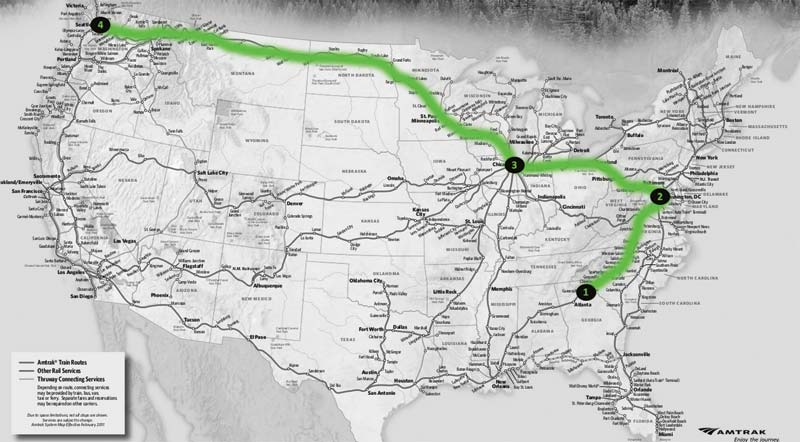
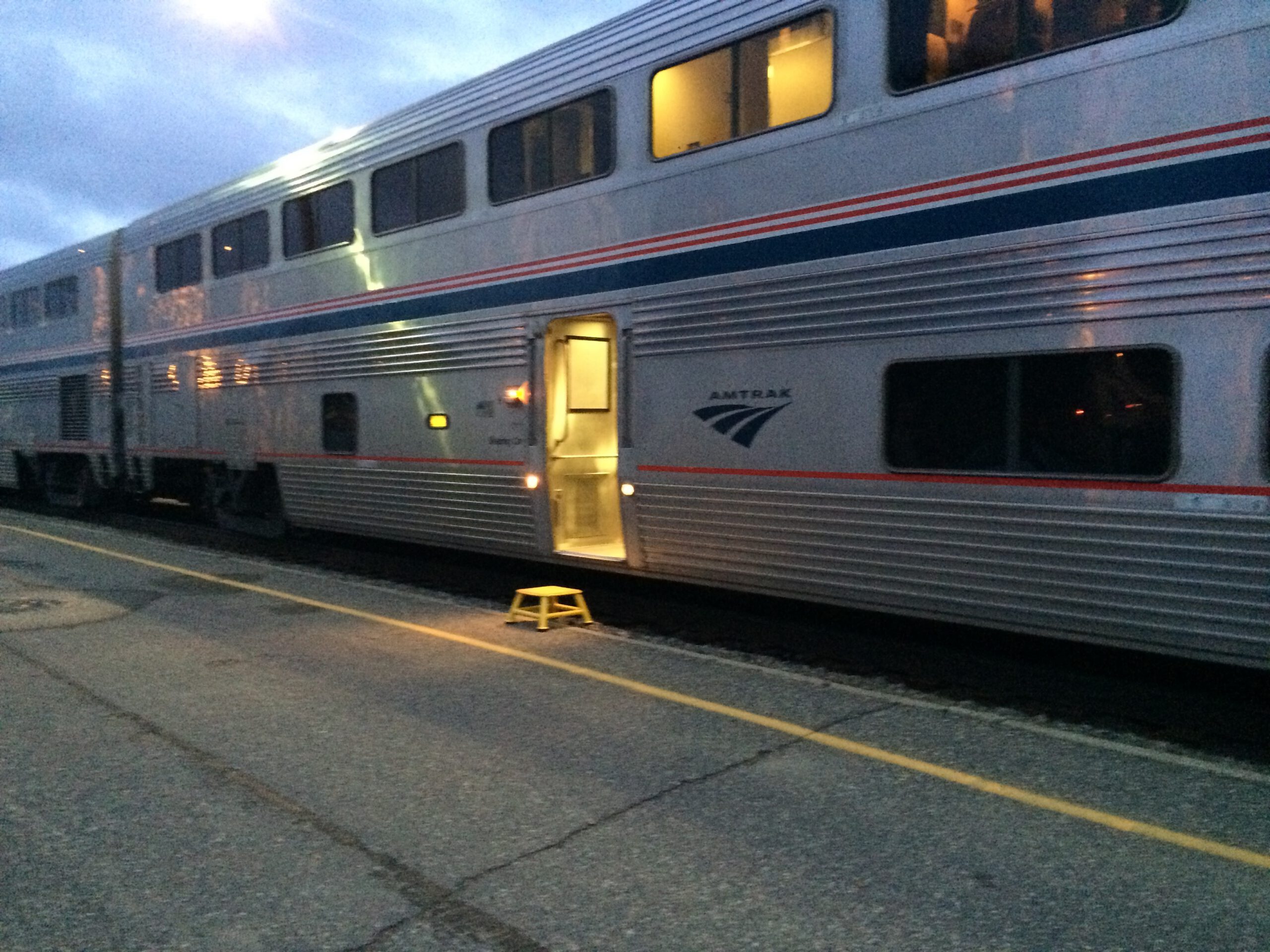
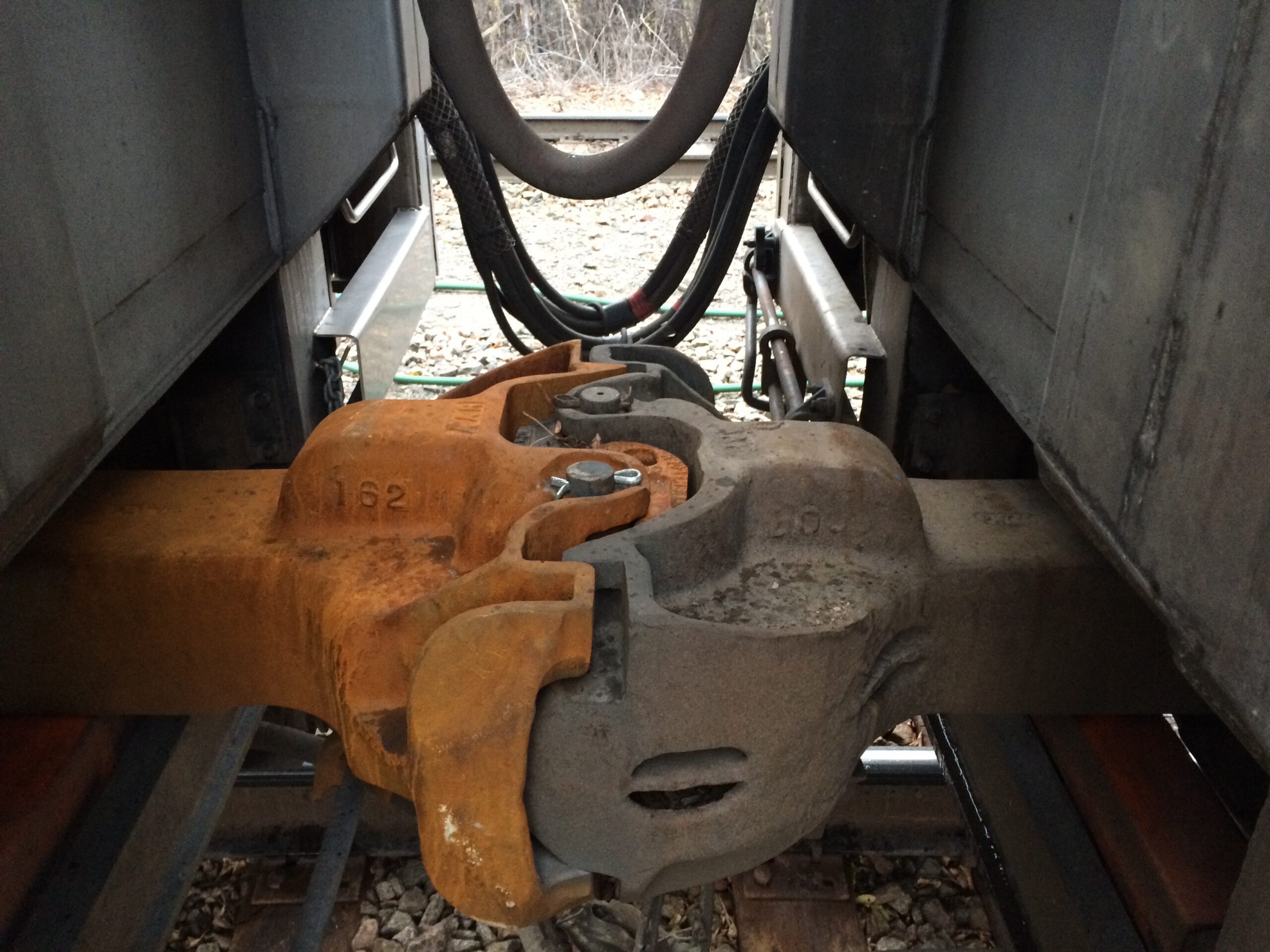
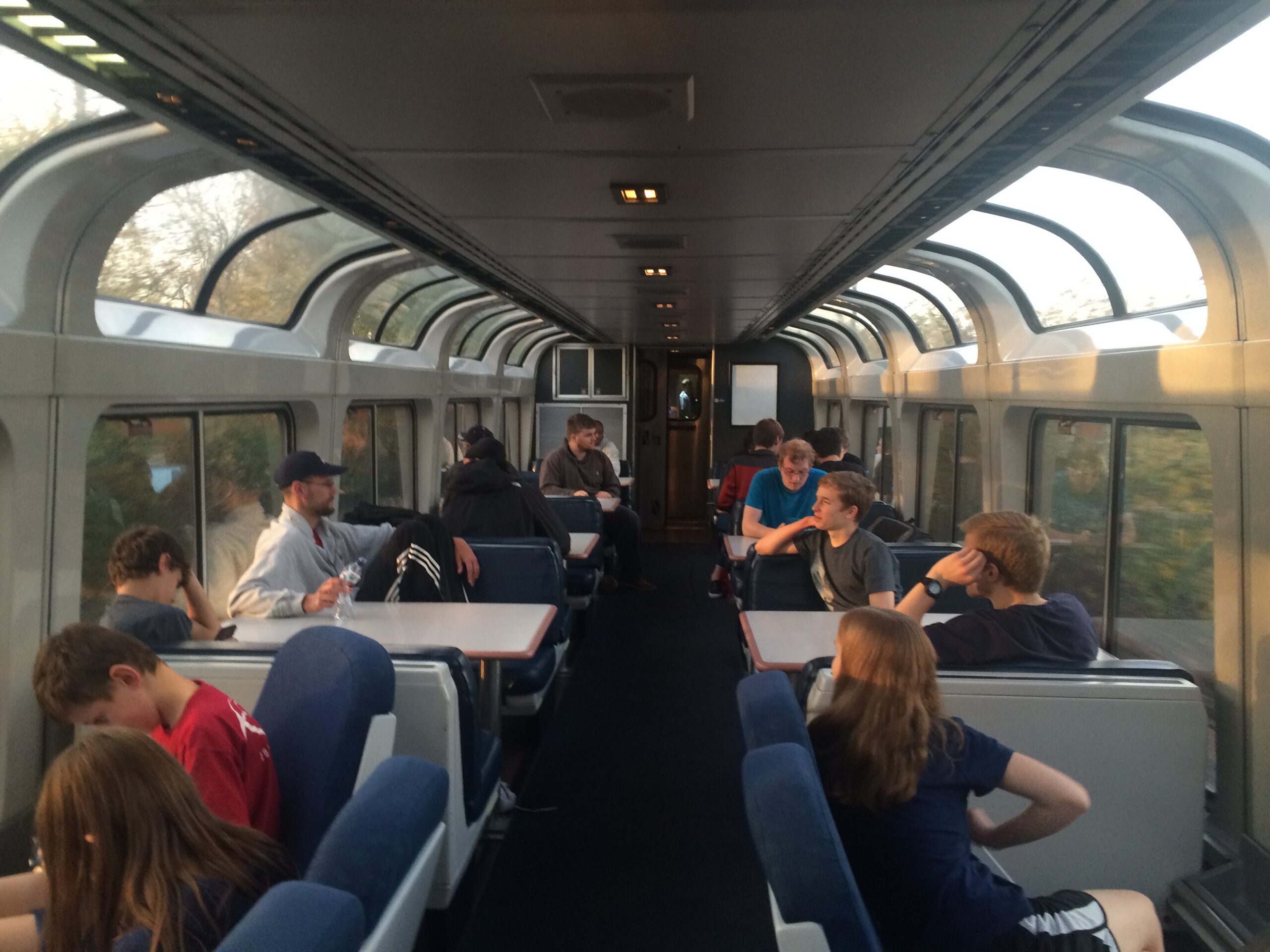
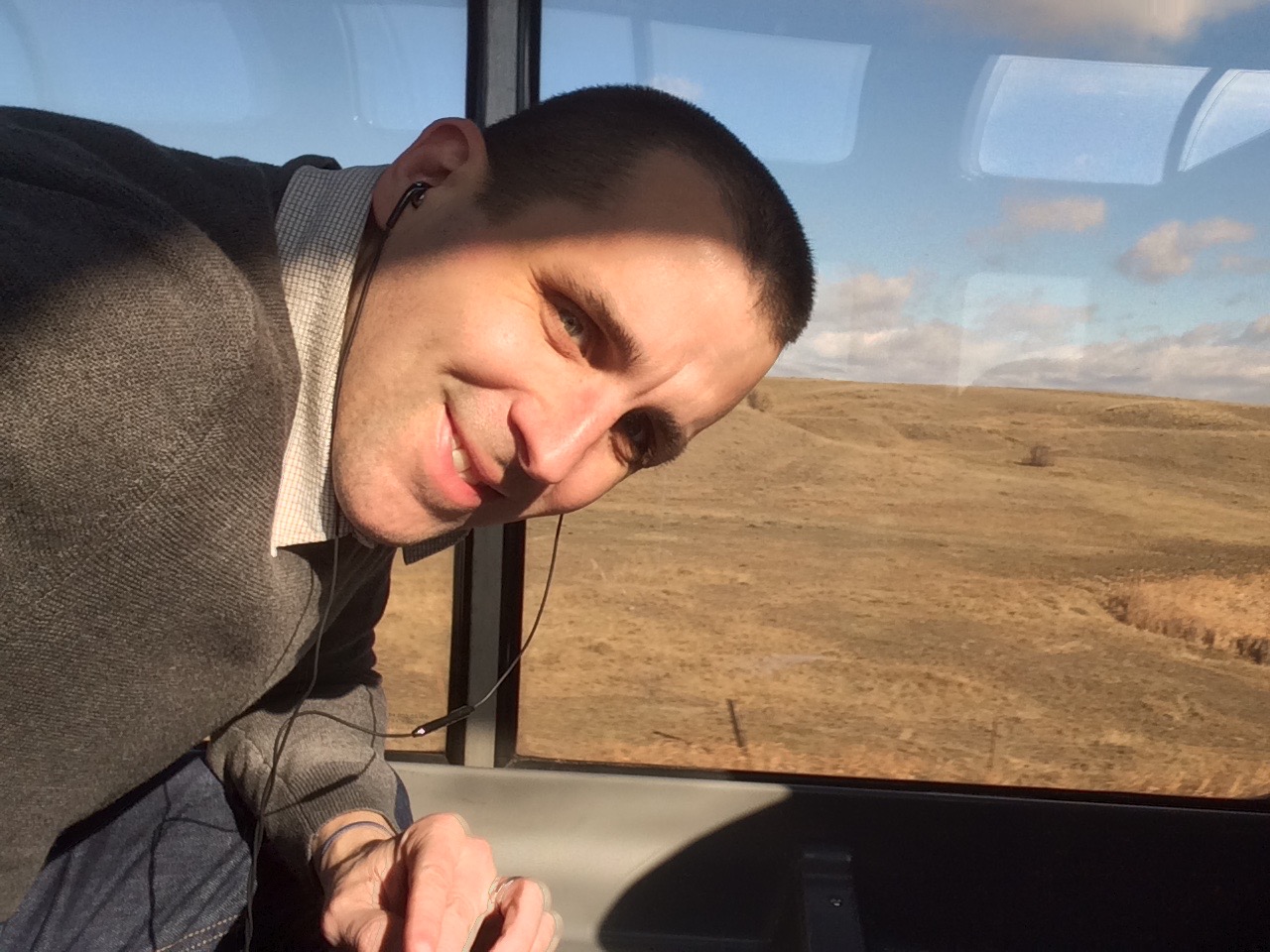
Last month I took a long train ride from Atlanta to Seattle over six days for my Amtrak Writer’s Residency. Each of the 24 writers chosen in 2014 from nearly 16,000 applicants, took solo trips of their choosing across the USA. We were granted a private sleeper car and free room and board. I was one of the last to take their trip and it was an honor and a great experience in every way. I wasn’t required to write anything, but based on your votes I chose to work mostly on documenting the trip itself and I hope to publish a short book or long essay about it next year.
Here are some highlights from the experience.
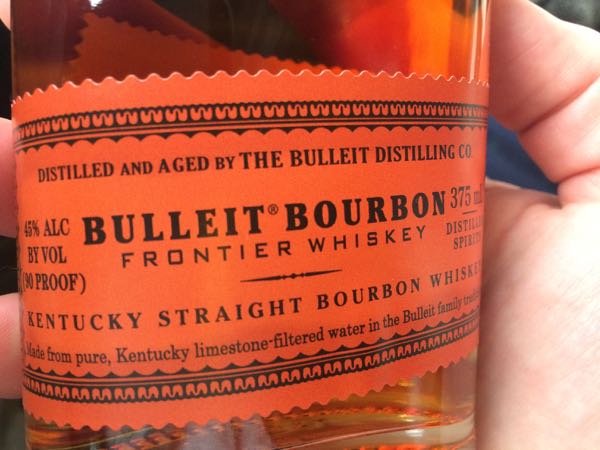
Slow is good for the mind. Traveling by train is surprisingly more civilized than traveling by car or airplane. There’s more room, there’s less security theater and the pace on the rails is more human (I didn’t see anyone suffering from the Cult of Busy). The landscape goes by at a pace that makes sense, not too fast but not too slow. You can bring your own food and alcohol (and people often share in the observation car). And the folks who choose long train rides aren’t in a rush in the way other travelers are, they’re friendlier and more relaxed. I found it easy to get comfortable no matter where I was on the train, and I spent most waking hours in the observation car, watching, thinking, talking and writing. It felt almost like being at a nice public lounge, on wheels, floating through one beautiful landscape after another.
Progress often comes with regress. We believe every new technology improves on the old in every way, but that’s not true. There are often good things we leave behind when we upgrade (e.g. you can’t slam a cell phone to hang it up). My long train ride was a reminder of what we’ve lost as travelers. The existence of a dining car and observation car, where I as a passenger could look out of floor to ceiling windows and enjoy an actual cooked to order meal was a pleasure – one that’s impossible to experience when in cars or airplanes. Trains have a charm few American’s experience unless they travel abroad to places where in the 1950s complete faith wasn’t placed in the belief that gasoline powered cars for every single person was the answer for everything.
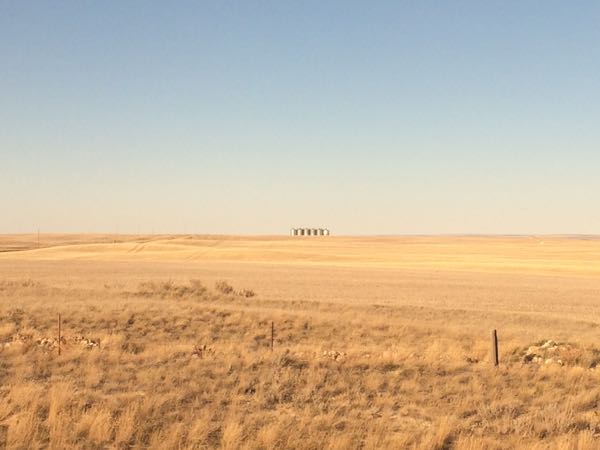
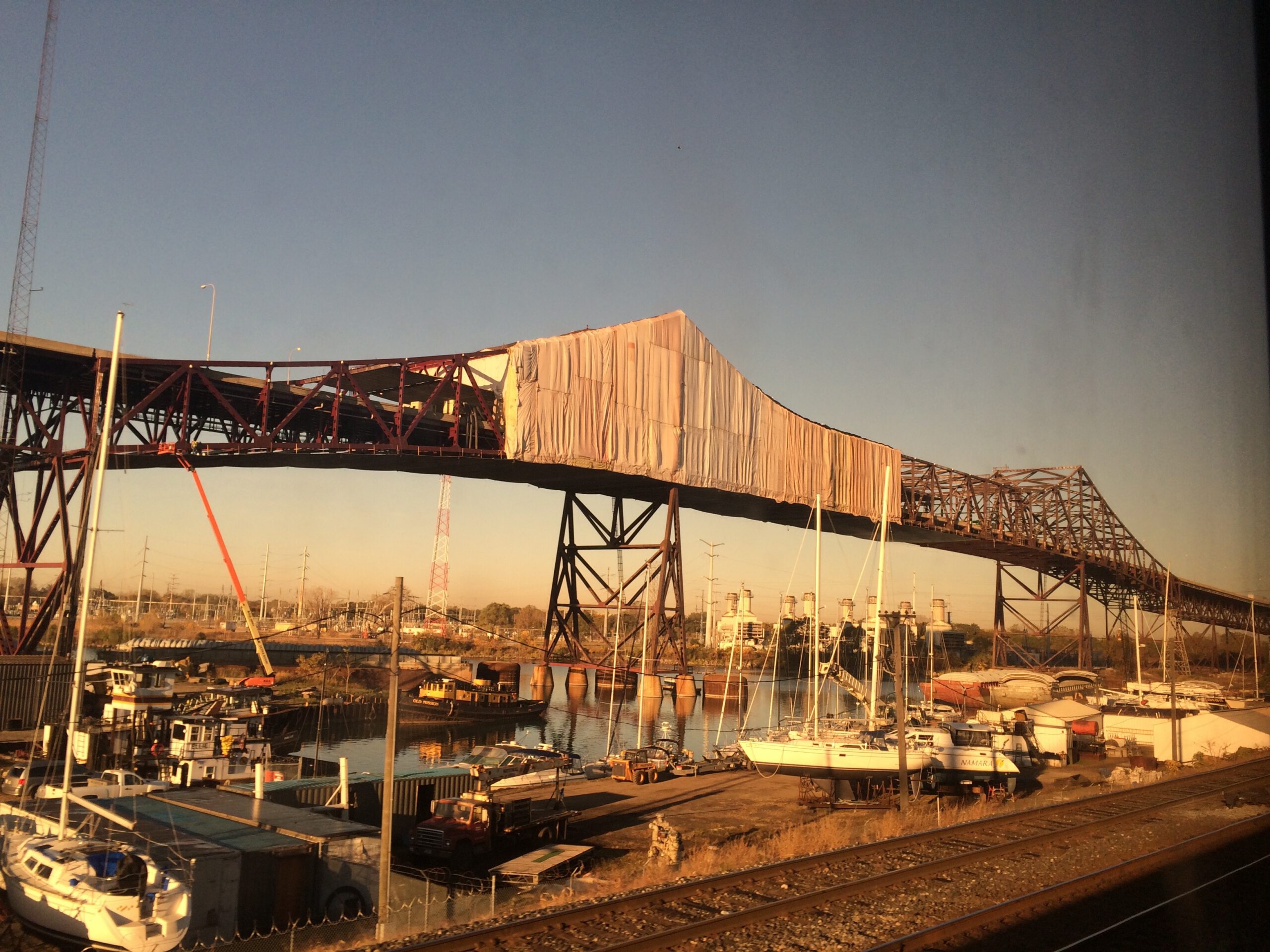
America is beautiful to see. With huge windows in every car, I felt drawn in (or more precisely, drawn out) to the landscape. The train routes follow the hills and waterways, curving in and out as the landscape demands. I had countless moments where I lost myself in thought as my eyes took in the beautiful countryside. I saw long rolling hills, high mountains, endless forests and powerful rivers. At times I forgot where I was and when I came back to my senses I’d wonder what (physical) state I was in, and what town I was passing by. Children in small towns often come to the station just to wave as the train comes in and heads out. Even in cities where train lines run through the rough backside of graffiti laden urban infrastructure, it gave me a better sense of how cities actually work. The USA is a wonderfully diverse and beautiful landscape, perhaps best seen as far away from our highways as possible.
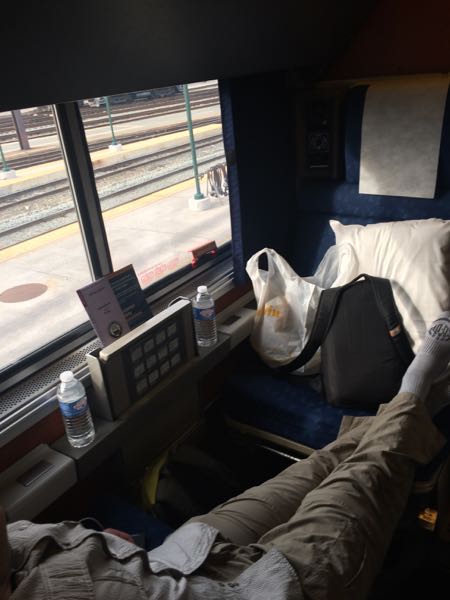
Constraints drive creativity. The small sleeper room I had contained many clever design choices to make good use of such a small space. It felt like being in a space ship or on a small boat, with little compartments and clever thinking at every turn. On one train my little sleeper had its own sink and bathroom (which stunned me as I only discovered this when asking the porter where the bathroom was on the train, and he pointed just to the right of where I was sitting in my sleeper room). The bunkbed where I slept from Atlanta to D.C. even had it’s own full width window, allowing me to watch my country speed past as the train gently rocked me to sleep.
Art is Magical. Even when I’m not writing for anyone else there’s something pleasing to my own mind to see thoughts that were once just in my head transformed into the permanence of written language. I haven’t published much this year, but the residency was a chance to work at my own pace, or not work at all, and I found it pleasurable in every way. If there’s hope for a better future for all of us it will come from the arts at least as much as it comes from our sciences. It’s our emotions that drive much of our best and worst qualities and only art gives us new ways to discover who we really are and who we most want to become.
I’m proud that Amtrak has invested in supporting writers and creators and I’m grateful to have been a part of it – I hope they do it again next year (which has already been announced and you can apply here).
Thanks to Julia Quinn at Amtrak for making my trip possible, all of you fans for cheering me on, and the generous folks in the Amtrak Facebook group who gave me countless tips for long haul train travel. You can read more about other residents experiences on twitter or at the Amtrak Blog (many bios have links).
I’m honored to be one of the winners of the Amtrak Writer’s Residency. All 24 winners were announced last year, but I finally managed to work it into my schedule this fall. Here’s the route I’ll be taking over 6 days, later this month:
Day 0: Flight to Atlanta (not on a train, but I’m counting this as the start of my residency)
Day 1: Atlanta to Washington DC
Day 2: DC to Chicago
Day 3-5: Chicago to Seattle
Decisions I have to make (input welcome – leave a comment):
What do I work on (vote below)? I can work on anything I like, and if you’re been following me for years you may know I have three unfinished book projects: A) Finish the philosophical techno thriller novel I’ve worked on (and off) for 20 years B) the book about the London Underground (untouched in years) C) Return to my book about religion (stalled in April 2015 due to burnout) D) Start something new E) Write about the residency trip itself.
What should I pack? I’ve never been in a sleeper car on a train before, or done a long haul train trip. I’m excellent at traveling light, but wonder if there’s anything special I should bring.
How do I get exercise? I’m a fitness junkie and I’m worried I’ll go insane stuck in a box for so many hours in a row (I imagine myself driving passengers crazy by running up and down the aisles all day). I’m even thinking of using the two layovers I have in DC (4 hours) and Chicago (5 hours) to taxi to a gym, get a workout in, and then get back on the train.
Should I tweet and blog, or go dark? It can be annoying to follow someone on a trip like this as many people don’t want to hear micro updates. But the journey itself will be fun to document in real time and if I knew there was an audience for it I’d give it a try.
Dinner before I go? Anyone want to join me for a kickoff dinner in Atlanta on 10/23 or 10/24?
[polldaddy poll=9125518]
Recently on The Gist podcast novelist and storytelling coach Matthew Dicks offered his four useful lies of telling true stories. He believes that these careful manipulations of the truth work in the service of the audience. Dicks offered that “All the lies I tell on stage are never told for my benefit, or for the story’s benefit, but for the clarity of the audience”. But as I’ll explain this is a tricky line to hold for any storyteller.
First, here are as his four lies:
Lie of Omission. On the show Dicks tells a true story about running out of gas for his car and having to walk door to door pretending to be collecting for a children’s charity. What he doesn’t include is that the entire time he had a hitchhiker with him. To include this detail would, in Dicks’ opinion, complicate the story and take away its power (and in turn, I have omitted many details of his example story about the lie of omission).
Lie of Assumption. When you can’t remember a detail of the story, but you invent specifics to ground the story and help the audience share a vision for what is happening. As an example one of his stories involves a car, and even though he couldn’t recall what model it was, he took a reasonable guess (“brown Station wagon”) and used it in the story. He says “A lie of assumption is okay as long as it is a reasonable assumption… you assume details when you feel they are important but you have to make reasonable assumptions.”
Lie of Compression. When you want to shift time or space together for the sake of the audience. Whenever you skip an hour or a day of a story, you’re compressing it for the benefit of the audience. You can also have a lie of expansion, where you slow a moment down and spend far more time talking about it than it took to experience in real time.
Lie of Progression. When you switch the order of things for the benefit of the audience. The classic three act structure or any narrative arc is using progression to create suspense or keep the audience interested. Sometimes the most powerful segment of a true story happened at the half way mark, not at the end, when it was experienced in real life. For a more powerful story, the payoff needs to be placed carefully at or near the end.
There are many other manipulations that good storytellers use and I’ve used many of them in my books, even if I never called these techniques by these names. Dicks’ list is good but I don’t like referring to them as lies. A lie is defined as “a false statement made with deliberate intent to deceive” which isn’t generally the goal of storytelling. Instead a good story conveys something that feels real to the audience and careful manipulations like those in this list help a storyteller achieve a kind of truth, even if it’s only a metaphoric truth. To tell or write a story involves having a point of view and editing events, which means there is no purely true story. But the goal of a writer is to try and get at some kind of truth. I’d rather call the techniques of storytelling manipulations, or tactics, rather than lies.
The ethical danger is in Dicks assertion that “the audience does not want a story that declines”, which suggests that a good storyteller gives the audience what they want. This is the moral trap of storytelling. What about the important experiences in life that are messy, complex, ugly, and confusing? These experiences don’t conveniently fit the narrative bias that wires our brains. Messy and confusing stories that stay with us despite their lack of resolution, or clear heroes and villains, might be more important to us than the satisfying ones. We’re not well equipped to deal with ambivalence, ambiguity and existentialism despite how deeply effected we are by events in our lives that causes these feelings. Shouldn’t this be what our best storytellers help us explore?
“All the lies I tell on stage are never told for my benefit, or for the story’s benefit, but for the clarity of the audience”
There is a pocket lie here – all storytellers benefit from popularity. Telling satisfying stories makes any storyteller more popular, even if their stories stray from literal or metaphoric truths. To be exclusively in the service of an audience is a slippery slope (and to be clear I’m not familiar enough with Dicks’ work to accuse him of this). To want to entertain is a reasonable goal, but as important moments in life are not necessarily entertaining, it excludes many important kinds of stories central to the human experience. Storytelling is powerful which means people who are good at it have some responsibility for how they use that power.
Many talented storytellers slide towards the same selfish manipulations of advertising, marketing, and political propaganda. Simple lies travel faster and wider than complex truths. And someone who is a good storyteller can easily use the four lies, or any narrative system, to their own advantage. We all know that rationally there are no get rick quick schemes, or 7 day weight loss miracles, but our brains are wired to love these kinds of stories independent of their truth (see clickbait). Next time you hear a great story, ask yourself if it’s more than just the narrative machine in your brain that’s satisfied.
On Truth, Mike Daisy and This American Life (Mike Pesca pointed out in his podcast that the expectations of truth differ depending on the medium the story is in. A hollywood film provides one set of expectations, an Atlantic cover story another and a format like The Moth (“True stories told live”) or This American Life a third. But I doubt audiences pay as much attention to these nuances as storytellers and journalists hope they do).
[Every Tuesday I write about the top voted question on Ask Berkun. This week it’s a roundup of unanswered questions about writing]
Question #1. I have been writing a book for 12 years, it is a fantastic story of fiction that grabs you from the beginning and is relatable to almost everyone. I have the beginning the middle and the climax, i have characters, names, sub plots and actually very good characters that you care about and cant wait to turn the next page. My problem dialogue. I have the words but the grammar and punctuation is a problem. Is there a ghost writer who could polish the dialogue and punctuation for me? The total word count is about 66,000 to 70,000. 20 people have read the basic concept of the book and all are crazy about the story and the ideas in the book. I think I have a pot of gold waiting to be published I just need a little push in the right direction. I am not a professional writer but this idea is classic grab you and not let go excitment that could be the next blockbuster movie, I am not kidding it is that good and original. Please help me with any input that you may have. Thank you for your time.
I must make an uncomfortable point. Your question is mostly not a question, but sentences about how awesome your book is. Why do you think I would care? Every writer thinks their idea is amazing and even if yours actually is it’s irrelevant to the advice you seek. Your excitement here is useful to you, but not to me.
Put another way: You will only get one chance to pitch agents, editors or readerson your book. The place to start is not what you think of it as you are the most biased person in the universe to judge its merit. Whatever you say do it thoughtfully. Be concise. If you can’t be concise, at least be excellent (and have no typos or spelling errors to distract me from your excellence). But the misguided way you wrote this does not bode well for your 66,000 to 70,000 word manuscript (and how do you not know precisely how long it is?)
A few web searches will find answers to most of your questions. It’s smart when asking for free advice from an expert, to explain what other avenues you’ve tried. If you haven’t tried any don’t be surprised if they think you’re lazy. And no agent, editor or reader wants to read lazy writing.
A good copyeditor will review your manuscript for grammar and punctuation. Some copyeditors will revise your dialog for you, but you’ll pay more for that level of attention. You can find copyeditors looking for work on odesk or freelancer.com or through Writer’s Digest. Ghostwriters can be found in similar fashion, but what you seem to want is a ghostrewriter which might be harder to find. On the DIY front there are plenty of books that attempt to teach dialog to writers: start with Dialog: Technique and Exercises and The Emotional Thesaurus (though this one is not strictly about dialog, but about when dialog isn’t the best way to express a character’s emotions).
2. Should I use real names when writing a book about the physical, emotional, and sexual abuse I went through by my parents?
Don’t let this question slow you down. You can postpone this decision until after you’ve written a first draft. It’s an easy adjustment to make and you’re likely to have better judgement about it once you can sit down and read the whole thing. Real names means there is a higher standard of truth to satisfy as readers, and the people you mention, will read your book differently if you call it a memoir vs. fiction. See: Should Your Book Be a Memoir or Fiction?
3. How do i go about writing with a sencond language? I have this book idea I’ve started on and the main characters talk English, but some of the other characters dont. Is there a way to do this without creating a whole new language?
Snarkgarlal mergle bergle fimbar sniP? Icky Snickersta Reb nagga na. That’s a language I just invented to answer your question. Did you like it? I doubt it since I made it up and you can’t possibly know what it means. Why wouldn’t you use an existing language like Spanish or French that some of your readers might actually know? There are some books that invent new languages: A Clockwork Orange for example. You should study books like this and see if the effect it has for the reader is worth all the trouble. I’d think probably not. Unless part of your narrative is a puzzle and readers can figure out the meanings of words, or puzzles, as the book progresses this seems like an unnecessarily hard experience for you as the writer and your potential readers.
4a. What is your opinion of writing a book on my personal life and “rare” medical struggles? My childhood was rough, to put it lightly, I was diagnosed with a rare form of bone cancer in my early 20’s (which cost me my military career in the Army) but kept moving forward and created a mildly successful career for myself and now, in my mid 30’s, am permanently disabled with ongoing surgeries and uncertain future. BUT, I am not a quitter and refuse to lose “the fight”. What do you think?
4b. How do you write a book about hard times in your life? Writing down all the bad hurtful stuff I went through during my abusive divorce I want to write a book about it, is this the right way to start?
I’m sad that you have had hard struggles in your life and I commend you for being introspective enough to want to write about tough times. But I have no opinion of you writing a book. I don’t know anything about how well you write or how much effort you are willing to put in. The idea itself for a book doesn’t matter much nor does the interesting life of the potential writer. Interesting ideas for books are easy (even though your life may have been difficult) and interesting people are not hard to find. What matters is how much effort and talent they, or you, can put into finishing a 200 or 300 page book. Are you willing to do the hard work?
I think anyone who believes deeply about an idea for a book should write it. It’s good for the writer and possibly good for the world. But for nearly all authors the external rewards of writing a book will feel like a sacrifice. Most books don’t sell well and few authors become famous enough to make a living from it, or to compensate them above minimum wage for their time. This means external motivations alone are the wrong source. Only you can decide you care enough about the book to do all the hard work to write it. See: Is Your Book Idea Good? (Yes, I Promise).
There are many different ways to start writing and it doesn’t matter much which one you pick as long as you pick one. The goal is always to get to the next draft, as in each draft the work gets progressively easier. All ways of starting invariably feel like work because, surprise!, writing a book is a kind of work. See: How To Start Writing A Book.
5. How Do You Blog About A Book In Progress? I’m a somewhat experienced writer, but one without an established online “author platform.” (Dare I admit I don’t even have a basic portfolio website?) I now realize how crucial it is I start building my platform, and have read about the value of blogging about a book while writing it. My questions include: Do you blog under your name (even if it’s widely unknown), a working title for the book, or, absent that, a title that hints at the book’s content? Is it OK for your book blog to also market yourself as a freelance writer for topics that might be unrelated? Is there value in explaining the blog’s context — for example, “I am a writing a book on topic X and here I share what I find along the way?” Finally, what types of content should and should not be shared?
Why wouldn’t you blog under your own name? It’s not like a made up name will be any more well known than yours (unless the “made up” name you pick is Stephen King or John Updike). Stick with the name your parents gave you. Name the website something short, simple and that can be relevant no matter what topic your book ends up being about. Your comedic space opera might end up being a gluten free cookbook, and if that happens you won’t want to have to change the name of the website.
There is no singular way to blog about a book in progress and I wouldn’t wait to find a perfect method. Aim for a mix of short posts about articles or other people’s work related to your project, and sample drafts or ideas from your book. You will have to experiment and learn as you go. My advice is to grab a blog, commit to publishing something short once a week and see what happens. Go find other author sites and see how they blog about a book in progress (you can usually go into their archives to read their earliest posts, which you can compare to your early posts) Have a simple About page on your site that briefly explains who you are, what you’re doing and why. For advice on the challenges of working blog posts into an edited book, see How To Turn Your Blog Into A Book.
Since most authors, even some famous ones, make most of their living from means other than book royalties of course it’s ok to market yourself as a freelance writer. Some popular blogs like Brainpickings even ask for monthly donations to support the blog itself.
You’ll have to experiment to discover what kinds of content your readers want, since you don’t have any blog readers yet. If you’re writing a book about space aliens it makes sense that posts about NASA or science fiction films make sense, but ones about recipes for bran muffins do not.
6. Can I use first and third person in the same novel?
Recently I did a live Q&A about How To Write A Memoir. It was a reward for the book’s backers. This post is a summary of the advice I shared. Thanks to everyone who tuned in and asked questions (and helped me keep the lights on).
1. The two truths of writing anything
There are only two things you need to write any kind of book.
Good habits. Books take time to write which means your success depends on regular habits. It’s a marathon. I know the way my psychology works I either need to write every day or I won’t write at all. It’s a muscle I have to use regularly to have it perform the way I want it to. How does your psychology work? You need to know. My advice is simple: have a set time every day, before you go to work, after dinner, before you go to bed, that is permanently reserved and protected by hungry Rottweilers, for writing. It needs to be something you do daily without debating each time.
Commitment. Your writing time will come from somewhere. You’ll need to give up one TV-show a night, spend less time with friends and family, or get up earlier each day. No writer in history has written anything without sacrificing time they could have spent on something else. And when you show up for each writing session turn everything else off that distracts you. You might only put a sentence or two down a day, but if you keep showing up that’s all you need to eventually finish a book. If I don’t feel like writing I’ll show up to my session anyway and commit myself to sitting and thinking about the project, or staring at the blank page. That’s commitment. Usually I’ll get so frustrated in a few minutes with how idiotic I feel having nothing to say that I’ll eventually start writing about that. And then, soon, I discover I do have something to say about the book I’m working on, and before I know it I’m writing. But I have to show up and put the time in. There is no other way.
When people fail with a writing project there are only two causes: bad habits or lack of commitment. If you are committed you will continue to experiment with your habits until you find one that works for you. And if you only manage a paragraph a day, as long as you are patient you will, eventually, have a finished draft. But there is no trick to avoid the work: every writer in history had to put in the hours and you will too.
2. What books or resources do you recommend for writing a memoir?
Read what you want to write. How many memoirs have you read? Go read some. You can’t write well in any genre unless you are well read in it. You’ll discover how many different ways there are to approach point of view, style, tone, pace, chronology and more. Here’s a list of memoirs I recommend.
Thinking About Memoir, by Abigail Thomas. A simple, short book that explores the basic concepts of what a memoir is and how they work. It includes writing exercises and encouragement. There are many basic books like this one, but I liked it’s concision and straightforward style.
The Art of Time in Memoir, Sven Birkerts. If you write a first draft and read it, you’ll discover the core challenge of memoir is how you, as the narrator, move through time. It’s the spine that makes a memoir work or not. Of all the books I read about memoir writing, it was this book that helped the most with the central challenge of time. The book referred to many memoirs I’d never read before, which I needed to read (at least partially) to fully understand his points, but that was time (ha ha) well spent. The only way to understand the different ways to handle time was to read another writer and experience the choices they’d made.
How To Write A Memoir. This short Reader’s Digest post by Joe Kita is surprisingly good and honest.
3. A memoir is not an autobiography.
A memoir is a true story about an aspect of your life. An autobiography is a comprehensive telling of you life story. This gets confusing because we often hear politicians or celebrities talk about writing “their memoirs“, as in plural, which really means autobiography. Autobiographies are much harder to do well, often span 600 pages and are far less interesting to most people.
A memoir has more creative freedom in the themes, narrative styles and storytelling techniques you can use. There are memoirs about childhood, travel, family, competitive sports, starting a company, almost anything. Rebecca Solnit bends the very idea of memoir by combining elements of history, personal stories and journalism together. The unifying factor is the the book is a true story told in the first person about events that primarily happened to the narrator on a singular theme (at least in the writer’s mind).
4. You have a secret reason for writing (a memoir). Figure out what it is.
My friend, and trained therapist, Vanessa Longracre was my expert guest during the Q&A. She pointed out that many people think they know why they want to write a memoir, but possess a secret, and more honest, reason. That honest reason might be:
This will solve my problems
My estranged father/mother will do X for the first time
Everyone will know the TRUTH about my brother and will shun/love/hate him
I’ll finally get the apology I deserve
Having written a book is unlikely to achieve any of these things. Certainly not by itself. A book can be cathartic and the process of writing it can help you think and feel more carefully helping you to understand yourself better. But the fundamental dynamics of a family relationship have very deep causes that are unlikely to be influenced by the existence of a book alone. Do some research and see if other memoir writers got their secret reason satisfied (See this story about a new memoir about a the troubled McCandless family)
People telling you “you have a great story you should write a book” is an insufficient reason. Unless they are gifting you 500 hours of time to do the work, it’s not help. You have to decide your own reasons, the primary one being that you believe it’s a good use of your time to write a book about yourself. I get emails often asking me “Is my book idea good?” and I tell them the same thing: only you can answer that question. My opinion is irrelevant since you will have to do the work.
It’s okay if you don’t know. And it’s ok if your answer changes as you’re writing. But realize you probably have a fantasy about your motivations. You’ll write a better memoir if you dig deep to sort out what it is you are truly after.
When this crisis happened in my family I talked to my mother and brother often. These were long, intimate conversations about our family and how we felt about what was happening. It’s a crazy story and we’d laugh at times about how absurd it was. I said to both of them “this should be a book” and they agreed. I don’t know at the time they knew how serious I was, but I’m a writer. This is what I do. A powerful, complicated true story landed on me and I committed myself to telling it.
I wrote it for many reasons. First, I was obsessing about my father and my family and I needed a constructive place to put that energy. Second, I’m a writer who wants to take risks and this was going to be a different kind of book. Third, all families have problems. What we don’t have are the skills and courage to talk about them. I felt if I told my story well it could help readers figure themselves out. This is what good art is supposed to do: help us understand the human condition.
6. There is power in writing without publishing.
I’ve kept a private journal since I was 19 years old. It started as a class assignment, and most of my early entries are embarrassingly shallow attempts to impress the professor. But after the class I kept writing in it. I found that trying to explain whatever I was thinking or feeling in words had a power, even if no one read it. It forced me to think and feel carefully, and when I wrote something down, even if it was expression of confusion or uncertainty, I always felt like a burden had been lifted. Seeing the words on the page made me feel more comfortable with myself. And then I discovered that going back to entries in the past and comparing my feelings in the present was transformative. Written words persist far better than our memories do, and writing your thoughts down is a gift to your future self.
You don’t need to publish writing for it to have meaning. You can also choose to share what you write with only with a friend, or family. You can decided after you’ve written a draft whether you want to publish it or not, or who you’ll publish it for.
7. How do you deal with the situations you don’t remember precisely? (e.g. names of places, people, what happened exactly, what people said, etc. )
Writing is never neutral, completely fair or perfectly accurate. There are long debates among writers about what poetic license is, and how far a (non-fiction) writer can go in shaping or crafting true events: it’s a complex subject I’ve written about here.
Human memory is highly unreliable and anyone writing a memoir must admit this. Keeping a journal helps as at least you have a written record of what you thought on the day certain things happened. Interviewing other people who were there when events happened can be critical as two or more sources dramatically improves the quality of the facts.
Most important is to disclose to readers what sources you had. Few memoirs do this and it’s a mistake. In most memoirs quoted passages (e.g.’and then Todd said “this is the worst Atari game I’ve ever played!”‘) are inventions based on one person’s recollection of a conversation. How accurate can this possibly be? Unless the author had a tape recorder playing 20 years ago how could they possibly remember the exact quote someone said? They can’t. But written storytelling works better when this kind of precision is provided, so many writers claim poetic license to fill in these gaps.
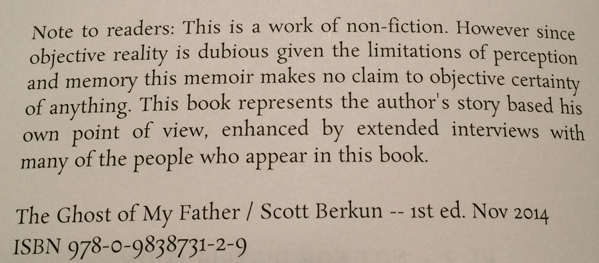
I think whatever you do is ok provided you explain to the reader somewhere what you did or didn’t do. Here’s what I included on the first page of The Ghost of My Father:
8. Were there periods of doubt while writing this book that were more severe or different than what you have experienced before? Were your habits always strong enough to alleviate these doubts? If not, what parts of your life helped you rebound?
Yes. All ambitious projects come with periods of doubt. If I work on something and never have doubts it means I wasn’t ambitious enough. This is my most personal book and everyone in my family who is in the book is still alive. But I’m a writer. This is what I do.
The habit that matters the most is having faith in the next draft. In each draft I had a chance to reconsider what stories I told and how I told them. I had 5 people read early drafts of the book, people who I know are honest with me about their feedback.
9. Did you have any fears or concerns about how being this vulnerable, personal and open would impact your perception and opportunities with your harder core business audience?
I’ve had some practice with sharing private thoughts publicly. I wrote a popular book in 2009 called Confessions of a Public Speaker, so I’ve confessed on some things already. My previous book, The Year Without Pants, is a first person story of my experiences leading a team. Of course The Ghost of My Father was far more personal, but the experience with being honest with readers is something I’ve been developing over time.
I want to take risks with talents. To do that means doing things I’m afraid of. I want to bet on fans. If I publish a book they’re not interested in I hope they’ll just wait for the next one.
10. What does a personal memoir need in order to be popular (have high sales) if it’s not about someone who is already in the public eye? Does it need a character arc? Or a realization of a profound truth? What makes it interesting to the reader?
Selling books is harder than writing them. There is no formula. In broad strokes memoirs are harder to sell than novels or non-fiction books. Being famous helps of course as people are interested primarily in the person, not the book. A big part of any book selling well has little to do with the writing of the book. You have to identify the audience, find ways early on to reach out to them, write a great book, and then work hard to let them know you’ve provided something they want. But the more you write a book to sell it, the less soul the book will have. Making true art demands goals with more depth than sales numbers.
11. Being such a creative mind and tackling so many topics in your blog, how do you decide on a topic & outline for a book? How do you handle “book being already written”, “same old topic”, etc? Really, how do you write great books on topics already addressed?
Every topic has already been addressed many times. So what? If you read the Greek tragedies you’ll discover Shakespeare stole their plot lines. And then if you watch the Lion King you see it’s Hamlet for kids. No one really cares how original it is in the abstract, they care about how good it is in the specific. See It’s Ok To Be Obvious for my take on this philosophy. If you have an opinion go read what someone else said about it. I bet you’ll find you disagree with them or have a better way to express a similar idea. Don’t hide from it, build on it.
11. Did you consider writing it as fiction even if it’s mostly true to avoid the issue of criticism of your decisions?
Telling my story as fiction felt like cheating. Many writers have done this and I’ve often wondered why. Even Charles Bukowski wrote Ham on Rye as a novel, despite it being the story of his childhood. In this case I asked myself: am I telling a true story or not? If I am, why call it a novel and introduce doubts? If I’m a good storyteller why do I need to invent things to make it work? Anyone in my family who read the book as a novel would easily identify who they were. So why the ruse?
My complaint about so many films and TV shows about family is how phony they are. And since these are the primary ways we learn about families other than our own they perpetuate the same fantasy mythology about what real families are like. Where does most of your knowledge about relationships come from? Much of it is from fiction and I think that’s part of the problem. Of course fiction can illustrate some things better than non-fiction, but in some cases the opposite is true.
I know many authors wait until their parents are dead to write about them. This feels like cheating too. Superficially it seems like respect to wait until after someone is dead to write about them. But think about that: it takes away their rights to respond. It’s actually a betrayal. It’s a permanent way to go behind their back. There is nothing in this book I haven’t said, or wouldn’t say, to everyone in my family. Does that make me brave or stupid? Probably some of both. To put it another way: how I can consider someone close to me if there are deep things central to who I am that I can’t share with them? Or share, as an illustrative example, as a writer, with strangers? We talk about transparency and honesty but do we practice it in families? in tribes? Cultures?
You can decide if you want to fictionalize your story later (and here’s advice on how to decide). Don’t get hung up on this. You’ll write many drafts and it’s a decision you can start worrying about once the first draft is done.
12. Did you come to have a different understanding of forgiveness? As a human ability or valuable choice?
I want to say yes, but it’s hard to be sure. The cliche of forgive but not forget is true to me. I don’t hate my father. He is a lost person and I feel sad for him, as he’s his own worst enemy. And I do understand, now, that his failings as a parent have more to do with him than with me. But forgiveness is not a panacea. Dysfunctional families are not fixed through forgiveness alone. Here’s a more important question: if you are in a relationship that is inherently destructive for you, what obligations do you have to stay in it? And how deeply? That’s not about forgiveness so much as it is about figuring out how to be a healthy person. How do you create healthy boundaries on territory you know is dangerous to you? That’s the hard question. There’s no platitude for solving that one. It’s the struggle most people have in their families: how can I be myself in here? I love these people and they love me, but then why does it hurt so much to get close? It takes hard work to learn healthy expressions of love.
———————————————————————-
You can buy The Ghost of My Father on Amazon. Kirkus Reviews called it “A sobering, lucid memoir about the uncanny, precarious nature of family, masculinity and childhood.” Profits from the first edition of the book are donated to Big Brothers Big Sisters.
If you have other questions about writing, or writing a memoir, leave a comment.
The recent Buzzfeed post by Curtis Sittenfeld called 24 Things No One Tells You about Publishing was fun to read. I’ve written 6 popular books with two publishers and I agreed with much of what she said. But in hearing every question and myth about my trade over the years, here’s my own list of what I wish more people knew.
Everyone obsesses about titles and covers but it’s hard to prove their impact beyond above a basic level of quality. It’s easy to find popular books with lousy titles and covers, and unpopular books with great titles and covers. There are too many variables for magic answers. Publishers exert more control over titles and covers than you’d expect: often authors have little say.
Some books, like The Great Gatsby or Moby Dick, don’t become popular until decades after publication. It’s a strange world. Books have lives of their own, typically quiet ones. We judge success by sales, but many factors that have nothing to do with the book itself impact sales. Bestseller lists are not a meritocracy. Sometimes a book is on the bestseller list for a week and never heard of again. Other times a book has steady sales for years but never makes any lists or wins any awards.
Your reasons for writing must transcend fame and wealth as neither are likely from writing alone. Most books you read are written by writers who pay their rent through other means. If you want fame and wealth from writing be committed to the long term. This takes the pressure off each book, and you’ll be open to learning instead of foolishly trying to hit a grand slam on your first try.
The publishing industry is slow to realize authors need them less than ever. Unlike 20 years ago, you can do much of what a publisher does yourself, perhaps not as well, but that depends on how entrepreneurial and self aware you are. Learn about self-publishing simply to be informed about your business end to end. Some publishers do great work, but many are stuck in an antiquated notion of their value.
Many authors are lazy. They’re arrogant too. They don’t want to do PR, they don’t want to do their homework and they are in denial of how many other authors there are. They, like some publishers, believe in romantic notions of how publishing works.
Some publishers/editors/agents are amazing. Some are bad and incompetent. YMMV. Don’t judge them all by the one you worked with. My agent, David Fugate, is awesome. Great advice on how to find an agent here, but remember the better the agent the more work you’ll have to do to get in touch with them.
A great editor at a mediocre publisher can be a better situation than a mediocre editor at a great publisher. Editors represent you for dozens of decisions the publisher makes for your book that you can’t participate in.
Many editors don’t “edit”. They’re more like strategists or strategic project managers. There are three roles editors play, often played by different people. Acquisitions editors sign authors. Development editors help you draft your book. Production editors are the ones who spend the most time with your words, and even they depend on copyeditors and proofreaders. Many people will touch your book.
Fame will likely ruin your writing or your life. And that’s assuming you’re lucky enough to get it. Books were the primary media of the 19th and early 20th century, but they are far less popular than they used to be compared to TV, movies and social media. Study the history of famous writers and artists if you doubt me. Fast fame in particular is a curse, or a trap, as everyone wants you to repeat exactly what you did before.
Don’t believe everything depends on finding agents or publishers. They both want you to already have a fan base, which is a paradox. There are many paradoxes to face in trying to break into any field that many people want to be in (e.g. being a movie star). To find an agent requires hard work and this is on purpose. There is a far greater supply of people writing books than demand from publishers.
Always remember you canupload a PDF of your book to Amazon and have it on sale on Kindle in minutes. Don’t get lost falsely depending on others. No one can stop you from writing a book and selling it except yourself. Promoting a book well is another matter (see #1), but publishers struggle with that too.
No one will come to your book reading/signing unless you are already famous. The packed author readings on the news are only packed because the author is already very well known. It’s another paradox related to #1. Read The First 1000 copies by Tim Grahl, or APE by Guy Kawasaki for a good start on how to market books. Book readings at bookstores are among the worst uses of time for a new author.
Publishers only invest in big PR for famous authors. For new authors there’s little reason to believe the investment will pay off. Would you spend 50% of your annual marketing budget on an unknown? Neither would a publisher. Publishers do love authors who invest their own time and money in marketing, and will help with and add to your investment.
Most people think they want to write, but really they just like to think about writing. If you have a 6th grade education you know how to write. The question is are you willing to put in the hours?
You can spot these people because they spend more time complaining about how hard it is to write than doing it. Or they endlessly stroke their idea as if it can someday magically transform itself into 300 pages. Don’t complain. No one is making you torture yourself but you.
Distractions say more about your lack of commitment than anything else. Learn to concentrate. Concentration is a skill anyone can develop and if you are serious about writing you should see this as central to your ambitions. If you were starving to death and writing a book would get you food, you’d write. We are all capable of writing if suitably motivated.
Which means that anyone with sufficient commitment can write a book. It might not be a good book, but most books by published authors aren’t that good either. What makes for a good book is highly subjective anyway.
A publisher is a venture capitalist. They are giving you money before your work is done. Before you complain about the size of the investment they are willing to make (or not make) in your book, are you are willing to make the same financial investment? Few authors are. It’s a business. They owe you nothing beyond what they agree to.
Your friends, family and colleagues are you best assets for finding an audience for your writing. Everyone has friends and family. Ask for their help. Make it easy for them to help you. Reward every new fan as if they were your only fan (because at first they will be).
Learn to take feedback well. By this I mean you want to be a better writer on the next book than this one, yes? That only happens if you listen for ways to improve. Arrogant writers, and they are legion, rarely improve.
Learn to take rejection well. It will be everywhere. If you think rejections from agents and publishers are tough, wait till you get rejected by reviewers and readers (e.g. The Great Gatsby has 235 1 star reviews). Look for a nugget of merit in every mean-spirited critique you hear as the mean people might have more honest insight into your work than the nicer people. Be grateful anyone read your book at all.
Stop looking for secrets and tricks. You’re a sucker if you think there’s a trick as every great writer in history never found one that let them skip the work. Tips only help if you are writing every day and can put tips to use.
You build a following, or in publishing jargon, a platform, by publishing regularly. There is no magic place where people will come to you just for showing up once. It doesn’t matter where you publish, but put something into the world regularly. Be willing to learn as you go and experiment. There are many ways to build an audience but they all require effort.
Publish once a week on a blog. You want to build an audience before your book is finished, not after. Write briefly about topics that relate to your book. Share excerpts and ideas you’re working on. Read other bloggers who write about subjects like yours and get to know them. Invite people you know to be interested to follow along. It will feel weird at first but work to get comfortable with being visible and making connections, as you’ll need those skills when your book is out in the world.
Get feedback on your ideas and drafts early. Find people who are honest with you – they are hard to find. Grand praise of your drafts does not make them better. Separate useful critiquing (“this section didn’t work”, “you should read Rushdie”) from the moral support your friends give over beers (“you can do it”, “keep going”). Get the tough feedback early enough that you can still do something about it.
Only your name is on the book. Your publisher will publish dozens of books every month. You will publish one book every few years, or maybe just once in your life. They will never care as much as you do about your book. You have the right to veto and argue, politely, with anyone who works on your book. Stand up for yourself, but earn that right by taking writing and publishing seriously. Do your homework. If you don’t take shortcuts, no one will try to take shortcuts on you.
Interesting in writing a memoir? or did you read The Ghost of My Father? Or both?
Join me for a live Q&A about my book and how to write a memoir of your own.
When: Wednesday March 4th, 12:00pm PST Where: Anywhere! It’s online. How: RSVP here
I’ll answer any questions you have about the issues raised in The Ghost of My Father (FAQ, free excerpt here), or questions about how it was written and what advice I have for you if you’re interested in writing a memoir yourself. Trained clinical therapist, and friend, Vanessa Longacre will join to provide expert commentary.
If you can’t make it, leave a comment with your question below, and I’ll answer here or during the Q&A (which will be recorded).
What are the creative processes you go through when writing?
I start with the first word of the first sentence and then write the second word. I continue with words until the sentence is done and then I move on to the next sentence. Ok, that’s not useful. Sorry! It’s just hard to take questions like this too seriously as I don’t think there is anything magical in any writer’s process. You have to do the work and as you do the work you figure out which process works best for you. The two words creative and process are oxymoronic in this sense, as anything strictly procedural would by definition not be very creative. Seeing famous writer’s habits is interesting and can give you tactics to try, but you won’t know what works for you without doing the work.
I’ve written often about how I work and my advice for other writers. Here’s a list:
Below is a photo of the desk in my office. I have a Mac Air and a 27″ Cinema display. I like working on a big monitor, but I can work nearly anywhere (I got much better at writing on the road while working on The Year Without Pants). I usually carry a moleskin notebook wherever I go so I can write or sketch, and I also take notes on my iPhone 4s. I read primarily on an iPad mini 2 using the Kindle app. When at my desk I often have music playing or listen to the news while working. I have different playlists and change which one I’m listening to depending on my mood and what kind of concentration I need.
When you wrote your first book what motivated you to start?
The first book I wrote, about the design of the London underground, was never published. You can read all of my blog posts about the project from 2005. My motivation was to deliver on an idea I had. Many people have ideas for movies or books and I was one of them, the only difference was I committed the time to try and bring the idea into the world. My larger motivation was to see if I could make a living doing something other than managing software projects. While this book was never finished the experience of writing it did give me the confidence to write Making Things Happen, which started my career as an author.
Once you started what different things did you have to think about and how did you confront them?
The biggest challenge is sustaining interest, for myself and for the imagined reader.When you start writing you have the excitement of the new on your side, but that fades and you slowly realize just how much work you will need to do to deliver on the idea. It’s important for me to have an outline as that helps divide and conquer the work. It’s easier to stay motivated if you can focus on small units of effort. A book is too large for most people to keep in their mind at one time, but a chapter, or a section is easier. When I’m stuck it often means I need to break down the size of the units of work or revise the outline. I have different things I try when I feel stuck, and perhaps that’s a future blog post.
I always focus on getting to a first draft. It doesn’t matter if I limp my way there or not. When I have a first draft I can read the entire thing and get a sense for how it all fits together (or more precisely, doesn’t fit together. If a first draft fits together perfectly it means I didn’t take enough risks in the draft). I like to think of books as fractals. The same loop of writing a draft for the entire book applies to each chapter, and for each section within each chapter. If progress is slow, I focus on a small unit of measure.
How do I make this interesting? Or do I rip this out?
How can this be smoother?
Why would anyone still be reading?
Does this line up with the promise of the book? With the previous chapter? With the next?
If I rip out or move this section will it make everything else better?
How can I say this in a more interesting and simpler way?
Can I show this rather than tell it? Is there a story I can use?
Mostly I pay attention to things that break the flow and stand out in a negative way. Coleridge described the suspension of disbelief for fiction, and I believe in something similar for non-fiction: the continuation of curiosity. The title of the book itself generates a certain curiosity for the reader and my job as the writer is to carry that through an entire 8 to 12 hour experience. The job of each sentence is to make the reader want to read the next one. If I can repeat this for every sentence in the book I’ve done well.
Did you go through the same thought processes for each book? If not, how did they change?
The Myths of Innovation was the most journalistic of my early books. I spent far more time studying history and interviewing people than any of my other book projects (see the bibliography). I wanted to write a book that was a contribution to knowledge in a formal, collegiate sense, and that demanded more thorough research and study. But the process is the same: collect notes, interview people, develop an outline, write a draft. The unpublished novel I wrote followed the same basic process.
Maybe the challenge of modern life isn’t external distractions, but our lack of practice with concentration?
I learned to concentrate when I was 15, as part of my dream of playing in the NBA. I read a book by Larry Bird to help me. I didn’t make the NBA (no surprise) and don’t remember much about the book (the cover was green, like the Celtic’s uniforms!), except for this advice on concentration:
You can sit or lay down. Once you are in position, close your eyes and relax. Just sit there for a minute and think about anything you want. After about a minute, start thinking about the neighborhood or subdivision in which your home is located. In your mind see your neighbors houses, the roads, the streets, the trees. After you can see your neighborhood clearly, move down the road your house is on and see the houses along the way…
When you begin, you will only be able to concentrate for a few seconds or minutes. If you work at it every day, though, you can build your concentration just as you can build the strength in your arms.
When I hear someone say “I get easily distracted” I always think of Larry Bird’s advice. Maybe they haven’t practiced concentrating enough to earn the ability to control where their attention goes?
I heard recently about Hemmingwrite, a distraction free writing device, as if it’s the devices we currently have that hold people back from writing the novels of their dreams. I don’t think so.
You can also buy software that claims to free you from distractions, but if Bird is right the distractions are in your mind, not in the world. No matter how advanced the software, a mind that’s bored will always find a way to do something else. Writing often and well requires dedication, just like doing anything often and well does. Every device with an off switch is “distraction free” if you choose to flip that switch. Every app has a close button. Take some responsibility. Sure, gadgets and software may help you, but at some point the problem is you, your commitment and your habits. Larry Bird bet on his own mind, the one thing you have upgrade yourself.
Artists don’t get down to work until the pain of working is exceeded by the pain of not working. — Stephen DeStaebler
I don’t always want to write. Writing is hard work. But I know the rewards are worth the effort and I work up the motivation to stick to my commitments to myself and put time to write ahead of other things. It’s only by practicing with your mind, the most important software you will ever have, that you can control what distracts you and what doesn’t. Some of the most important things we want in life can not be bought or sold as a product: control over our own attention is one of them.
How do you create a reliable character in your story? how do you create a deep, reliable personality? So they would seem real? (Submitted by Elchanan Paley)
I am going to do something I haven’t done before and deliberately not answer this question, at least not directly.
This question seems, at first, like a reasonable, if basic, thing a writer should ask. But there are several issues lurking inside this question that made it a great example for how to ask better questions. It’s not a bad question, despite the title of this post, but it certainly could be a better one. And the way you ask better questions is to question the question.
Why does a character need to be reliable?
I know many unreliable people in real life. Part of what makes a person a person is their contradictions and flaws. Even narrators can be unreliable in good books. It’s by carefully capturing the important details of a person in words that makes them seem real or not. And don’t forget depending on the kind of writing you are doing, unreality is an asset. Consider Frankenstein, Darth Vader or even Harry Potter. Unreliability, or superficiality, might be the most important trait a character, or a person has.
Which writers have you read that have written good characters?
One powerful thing about books is there are no wires or strings. There are no special effects. Every book is just a series of words. This means anything one writer achieves can be studied by other writers. Go read how Dickens describes the characters in Great Expectations, or Tolstoy in Anna Karanenna. It’s all there. Of course you can’t see how many drafts it took them to arrive at these finished works, you can see every verb, noun and adjective in every sentence.
You might read these books and decide that the way these writers wrote those characters isn’t all that good, and as a writer you are entitled to your opinion (A great exercise is to take a page you don’t like from a classic book and rewrite it in your own style). But the way you develop your sensibilities isn’t to just read books about how to write, but to read whatever kinds of books you’re trying to write, study them and then write something yourself based on what you learned.
Pick any two novels, read ten pages of each, and then compare the different ways the author was effective, or ineffective, in achieving whatever thing you want to achieve in your own works. To be a serious writer demands developing your own opinions and you can only do that by changing how, why and what you read.
Why do you think there is an objective answer?
I think The Catcher in The Rye is a good book, but many people don’t agree, as it has 400+ one star amazon reviews. There is no one answer for what is a good book, much less for what is a well written character. The writing styles of, for example, Hemingway and Updike, are very different, but neither is necessarily better than the other.
This is part of the challenging of making things: you have to accept we are an opinionated species. Some people will like what you write and some people won’t no matter how good a writer you are. Some people will prefer characters written one way, others another. John Gardner, author of the classic The Art of Fiction, wrote that “Nothing in the world is inherently interesting… to all human beings.” If you want to write you have to accept the subjectivity of writing.
Why do you think I would know the answer?
I’ve written five books, but they’re all non-fiction. I have an unpublished novel, but that, in the grand scheme of writing fiction, isn’t much of an achievement. This means I’m not the best person to ask this particular question. Given how many writers make a living purely by writing about writing, rather than writing books on other subjects, there are many good places to start. Gardner’s The Art of Fiction is the first book I think of for new writers of fiction, but it’s easy to find others.
It was my friend Rich Grudman who first told me to read Bukowski. He gave me Post Office, about Bukowski’s drunken Kakfaesque experiences as as poet working with mail. I found an unusual kind of truth in it. Unlike the majority of writers he wasn’t primarily interested in impressing anyone. There were no grand flourishes or overwrought metaphors. He seemed like a terrible person in many ways but there was something oddly refreshing about how little he tried to hide it.
Much like Henry Miller’s non-fiction, Bukowski believed that, even as a drunk, if he were honest and treated his thoughts like a craftsman would, he’d be a rare voice in the literary world. And he was. He spent, as most writer’s do, a career in obscurity, but late in his life, to his surprise, and many others fame came his way.
I know, from the documentaries, he was a bum, a drunk and a jerk, and I accept that since he seemed to have. I thought the movie Factotum was much better, and funnier, than Barfly. I’m still catching up on his poems, the work Bukowski perhaps did best, but I’ll get there soon. To celebrate his birthday here’s a list of my favorite Bukowski quotes (there’s a searchable archive of his work here):
“If you’re going to try, go all the way. Otherwise, don’t even start. This could mean losing girlfriends, wives, relatives and maybe even your mind. It could mean not eating for three or four days. It could mean freezing on a park bench. It could mean jail. It could mean derision. It could mean mockery–isolation. Isolation is the gift. All the others are a test of your endurance, of how much you really want to do it. And, you’ll do it, despite rejection and the worst odds. And it will be better than anything else you can imagine. If you’re going to try, go all the way. There is no other feeling like that. You will be alone with the gods, and the nights will flame with fire. You will ride life straight to perfect laughter. It’s the only good fight there is.”
“There’s nothing to mourn about death any more than there is to mourn about the growing of a flower. What is terrible is not death but the lives people live or don’t live up until their death. They don’t honor their own lives, they piss on their lives. They shit them away. Dumb fuckers. They concentrate too much on fucking, movies, money, family, fucking. Their minds are full of cotton. They swallow God without thinking, they swallow country without thinking. Soon they forget how to think, they let others think for them. Their brains are stuffed with cotton. They look ugly, they talk ugly, they walk ugly. Play them the great music of the centuries and they can’t hear it. Most people’s deaths are a sham. There’s nothing left to die.”
“Most people who write shouldn’t”
“An intellectual says a simple thing in a hard way. An artist says a hard thing in a simple way.”
“We’re all going to die, all of us, what a circus! That alone should make us love each other but it doesn’t. We are terrorized and flattened by trivialities, we are eaten up by nothing.”
“My ambition is handicapped by laziness”
“The shortest distance between two points is often unbearable.”
“You have to die a few times before you can really live.”
“BELIEVE YOU ARE GOOD WHEN THEY TELL YOU YOU ARE GOOD AND YOU ARE THEREBY DEAD, DEAD dead forever. Art is a day by day game of living and dying and if you live a little more than you die you are going to continue to create some pretty fair stuff, but if die a little more than you live, you know the answer. Creation, the carving of the thing, the good, creation is a sign that the god that runs you there inside still has his eyes open. Creation is not the end-all but it is a pretty big part. End of lecture #3784.” Pg. 33, Screams from the balcony
“Sometimes you just have to pee in the sink.” – Bukowski
“As we live we all get caught and torn by various traps. Writing can trap you. Some writers tend to write what has pleased their readers in the past. They hear accolades and believe them. There is only one final judge of writing and that is the writer. When he is swayed by the critics, the editors, the publishers, the readers, then he’s finished.And, of course, when he’s swayed with his fame and his fortune, you can float him down the river with the turds”
“it’s not the large things that
send a man to the
madhouse. death he’s ready for, or
murder, incest, robbery, fire, flood…
no, it’s the continuing series of small tragedies
that send a man to the
madhouse…
not the death of his love
but a shoelace that snaps
with no time left” (From The Shoelace)
“Some people never go crazy. What truly horrible lives they must lead.”
I’m looking for a sharp copyeditor who practices tough love, extreme sarcasm and enjoys long arguments over wine about the Oxford comma (or arguments about why arguments like this are silly). Previous book copyediting experience required (preferably of a memoir, although a heavy diet of reading memoirs works too).
To apply:
Briefly describe the worst memoir you’ve ever read
Give one reference for a writer you’ve worked with who loves and hates you for the right reasons
Tell me if you’re available and what your rates are
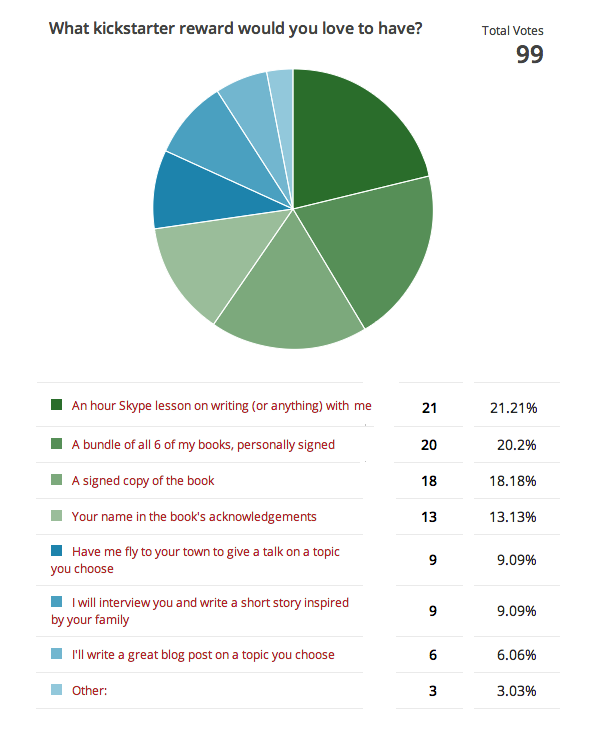
No surprises here. Of course with no associated price tags, an hour personally with the author (me in this case) came in first place. Curiously a signed copy of the book came ahead of items that are far more personal: writing something at the reader’s request.
About ten people emailed me to tell me they really just want the book. They don’t care about rewards and a reward is not going to make them decide to support a project they wouldn’t otherwise. I respect this opinion and often share it myself. However to run a successful kickstarter campaign requires appealing to different people who have different preferences. People who just want the book aren’t hurt by offering rewards to those who are willing to pledge more money, but want something special in return.
I’m sure different authors with different audiences will see different results than I did. But as I couldn’t find anyone who’d published survey data like this I though it useful to share.
The book in progress, The Ghost of My Father, is a memoir and it’s no surprise the process of writing it has been different than my other books. To help me sort out what I want to do and how to do it I’ve read dozens of memoirs and several books about memoir writing (recommendations post forthcoming). I thought I had a strong grasp of my own goals and the nature of writing these things. How wrong I was.
The funny thing is every book I’ve ever written has a moment where I realize how wrong I was. That’s part of the journey of writing. You have to possess a certain madness to believe you can take on something as big and unknown as 300 blank pages and shape it into something other people will want to read. For all of my books there has been a point like this, somewhere late in the middle of the work, where it hasn’t all fallen together yet in the way I want and I naturally wonder if it ever will.
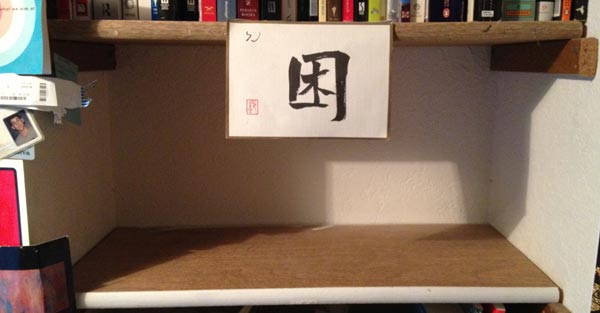
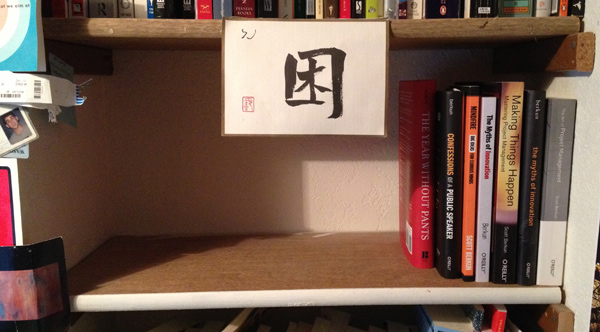
The thing I’ve learned is when any creative work isn’t falling together yet it means something bold has to be done. Usually it’s concision: removing something big to give everything that remains the space it needs to blossom. Sometimes it’s shuffling: changing the order in which things are told. Other times it’s far more subtle, and I need to write a new beginning for the book that has better aim for carving through the rest of the material. For most of my books the first chapter that appears in the published version was written from scratch late in the process, to my dismay each and every time. The original first chapters, as hard as I’d worked on them, no longer fit the book they’d started. Maybe if I fill that shelf, I’ll have enough abandoned first chapters to make a book out of them.
This week I’ve been reading through the entire 2nd draft of Ghost. It’s the draft I’ve had 5 people read and give feedback on. I call these sessions where I read through the entire manuscript The Big Read. It’s a big deal psychologically and I force myself to do it. Rewriting and revising is far more fun than reading drafts. I’m convinced it’s worth it as reading the whole manuscript is the only way to put back into my brain what the book actually is at the moment. Books are big and my brain is small. Without rereading the whole thing I’m working with my imagined idea of what the 2nd draft is, which may be pretty far from what it really is like. Reading the entire draft also lets the feedback I’ve heard from others land properly, as while I’m reading I can see for myself where the feedback is accurate, or not, and make notes accordingly as I go. As strong as the urge is to jump to the computer and fix things, I resist. I want to wait until I’ve experienced the whole thing before I change anything.
As I’m reading the 2nd draft I’m noting the problems I find. Some problems are structural: why is this section before that one? Why is this story even in the book, but not this other one? How does X fit with Y, if at all? Other problems are craft: underwritten paragraphs, overwrought metaphors, experienced told but not shown. Craft is far easier to fix than structure. Craft is polish and you can revise a book, even a deeply flawed book, into polished writing. Some excellent books are structural disasters with craft so fantastic you barely notice (I’m looking in awe at you, Mr. Updike). But structure, pace and tone, things that have to line up throughout the entire narrative, are far harder to get right or to experiment with.
I have a novel I’ve worked on now and then for years. I once decided to switch the entire book from 3rd person to 1st, a task I decided could only be done by typing in the entire manuscript again, shifting the point of view as a I went. Some experiments and changes can only be tried at large scale. That’s the burden of long narratives like books, or films. The upside of books, and all writing, is you can always go back. Unlike a painting or a sculpture where a bad choice is irrevocable, in writing you can always go back. Writers should be brave in revision for this reason: there’s always a safety net, so be bold.
It took until I was halfway through this big read that I understood what I needed to do for Draft #3. And as much as I want to dig in right now and get busy, I won’t do it. I need to know if these plans I have now, at the halfway mark, will still hold together when I’ve read the whole thing. As soon as I hit publish on this post, I’m going back to the read. I’ll report back when I’m done. Have a good weekend.
I write nearly every day and I have the hypothesis that there are three writing mindsets. Put simply:
Raw. When I wake up from a dream, or share a meal with someone interesting, I have a surplus of ideas in my head. Often they’re strange, sometimes they’re interesting, occasionally they’re brilliant. In all cases they are fragments of ideas: phrases, concepts, images, memories. They could be anything, ideas for books, or systems of government, or a new kind of terrible spray cheese product. I know I can’t predict what idea will lead to what other ideas, so I write down tons of the raw thoughts that cross my mind. I have many places for capturing the raw things that come out of my mind. I have a pad by my bed, a small notebook with me all the time and a digital journal.
Run. When I’m developing a specific post, essay or chapter, this is the mindset that lets me build a narrative, find a theme, and run with it for as long as I can until it dies out. Sometimes I can run with a thread for pages. Sometimes I barely get through a paragraph. But unlike Raw, with Run I stick with the same idea for as long as I can and continue trying to make it work.
Review. When nothing else works I review. I reread from the start. I fix things. I change the order of points. Sometimes I change bigger things like the order of paragraphs, pages or chapters. Sometimes I fix little things like spelling or grammar. This is editing, in that I’m primarily working with what’s already there. If I’m reviewing to avoid running, I try to review only long enough until I have an idea and the confidence to start running again (saving real editing for the big read).
Some writing sessions involve moving between these three mindsets frequently. I might decide to scrap an entire chapter or add a new one (Raw), or pick up a side path and make it the focus (Run). To do either of those tasks might require me to reread entire sections (Review) before I can hold enough of it in my mind to make a Run.
There are good days where I balance the three mindsets well. On other days I get lost on one particular run on something that in reality is a tangent, and I won’t know it until the next time I sit down to review the whole creation. Now and then I find myself obsessing about a detail (Review) far too early, when then entire piece isn’t developed enough to justify polishing.
Often I can control which one I want to use and it’s a choice. When I sit down each day I often know where I left off yesterday. I begin the writing session I already have in mind what the next session needs to do. Other times I have trouble continuing, and need to write freely in my journal just to get the exhaust out of my brain (Raw). But on some days I’m a slave to my mind, when it wants to Run, or wants to be Raw, even though the task at hand is to Review, I sometimes let it have its way.
I always have projects at different stages lying around. If I can’t concentrate on the mindset one project needs, I’ll at least go and review something, or continue a Run (e,g, a half-written blog post) I abandoned weeks ago, until I sort out what is distracting me from what i want to do. I try to never let myself do nothing: there’s always a way to use whatever state of mind I have to my advantage. At minimum I can do some research on the project (a kind of review, just of other people’s work). But I know on some days the escape from having any conscious mindset at all is what I need, and the solution is to go for a run, chase the dog, have a beer with a friend and see where my mind is the next day after my body has had its way.
[This post was 1% Raw, 74% Run, and 25% review: I wrote it in 25 minutes just now, while avoiding a much larger writing project]
I’m a fan of Melville house, a young, savvy publishing company founded in 2001 in Brooklyn, NYC. They have a lively twitter feed, they publish interesting books, and generally seem wise about what books and book publishing mean in this technological age.
But a recent article of theirs titled Publishing and Poverty by Zeljka Marosevic, their director of UK Marketing, reflects a flawed romanticism about writers: there was never a good time to be one.
The writing life has always been hard, especially for writers of fiction. Even Hemingway and Fitzgerald had a hard go of it at times. Dickens saw most of his profits lost to piracy and, like Twain, earned more from speaking engagements than his books themselves. Even when the novel was at the center of European or American entertainment, it was still the rare novelist that survived by their writing alone, and those that did achieved it at great risk and with consequences to their health, their families and their wealth. Many famous writers, from Mellville to Kafka, became famous after they died. They never experienced the full attention their works generated, a fate common for many artists (e.g. Van Gogh). Da Vinci is far more famous today than he was during the Renaissance. Being an artist has always been a hard road.
Marosevic mentions a story of British author Rupert Thompson:
Rupert Thomson, who is being forced to abandon the office he hires in exchange for converting his attic into a “garret” to save money. Due to falling advances and physical book sales, combined with publishing’s move to digital, Thomson feels fearful about his future as a writer: “I don’t buy anything. No clothes, no luxuries, nothing. I have no private income, no rich wife, no inheritance, no pension. I have nothing to look forward to. There’s no safety net at all.”
He had an office? What a luxury. What percentage of writers throughout history had them? And what is this talk of safety nets? If an adult wanted a safety net, why on earth would they choose to be a writer? Now mind you I’m all in favor of good writers who need support getting it if they can. I’m a member of the Author’s Guild and I support programs that support writers. However to choose to be an artist is to deliberately reject the security that comes with nearly any other profession. It’s to be expected that to structure a life around writing will be a challenge.
She comments on the recent London Author’s fair:
Their education seemed more to be about learning to market themselves than becoming better writers. Unless that’s what it means to be a good writer today. No vision seems satisfactory, and with the decline of the old and the dawn of the wobbly new, a writer’s place seems highly insecure.
Throughout history there have always been more authors looking for a break than publishers can afford to give. Even Mellvile House itself does not accept unsolicited fiction submissions. It should be no surprise that when writers convene, much of their conversation is about marketing: publishers demand writers market themselves to the publishers! That’s what agents, book proposals and synopses are for. The entire machine of the publishing industry depends on writers marketing to publishers. And until the technology of the last decade they’ve had the keys to the only gates (now we all have gates on our phones).
Publishers today, and probably always, desire writers who are excellent self-promoters. Walt Whitman went too far in writing fake reviews of his books in newspapers, but the spirit was always desirable. Authors are chosen in part for their platform, jargon for how famous they are. That fame is assumed to translate directly into marketing, and it’s common now for publishers to ask how many twitter followers or blog readers a would-be author has. This is not a shock, it’s logic. Publishing is a business. To choose an author already known minimizes risks and publishers, more often then not, play it safe, especially when deciding between two equally good manuscripts.
Beyond my critique, I believe without question this is the best time ever in history to be a writer. It is still hard, but today we have more tools in our possession to publish, to collaborate, to market, than any writer in history ever had. And most of these tools are free! There is simply no one to blame. Can’t find a publisher? Publish yourself. It’s cheap. You can’t blame ‘the system’ anymore. Don’t know an editor? Hire one. Don’t have money for it? Save. If you are so passionate and talented you will find patience. Don’t have any followers or fans? Start a blog – a blog is free and instant publishing to the planet. If as a writer you can’t get excited about publishing anything you like to the entire planet for free I question your sanity. This is as good as it will ever get.
Most of what’s published is trash, it’s true, but this means if you are talented and dedicated your work will shine. It’s unlikely to shine brightly enough to be the way you make a living, but as I’m telling you there was never a time this was likely anyway. Do it because you want to do it, not because of some reward you expect from the species. Your talent might have been granted to you, but it must be proven, through hard work, to the rest of the planet.
Publishers can be great partners to writers. They can help craft the book and find it an audience. But all they’ve ever done throughout history is help. Only the writer gets their name of the cover and for that privilege comes the lion’s share of the work. While publishers are allies, a prolific writer finishes a book a year while a publisher will publish dozens of them in the same period of time. The math is simple, in that the most committed publisher will never invest as much in a particular book as the author. All authors should be prepared for this since it has been true since the history of publishing. The author is always at the center of marketing and publicity even when a publisher is fully behind them. But today with Kickstarter, Facebook, twitter and blogs every single person you know can help contribute to, or spread word of, whatever you make and have as much or more influence than publishers had in the glory days (whenever you think those were) for finding an audience for what you make.
The web has rekindled the old complaints of giving work away for free, or competing with people who work for free. It’s hubris. Bakers, brewmasters and cheesemongers give free samples, why not writers? You end up doing work for free in any profession where supply outweighs demand. Actors, musicians, poets, painters and writers struggle because thousands of people want to do these things. If you don’t want to compete with people who will work for free, you must choose a kind of work that few people can do. Learn to fix cars or air conditioners and you’ll never work for free. But to chose to write, or paint, or sing, and then bemoan a golden era than never existed shows a lack of understanding of the profession of your passion. Many actors, musicians, painters and writers get paid very well for what they do, but they had to earn it. There are careers available, but you’ll have to scrap and hustle and then get lucky to get them.
I have the ambition to be a novelist. I want to write plays and stories too. But thus far in my writing career I’ve written business and philosophy books. Why? Because these markets are simpler and easier to market to. Magritte worked in advertising for years before becoming famous enough for his paintings to focus on his own work. Director David Fincher filmed TV commercials. Hemmingway wrote for newspapers. You don’t have to do much research to discover how many great talents hustled to develop the skills, the connections and the confidence to become who they became, without any security other than what they scraped together themselves.
I wish the best for writers, and publishers, everywhere, including Melville house. We’re all in this together. The world needs great works and people with the ideas, craft and dedication required to entertain, challenge and inspire us. But lets not kid ourselves about what writing is or how it has always been, and always will be, done. Good luck to you and I hope you’ll wish some to me in return.
The photo below explains my ambition: I’m working to fill this shelf with books I’ve written. I want an interesting life which requires doing unusual things and having unusual goals. This is mine. Will I achieve this? I really don’t know, but in having this goal I believe I’ll live the kind of life that I want. What’s your big goal? How do you remind yourself of what it is? I find both these questions fascinating and I thought I’d share my answers as it might be helpful to help you figure out yours.
When I quit my first career as a tech manager in 2003, I primarily wanted to try another way to earn a living. I was afraid if I didn’t try I’d have the same career forever and that scared me. What else is out there? I felt I owed it to myself to try and see what I could possibly do and who I could I might become. I was lucky that I had a window of opportunity to try (no kids yet, little debt) and thought those that don’t would probably tell me I was foolish not to take a shot.
Books had changed my life many times and I wanted, hopefully, to write books that helped other people in a similar ways. Since I saw the shelf many times a day (it’s to my right as I type this) I decided it was the perfect spot to have some kind of reminder. Even when I finished a new book, the reminder would always be there. When my first book was published in 2005 I put this simple photo above on the author bio page.
It’s a cliche for Americans to swoon over Chinese symbols, misunderstanding what they mean and not bothering to study their meaning or context. As my Chinese speaking friend Jeff likes to joke, “Uh, that symbol tattooed on your arm doesn’t mean Great Love, it means soup dumplings.” I did my homework and understand its legitimate meaning (often used to mean sleepy, or something that’s kept hidden or locked away), but it also has a specific meaning to me.
Around the time I decided to quit, which took me over a year to work up the courage to do, I found this card at Uwajamaya in Seattle around the time I quit my job. I liked what it claimed the symbol meant (see below). I love the quiet strength of trees and it matched how I needed to be to reach my goal. The I Ching references the symbol as Hexagram #47, which has various meanings, including the one on the card. I’ve learned in common Chinese the symbol/word is often used to means confinement (one of the other meanings suggested by the I Ching), trouble or sleepy more than overcoming, but that’s OK. The symbol has adorned my shelf for so long it means something specific to me regardless of its common meaning.
Years later I’ve written 5 books, [8 as of 2020], and the shelf looks like this (see below). I have a long way to go. Translated editions don’t count, as that’d be cheating, right? I’ll need to write about 25 books to fill the shelf which will likely demand most of my working life. That’s fine. I have nowhere else to go and no goal as meaningful as this one.
Although it’s a volume goal, I have no interest in writing bad books. I also have no interest in writing unnecessarily long ones. My essay collection Mindfire is comprised of revised essays from this blog, but I’d feel it was cheating if most of the shelf was recycled material. One book in five seems a fine pace for compilations and such.
Occasionally I’m very fortunate to have people interested in hiring me for very nice conventional jobs where I’d have more security and income, but then I look at the shelf. More security and income are desirable, but they have limited bearing on my ability to fill the shelf. So as tempted as I might be, I say no (The Year Without Pants was a notable exception). Writing and speaking are my only means of income.
Another reason I like this goal is writing books demands many things:
Polymathic thinking
Study
Curiosity
Passion
Connecting with friends and colleagues
Making new friends and relationships
Commitment to an idea
In the process of writing a book I’m forced to do many things in line with the kind of life that I want: An interesting one. As long as I focus on the shelf, many other good choices are forced naturally.
Most authors repeat themselves, writing the same kind of book repeatedly. The marketplace rewards familiarity and a writing life is hard enough, so I understand why it’s common. Many of our most popular authors publish in narrow ranges. This is wise and lucrative, but also limiting (the most curious perhaps are authors who exclusively write about creativity, which in a way is not very creative). I’m taking the opposite approach for as long as I can. I’ve never written a sequel, because we all know how underwhelming sequels often are. I have no shortage of ideas for books and I’ll keep moving forward until I’m forced to be more conservative, if that’s even possible.
I want to be a writer in the largest sense. I want to be an artist. I want to take big risks with my skills, which will help me discover exactly what abilities I have or don’t have and what good they can do in this world.
Last year I got my first and only tattoo. It serves as an additional reminder to me about why I’m here and what my goal is. I’m a writer which means I work with my hands. I wanted to keep the symbol with me, near my hands, all the time.
That’s my story. If you see me speak and notice the tattoo, now you know why it’s there and what it means.
Follow As I Chase The Goal
Any encouragement is encouraged. Praise the crazy writer man! And thanks for supporting my work. Best wishes to you on your own goals.
From what I can tell, you are a voracious reader. Do you read just one book at a time, or multiple books at a time? Advantages or disadvantages to either?
I read 20 to 30 books a year, sometimes more if I’m working on a new book and there’s research I need to do. I don’t worry much about what I read. I keep a big supply of good books around and what I read on a given day is driven more by whim that anything. If I buy good books, which one I’m currently reading doesn’t matter.
I read primarily on my iPad through Kindle. It’s convenient given that I travel often, it’s easy to buy new books on the fly, and I like their highlighting system. But I’m not particular: I read print books often too.
I try hard to read one book at a time. It’s very tempting not to, but like all multitasking you waste energy when you switch as it takes time to recall everything that was in the book up until the point you reached last time. If I switch away from a book it’s a good sign I should abandon it completely. If I’m not convinced by the 50 page mark I will abandon a book with no regrets. I used to have 3 or 4 partially read books around but I’ve gotten much better at avoiding that trap.
As long as I’m reading frequently I don’t worry much about what the particular books are. But if you forced me to make it into a formula it’d be something like this:
Books I should read. I’m interested in writing books that will be read long into the future and I read old books that are still read today to learn something about how it’s done. I read many books that were published decades ago and largely avoid trendy topics or bestsellers. There’s plenty of classic literature I’ve never read and I try to knock off one or two of those a year. Some books are purely recommendations from friends who know the kinds of books I love.
Books related to a book I’m thinking of writing. I have a table in my office with 5 piles of books, each pile represents a future book project. I don’t know exactly when I’ll get to these projects, but I do look for books that line up with future ideas I have for my own projects. Sometimes I put them aside, other times I bump them to the head of the queue.
Books in different subjects. My strength as a thinker is I have wide interests and I grow that strength by reading books in many different subjects. The last few books I’ve finished include Glittering Images by Paglia,The Origin of Satan by Pagels, A Drive Into The Gap by Guilfoile, and Broken Music by Sting. I rarely read books about management or creativity anymore as I have far less to learn in those subjects than I do about art, religion, sociology and dozens of other ways of looking at the world. I also believe I become a better expert at what I already know by reading different subjects as there are always ideas from one field that can be applied to others and that’s where many breakthroughs come from.
I rarely read bestsellers and seek more challenging books. The bestseller list is conservative in the kinds of authors and topics that will be widely popular immediately on the book’s release. Plus it’s not a level playing field, which is a surprise to most people. I prefer more ambitious books that are too challenging to ever see this kind of popularity. Zeldin’s An Intimate History of Humanity or The Great Big Book of Horrible Things are good examples. I love books where a smart expert who writes well takes on a big subject without ever claiming a gimmicky solution to all the world’s problems (a sad cliche of the non-fiction bestseller lists).
I read good writers. I sometimes read books purely because of the talents of who wrote them or the approach they took. Writing is a craft and I want to learn from other craftspeople. I’m a regular reader of The Best American Essay series since it’s an easy way to find new writers and essays are short enough that if I don’t like one I can just skip to the next one.