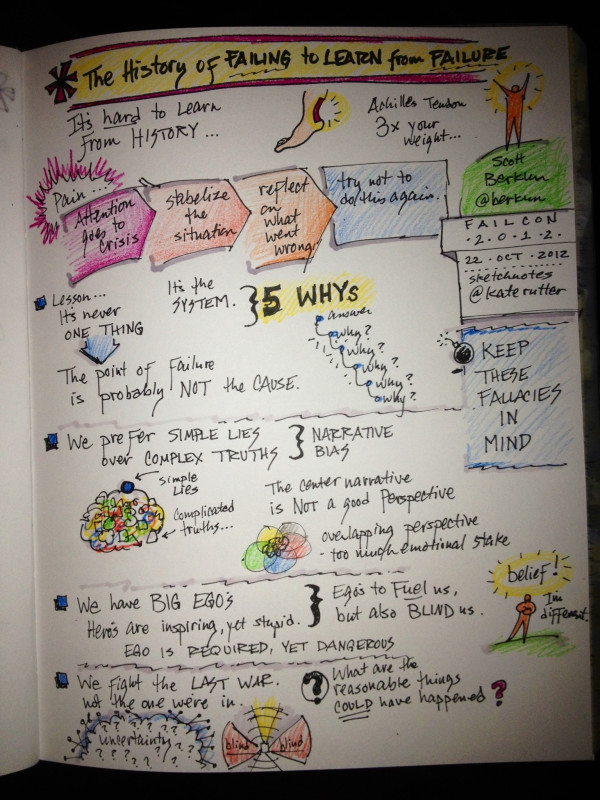
One of my most popular books is The Myths of Innovation. It was published years ago but I’m still regularly asked to talk about the core themes of tech-hype, survivorship bias, the flaws of tech-determinism and what true innovation looks and feels like.
Recently I was invited to give a talk called Beyond The Myths of Innovation as the opening keynote at Interface – Québec this year. I briefly explained the Myth of Epiphany, but then told stories that are not in the book. It was an excellent event and I felt honored to be there.
They kindly recorded my talk and you can watch it here for free.
“This is not a presentation, a sermon” – a passage from the book of hackernews. “I don’t want to be a founder anymore – there’s a lot to lose from speaking how I feel. We’re profitable, growing, debt free and about to be acquired. The problem is I am supremely unhappy”
The founder who posted this had four choices:
Quit, killing company
Hate the next 2-5 years
Fix it
Keep running the company
It seems to be a common pattern that founders aren’t happy despite achieving all the things they set out to do (See Credit-Suisse research study).
You have to decide to face some ugly , emotional truths – no one will force you to since you have no boss. It’s easy to be a victim of your own denial.
Jason asked the room “who here has taken too long to fire someone?” and most people raised there hands. “Too soon” – on ly a few people. There’s the good reason, and then there’s the real reason we do (or don’t do) thing.
2×2: matrix, Things that don’t need to be done, needs to be done, want to do, don’t want to do
The fact that a thought won’t go away, and keeps you up at night, is a good indicator it’s something you need to deal with.The emotionally tough choice is usually the right choice.
How to do the tough thing:
Be swift: delay never helps, often hurts
Be decisive: flapping hurts
Be kind: to the person, to others, to yourself
Someone is always the smartest people in the room, but many people might believe that it’s them.
A players hire A. B’s hire Cs.. The presumption is that as an A, you are an A at everything, but when you take on a new role, like finance, even after a couple of months you are not really an A. And when you hire, you are calibrating against yourself, so you unintentionally hire a C and staff new roles or departments with C.
“We don’t hire smart people to tell them what to do. We hire smart people so they can tell us what to do.”
Be an editor, not a writer. Hold people to hire standards, but hire people who can do their own job/role better than you can.
Action oriented vs. results oriented – results are about outcomes and customer satisfaction, action is just a series of acts and choices
He told the story of selling his first company Smart bear. He got an offer and talked to his wife, who said “you have to sell.” And he asked why. And she said “Don’t you know how unhappy you are?” And even when he sold the business, he thought he’d feel better, but not at first. It took a long time to resort himself.
Has been marketing software for many decades, almost 40 years.
Just because its good software doesn’t mean it’s a good business.
B2B is different (if you type in B2B in google image search it’s all handshaking). Purchasers are spending other people’s money – different from selling to customers. They need to know “what will I tell my boss?” without something better, they will buy the cheapest one assuming they are all the same. Your job is to reduce fear.
The connection ratchet (or racket). Phone booths do not improve as more people try to use the same one. Metcalf’s law vs. Fight Club. Instead of thinking of funnels, think of megaphones. Purple cow is remarkable, which means something worth making a remark about. “make things in a way that they are worth talking about”. The marketing of ringtones is built in to ringtones themselves. People like us do things like this (e.g. instead of bilboards and TV ads,we need to think about the minimum viable audience of passionate people)
Packaging is obsolete. Infocom games and competitors invested in packaging and how things appeared on the shelf. Album and CD covers.
The art of promising. If we over-promise to get in the door, you are set up to disappoint.
Free (Price) is not related to cost. Three reasons to make software free: 1) engagement 2) to get people hooked (to upgrade) 3) spread the word. Customer traction means to get people using and talking about your software.
Make it Matter.
3. Natalie Nagele, Keeping the fun in your business life
Managers job is to create an environment – the business exists not strictly for the customer but also for the team (especially if sustainability is the goal – a future proof organization). A team is committed to each other, not just a product (it’s easier to replace a product that a team).
Culture sometimes happens to you. As the founders age the culture will tend to shift with them, but this isn’t the best way as the founder centric culture can leave other people behind (e.g. she had her first child and the company became more family friendly).
She tried to enforce culture through policy but at a retreat she learned from her team that they weren’t fond of this approach. They asked the question: what are our values (what do we expect from ourselves)? how do we support them? And clarify the values to new people who join? This was the first time they took culture seriously and clarified their intentions.
Why do people have a job? 1) Success of purpose in their professional life 2) Enable a life outside of work (we work for our hobbies). Work to live or live to work? The came up with these values for the company:
Wildbit is product agnostic. We exist to support our team.
As individuals, we are self-motivated and constantly improving our craft.
As a team, we support each other to do the work of our lives.
We expect great things from ourselves. You should expect the same from everyone else.
We are motivated and rewarded by our customer’s success.
Perks: Flexible working hours, profit sharing, competitive salaries, private offices + best benefits we can afford
There is nothing wrong with being a regular business. You don’t need to a lifestyle business, or a growth business, or a Unicorn magical business. Business are not built for martyrdom. There is no obligation to be a workaholic or not to have time for ordinary pleasures.
Growing to sell vs Growing to keep: if you are growing to sell you are making a huge bet that a final success (acquisition) will validate and pay for all of the sacrifice and debt along the way. But if you grow to keep, you have a sustainable and reasonable business (and founder salary) along the way, and likely have a better negotiating position. Take care of yourself so you have the incentive to keep going. Many founders exit because they are tired and broke.
Quit serving the business, serve the people. And by doing this, it serves the founders too.
When you are scaling big problems are scarier – there is more money and more people impacted. Communication as you scale gets hard.
Clarity and authenticity are important, but tone is part of the message too. And the medium you use changes it (an email vs. a text vs a post – different levels of formality).
He told a story about a major issue that the leadership team felt was best solved by raising prices. When they told the team, they revolted and said “it can’t be done.” They formed a new team to own the problem – they did something very different. Instead of going off to discuss in private (like the leadership team did) they worked on the problem openly. They reached a similiar conclusion, but because the problem was solved openly people’s responses were different.
Lesson: Solve big problems openly – instead of shielding people from uncertainty, it creates fear and a whiplash effect
As a company scales, finding time to think becomes a challenge. At the beginning it’s much easier. He showed his schedule one year after the company started and it was mostly empty.
Work life unbalance: his calendar and schedule made it seem like he was a balanced person, but he wasn’t present with his family and friends. He forgot that thinking is work. Running a company is a creative endeavor in a different way that starting a company.
Problems are rarely schedule problems, they are people problems. You need to delegate more or get better people. Being busy is a people problem, not a productivity problem.
Focus on Tone
Solve big problems openly
Don’t feel guilty having free time
I speak later today at Mind The Product, an event about product management and design, in London. Here are my notes from the sessions so far.
Product management is about people. You can only build products people love as a team. Product managers are not the CEO of anything. Regardless of your job title, we are all product people. Perhaps instead of calling ourselves product people, we should call ourselves people people. We can only learn how to do this well by coming together and sharing what works and what doesn’t. Which is why he founded Product tank – the core community behind this conference. 1592 product people from 52 countries are here today. The goal for today is to meet the people who mind the product.
(hi-five training – the secret is to watch the elbow, not the hand)
2001 – Jake worked on Encarta (Remember CD-ROMs?). Soon wikipedia launched, which they found interesting but didn’t take as a threat. But by 2003 it had more artiles than Encarta did, and using the web for research, which was always there and always free, even if the quality wasn’t great.
Jake proposed an idea – it took months to prototype, build and ship. And they did. It was a more web-like design for Encarta. But unlike today, you had to go to physical stores to buy software (no-app store). The box design was important – and the logical thing would be to show the new design and the name of the product – but they didn’t. They made the mistake of waiting till the end to involve the marketing team, which went with a generic design. The major redesign work earned a single bulleted list buried on the front. Soon Encarta’s market share declined until the product was killed (if you do a google search for Encarta, the first result is from Wikipedia).
He went to Google in 2006 and recognized they often followed the same broken process. And sometimes with 20% projects the idea would spin out of control and never quite launch. Later on a project called “Google Meeting” and they built a prototype and stating sharing it around the company. In 2011 it launched as google hangouts.
In 2010 he experimented with the idea of design sprints. In 2012 he went to join Google Ventures, which worked with startups. He was curious about how startups managed the ideas and time and discovered it was similar to the same old failed process, with marketing coming in late at the end, too late.
Build-Data-Idea cycle – classic notion of not going too far without validating and adjusting.
The perfect week (the design sprint): get rid of all default habits of scheduling, and follow a system (aim for the elbow). By default, teams are fragmented. But in a sprint everyone is all together in the same room for the entire week.
Monday: Map – focus on one key moment for the customer. You draw a map of the flow of interaction for how the customer will walk through the experience.
Tuesday: Sketch – everyone sketches – you work alone, but together in the same room. Everyone quietly sketches solutions and then gather together to discuss them.
Wednesday: Decide – silent review of sketches, structured discussion of each idea, and the “decider” makes the call
Thursday: Prototype – the work gets divided up and simple tools get used to mock things up and stich them together. With hotspots it’s not hard to create something you could even show to a customer and walkthrough the experience.
Friday: Test – get quick and dirty data with 1:1 interview, with no sales pitch and asking them to think aloud. 5 interviews and the rest of the team takes notes. Observations are put on wall with post-it notes to compare observations.
Next sprint: Repeat and perfect
Some organizations plan to run a sprint at the start of each quarter, and then have enough confidence to push through to building a shipping. Jake has run 150+ design sprints.
He told a story of designing a delivery robot for hotels. One problem was that people had way too high expectations (from movies) of what robots could do. Using a design sprint, they experimented with three ideas: games, faces and dancing. The game idea didn’t work, but a simple face design combined with “dance” (more of a shimmy) was just charming enough without setting people’s expectations too high.
Design sprints allow you to take big risks, and focus on the moments of the experience that matter the most, without costing very much (one week).
Edison didn’t invent the light bulb. It was Joseph Swan. But Edison successfully made it into a product and changed the world.
He asked the audience questions: Is innovation important? (many hands) Is user experience important? (many hands) Does user experience as a competency have a strategic role at your company? (few hands). He implied this was a mistmatch of ambition and reality.
A problem well stated is a problem half-solved. – Charles Kettering
He uses a ten step process in the design thinking course he teaches.
Identify
Gather Information
Stakeholder Analysi
Operational Research
Research
Hazard Analysis
Specification
Creative design
Conceptual design
Verification
Two phases of innovation:
Phase 1: Learning how to think about solving the problem, defining questions to use to help define the problem. “Is this really a problem? Who’s problem is it? What words best describe the problem?” (He calls this experience center-lining)
Phase 2: Standard design process
Apple Newton had the wrong centerline. Processor wasn’t fast enough, it was expensive and too big. The Palm Pilot had the right centerline.
She worked on a project for college alumni, and by accident they were allowing spam to go out to the mailing lists they had created. They brainstormed and one idea that teammate Seth suggested was to add google maps so alumni could see where they all are. She asked “how does this solve the problem?” – and he said it didn’t, but it was cool and would drive engagement. She asked the rest of the team and they agreed. Teresa was baffled.
We fall in love with our ideas, even if they don’t apply to the situation at hand. We have to remember to ask “is this idea any good”. We tend to consider one idea at a time, when we should be asking “compare and contrast” questions. Good is not an absolute trait, but we often assume that it is. When we consider more ideas we ask better questions.
She realized she didn’t take the time to get the team focused on the real problem at hand. The notion of problem space and solution space have (gratefully) become more popular.
She found value in the book Peak, by Anders Erickson. Which explained that experts have more sophisticated mental representations of reality than novices. Teresa came to the meeting from customer visits and was thinking about their problems. But Seth had just read about Google Maps APIs, so his framework was different.
It’s hard to prioritize a list of unlike items. You need a system or process to ensure you are thinking clearly about the comparisons you make. She described the Opportunity Solution Model, a tree like visual tool for framing problems to aid in critical thinking. If you focus on too many problems you end up with shallow solutions.
Instead of arguing about who’s idea is better, you instead argue about which problem is more important to solve.
She explained how dot voting is a handy technique to use with teams to sort through candidate ideas.
I’m the I was the closing speaker today yesterday at Digital PM Summit in San Antonio, TX, and I’ll be taking notes (or in fancy terms, liveblogging) for every session that I sit in until it’s my turn. I’ll be following the basic rules of Min/Max note taking and will update this post as the day goes on. It’s the first PM event I’ve been to in years – brings back many memories from my first career.
Please forgive typos, I’ll get to them when I can. Here we go!
Brett, one of the organizers of PM Summit, asked the audience how many people became Project Managers / Producers on purpose, vs. how many fell into it accidentally, and most of the room raised their hands as accidental! (He joked with a slide that said “You are not an accident” 🙂 This isn’t a surprise as often the role evolves as a project or organization gets larger.
It’s also a related observation that most people don’t know what a project manager does, particularly digital project managers. Once during a trip he was stopped by a UK immigration officer who seemed baffled by his job title and asked: “what kind of projects do you manage then?” He shared a list of quotes from colleages who he asked to explain what he did for a living:
“As far as I can tell project managers do nothing, but if they stopped I’m pretty sure everything would fall apart” – Paul Boag
“You help teas organize their work” – Brett’s Mom
“Project management is like sweeping up after the elephants, only less glamorous” – @zeldman #dpm2016
He shared how the History of Project Management goes back at least 4000 years, and that there’s a long history of teams of people making difficult things. But that digital project managers have yet to be entered into that history in a meaningful way, and part of what he’d like to see is greater recognition for the contributions digital project managers make.
7 DPM (Digital Project Manager) Principles: The balance of his talk was an exploration of 7 principles about leading teams and projects.
Chaos Junkies – we thrive on problems because we know we can solve them. We break processes to make new ones. We make our own templates. We managed with our minds, not our tools.
Multilingual communicators – listen and take cues from our team and clients.
Loveable hardasses – reputation for being firm but wise and well intentioned.
Consumate learners and teachers – that teaching teammates helps the project, the organization and the pm
Laser focused
Honest Always – cultivate a reputation for straight talk
Pathfinders – do more than take care of budget and timeline
His final question for the audience was: where will you take us? Which principles resonate the most?
The core of her talk was about the concept of MVP, or Minimum Viable Product, and how to apply it to projects. She referenced Eric Reis’ book, The Lean Startup, and asked who had read the book: I was surprised how few hands went up. Perhaps I’ve been to too many start up events the last few years. I had a hard time following the thread of her talk – she referenced many models and frameworks but it was tough to find salience to pm situations, or connections to each other.
She offered four goals or objectives:
Building just enough to learn
Learning not optimizing
Find a plan that works before running out of resources
Provide enough value to justify charging
She mentioned loop models, were you have a cycle of behaviors you repeat, such as: Think -> Make -> Check. Briefly she touched on Lean UX, and how customers must be involved as part of that check process – “Customers don’t care about your solution, they care about their problem”.
Next she talked about metrics, and offered this quote: “A startup can only focus on one metric and ignore everything else” – Noah Kagan. I didn’t agree with this, as it sounded more more like hyperbole than sanity – plenty of successful startups have focused on multiple metrics, or at least prioritized them.
She offered “Pirate” metrics as good choices for what the primary metric should be:
Acquisition
Activation
Retention
Revenue
Referral
Regarding building software, she explained the Build Model:
There are 3 desirable criteria, but you rarely can do all three
Build right thing
Build it fast
Build thing right
(reminds me of the PM Triangle – “you can have fast, cheap or good: pick two”)
Which she compared to the Learning Model (Learning, Speed, Focus), but I didn’t quite understand how they related to each other.
Lastly she provided this outline, in reference to a project she managed:
Reduce scope
shorten time to feedback
get out of the deliverables business
learn from customer behavior
3. Elizabeth Harin, How Can I Help You Now That It’s Too Late?
She explained that her background is different than most of the audience, but that the importance of feedback is shared: feedback should make it easier for (clinicians) to do their job.
A common mistake in getting feedback is asking for it only when it’s too late, AFTER, the customer has experienced what you made for them. She gave the example of how a waiter at a good restaurant will check in on how you are doing DURING the meal, creating the possibility for them to fix a problem before it’s too late. But projects rarely do this. All feedback is too late.
A goal she has used is to make it possible.. “For all our customers to continually rate the services we provide as good, very good or excellent” and that part of this should be that the customer defines what good looks like (which is important since it forces you to confirm your assumptions about what customers actually want are valid)
Tip #1: Measure what’s important to the customer
Tip #2: Track your scores to show your impact
Tip #3: Make feedback little and often
Tip #4: Don’t expect credit for hygiene factors (things people expect you to do anyway)
Tip #5: Satisfied Customers Make Good Allies
Steps:
Get buy-in – does your team support idea of continuous customer feedback?
Set & Spread the vision – “want majority of customers to score us good, very good or excellent”
Decide who the customer is – it’s often not the most senior or visible person (and segment the customer pool if needed).
Define your scoring mechanism
Organize for success
Align your partners
Launch
Do the work (she joked at once getting the feedback “having a change management process is onerous, so… we shouldn’t have one”)
She closed with the following quote, pointing out how we call use the right words, but the impact is only felt through our behavior.
“people may hear your words but they feel your attitude” – John C. Maxwell
4. Aaron Irizarry, Hold Fast: Managing Design Teams When Projects Go Sideways
The number one thing that will screw up a project: people. Feature and scope creep only happens because someone is not communicating well with others.
Projects are complex for many reasons:
How departments are defined
Internal politics
External politics (client)
Team distribution by location
The understanding of the role of designers
Limited budget lofty goals
The most important thing is to avoid being blindsided. If you see problems coming you can prepare, but if you are surprised by something you did not anticipate the damage will be far worse. Almost every problem can be traced back to communication issues and how people relate to each other.
When you take responsibility for your mistakes, other teams will respond in kind.
Creative Friction is a healthy fuel if managed well. (See Creative abrasion)
Admit when you don’t have an answer. There is no shame in not knowing something and it’s far better to put that ignorance out in the open where it can be resolved, rather than hidden (where it will fester)
“I design how my team designs” (as lead)
Work to understand root causes of difficult situations.
Be prepared to ditch your process if it’s not working. It’s the ends that matter not the means.
‘Everyone has a plan until they get punched in the face’ – Mike Tyson
You don’t want to be inventing a new plan when you are in the middle of chaos. Have a backup plan. And a backup plan for your backup plan.
The needed solution might not be the ideal solution. There is what’s ideal and there is what’s real.
No two projects are alike
Do everything you can to avoid blindspots
5. Tera Simon, How to Eat an Elephant (Or Tackle Most Any Big, Huge, Enormous Project) (slides)
First time she worked on a large project she was excited to see a budget so big. The project was to make a video game to teach accounting to high school students. But then she realized her team was small and the expectations the client had were demanding. This led to a kind of crisis: Why me? Why did I want to be in this situation? (In the end they did finish the project on time, but over budget). Over many projects she’s found good answers to this question.
PM is untangling the most complex project and making it tangible.
Essential skills for managing (complex) projects
Adaption
Collaboration
Communication
Expertise
Leadership – cheerleader and bulldozer at same time. Takes time and practice to learn.
Strategic
Difficulty != Complexity: just because it’s difficult doesn’t mean it’s complex. Factors that make a project complex:
Many teams and stakeholders
Numerous moving parts
Project timeline
Budget / restraints
When eating an elephant, take one bite at a time.
Continuously clarify your goals. Goals change and you have to make sure that you are verifying they’ve stayed the same (and reminded your client of them).
Create more visibility – last thing you want is a team member who is working on something that isn’t needed anymore. She explained process maps – a visual outline for all of the roles people need to play, at the firm and at the client. They’d have the client review them, on a huge sheet of paper, answering questions and clarifying.
Be flexible and willing to adapt – As PMs it’s natural to tend to want to control everything, but flexibility (bend not break) can be a strength not a weakness.
Pay attention to the calm before the storm – complex projects are like dating. When you start a project, everyone is excited. But soon interest fades, and slowly problems arise, often creeping up on you and easy to overlook.
Scope Creep causes
Every time you say yes to one more edit, you’re inviting the next one. You must get comfortable saying no, not always but often.
Interference from the client
Incomplete scope
Poor change control
Miscommunication
Effort Creep causes
Overly optimistic estimates
Doing more work without added scope
Lack of skills – “pleasure of working with” a junior person
Hope Creep
Team falsely reports they are on track, which you report to client
Hardest to identify
Hides until the last moment
As much fear as PMs have, designers and developers have it too, but for different reasons
Have a “NO SURPRISE” rule – it’s a two way pact to make sure you don’t set up the other person for failure
Feature Creep causes
Also known as gold-plating
Over-delivery on the scope
adding unnecessary features
“The single biggest problem in communication is the illusion that it has taken place” – George Bernard Shaw
Swoop and Poop
Someone powerful flies in, late in the project, and dumps all over it
You can avoid this by having a list of stakeholders who have the authority to change things late (no surprises)
6. Carson Pierce, Your Brain Hates Project Management
“The brain is fundamentally a lazy piece of meat” – Gregory Berns
Our brains are not as impressive as we think they are. We are not designed to handle the amount of information and the cognitive tasks we ask. It’s like taking the first computer you ever owned and trying to use it today to use web.
“It’s not information overload, it’s filter failure” – Clay Shirky
“My wife probably tells me that I never listen” – Rodney Lacroix
He showed an example of awareness bias (watch this video and try to count how many times the white team passes the ball). It’s easy to miss something you’re not looking for. As a side note, ADHD means it’s hard to focus on one thing. While someone with ADHD are more likely to see everything (in the video), but also more likely to get the count wrong.
Layering: two relatively simply things using different parts of the brain (singing while driving, one is physical one is mental).
However two mental tasks at same time: does not work well. Instead of doing them at the same time our brain switches back and forth (fast enough so we feel like we’re doing both, but we’re not).
“Multitasking is the ability to screw up everything simultaneously” -Jeremy Clarkson
He asked the room how many projects they manage at the same time: majority of the room was 6 or more.
General stats (reference?) on performance loss when trying to multitask:
2x as long to finish a single task
50% more errors
40% drop in productivity
willpower drops
decision fatigue
He referenced a study of judges and how they granted parole 65% early in the day and drops until lunchtime, when it returns to a high level.
He was going to talk about procrastination, but then decided to get to it later.
Rest – 7 hours of sleep (Most people who think they need less are probably wrong). Taking breaks is good for body and brain (see pomodoro technique).
Eat – don’t eat bad things.
Move – We work in a chair for 8 hours a day. We need blood flow, to stretch or joints, and our brain is part of our bodies after all.
Plan – Avoid back to back meetings. Try for single tasking – where you are focused on one project at a time.
Cheat – shortcuts, rules of thumb, heuristics – ways to make your brain more efficient.
Predictable Mistakes
He gave an example of the conjunction fallacy – is Linda more likely to be a banker, or a feminist bank teller:
“Linda is 31 years old, single, outspoken, and very bright. She majored in philosophy. As a student, she was deeply concerned with issues of discrimination and social justice, and also participated in anti-nuclear demonstrations. Linda is a bank teller and is active in the feminist movement.”
He referenced killer clowns as an example of availability bias, a mental shortcut that relies on immediate examples that come to mind, and also probability neglect.
For PMs an important one is ambiguity aversion – where we will take a known thing, even if it doesn’t work well, over an unknown (known risk over unknown risks).
Another one is illusion of control – dice games where people believe they have an influence over the roll. Or when people yell at their televisions while watching sporting events, or even pushing the elevator button more than once.
Estimation is prone to many kinds of bias (the planning bias documents our tendency, even experts, to underestimate time, costs and more). We also suffer from anchoring bias – whatever first number we hear changes the answers we tend to consider (a factor in speed limits and prices). As a tip, whoever anchors a discussion can likely influence it.
Hofstadter’s law: it always take longer than you expect, even when take into account Hofstadter’s law.
Advice
We are wired with these limitations and it’s not entirely clear how consistently we can overcome them. But there are tactics that minimize their impact and frequency:
Be Sad – our mood impacts our judgement. When happy we are overly optimistic. Consider watching a sad movie before doing tasks were skepticism is required.
Remember – “memory is fiction.. not just a replaying, but a re-writing” Daniel Levitin. Our memories don’t work as well as we think they do – snapshots, not the whole film, and our brain invents to fill in the gaps.
Last month I took a long train ride from Atlanta to Seattle over six days for my Amtrak Writer’s Residency. Each of the 24 writers chosen in 2014 from nearly 16,000 applicants, took solo trips of their choosing across the USA. We were granted a private sleeper car and free room and board. I was one of the last to take their trip and it was an honor and a great experience in every way. I wasn’t required to write anything, but based on your votes I chose to work mostly on documenting the trip itself and I hope to publish a short book or long essay about it next year.
Here are some highlights from the experience.
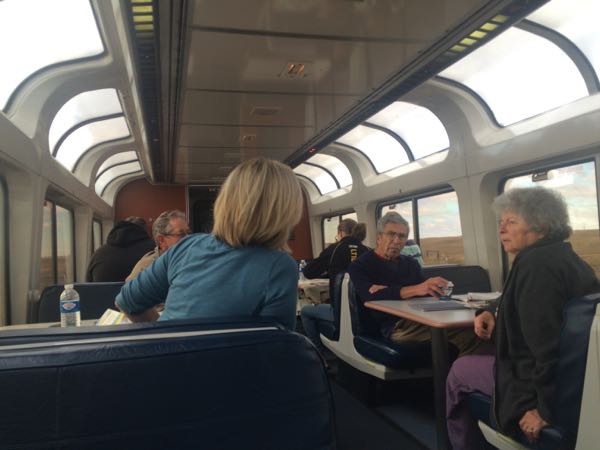
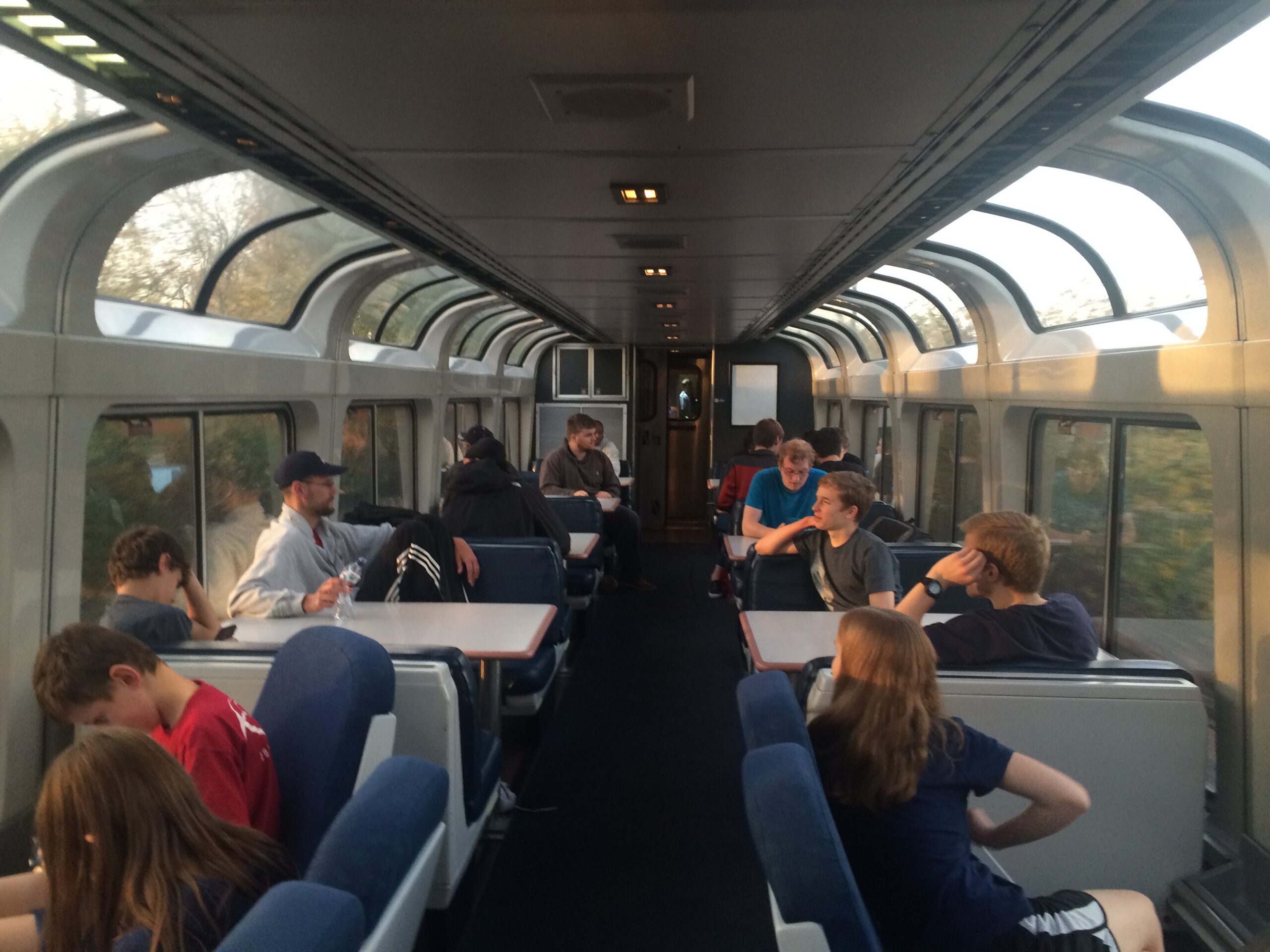
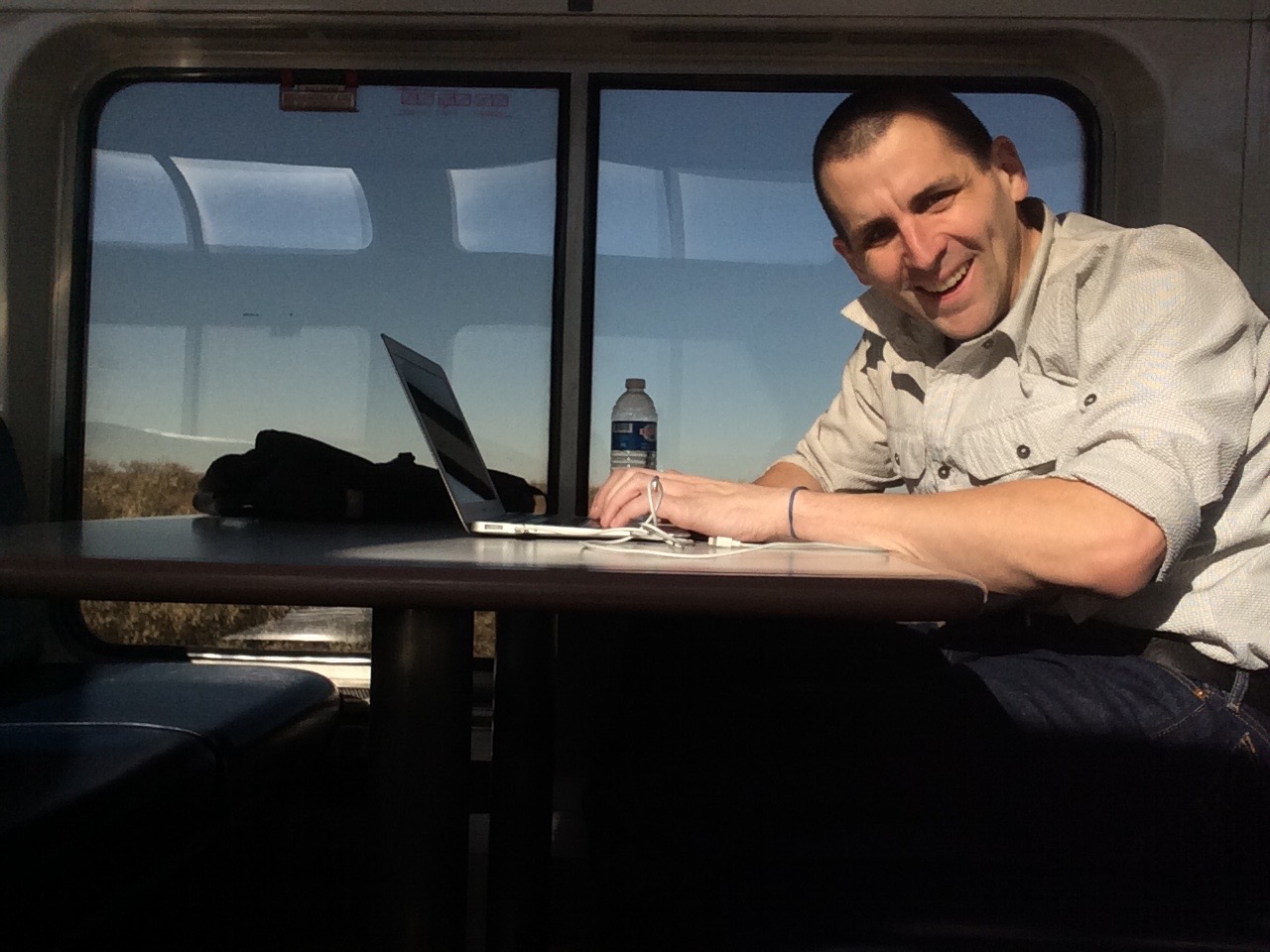
Slow is good for the mind. Traveling by train is surprisingly more civilized than traveling by car or airplane. There’s more room, there’s less security theater and the pace on the rails is more human (I didn’t see anyone suffering from the Cult of Busy). The landscape goes by at a pace that makes sense, not too fast but not too slow. You can bring your own food and alcohol (and people often share in the observation car). And the folks who choose long train rides aren’t in a rush in the way other travelers are, they’re friendlier and more relaxed. I found it easy to get comfortable no matter where I was on the train, and I spent most waking hours in the observation car, watching, thinking, talking and writing. It felt almost like being at a nice public lounge, on wheels, floating through one beautiful landscape after another.
Progress often comes with regress. We believe every new technology improves on the old in every way, but that’s not true. There are often good things we leave behind when we upgrade (e.g. you can’t slam a cell phone to hang it up). My long train ride was a reminder of what we’ve lost as travelers. The existence of a dining car and observation car, where I as a passenger could look out of floor to ceiling windows and enjoy an actual cooked to order meal was a pleasure – one that’s impossible to experience when in cars or airplanes. Trains have a charm few American’s experience unless they travel abroad to places where in the 1950s complete faith wasn’t placed in the belief that gasoline powered cars for every single person was the answer for everything.
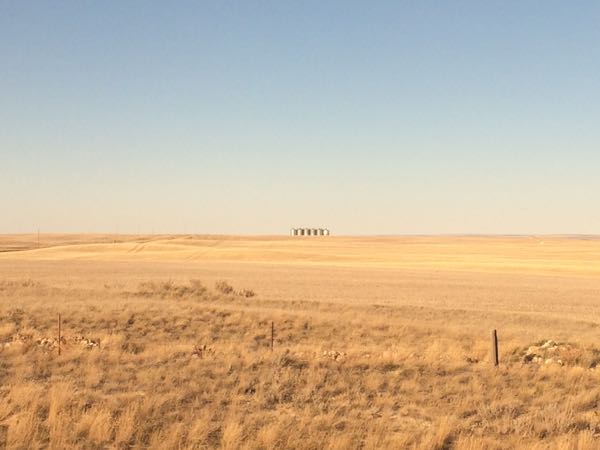
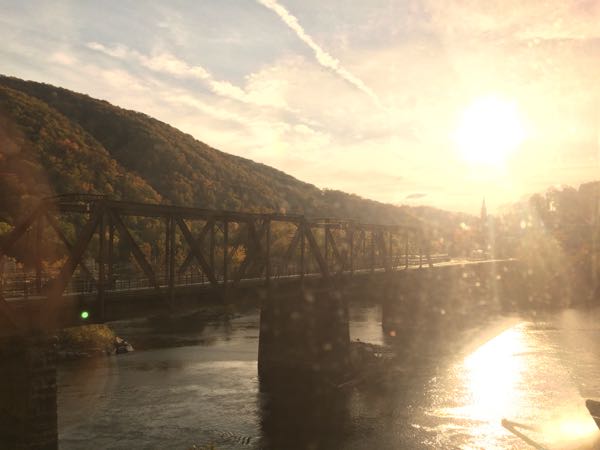
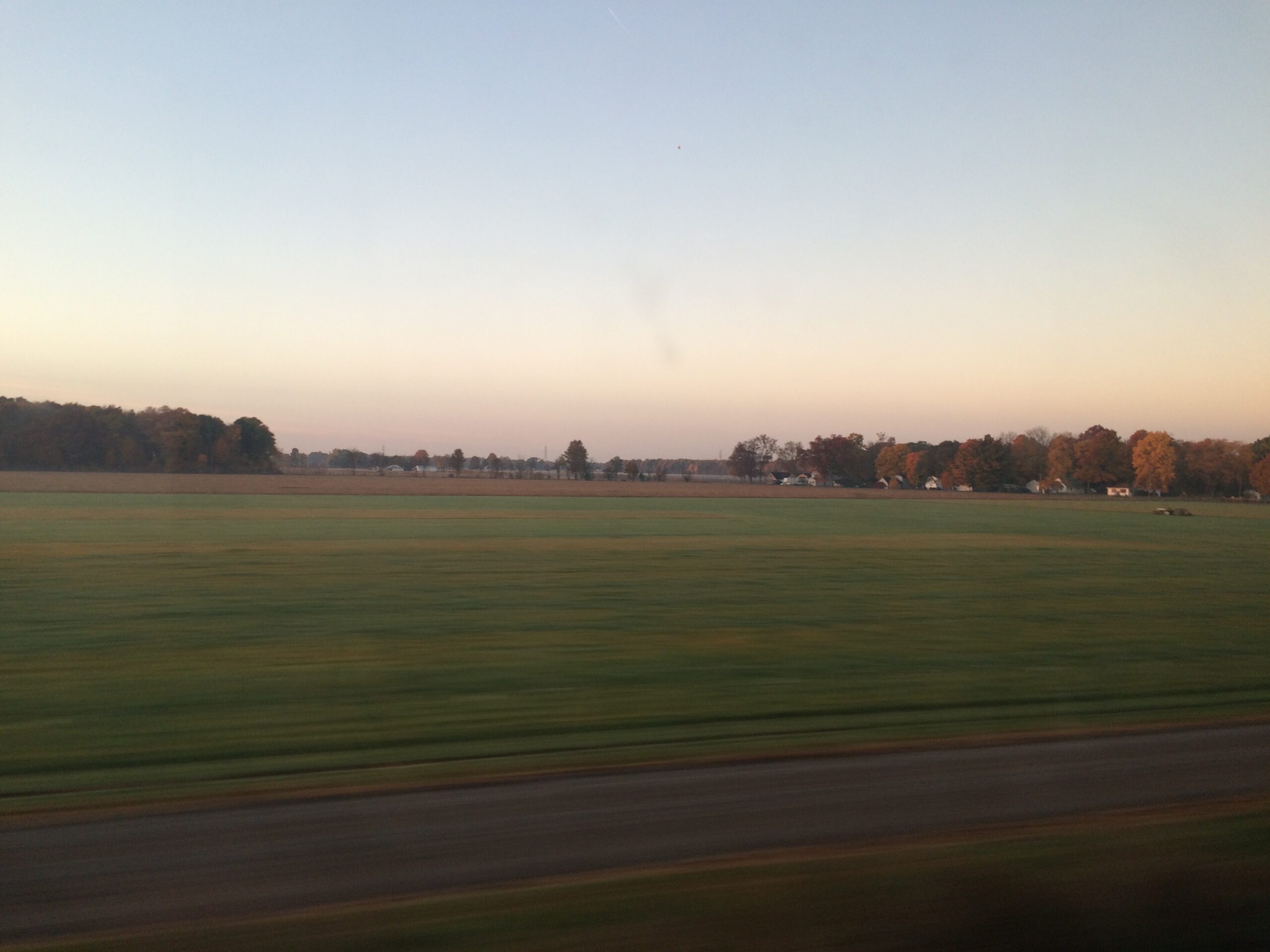
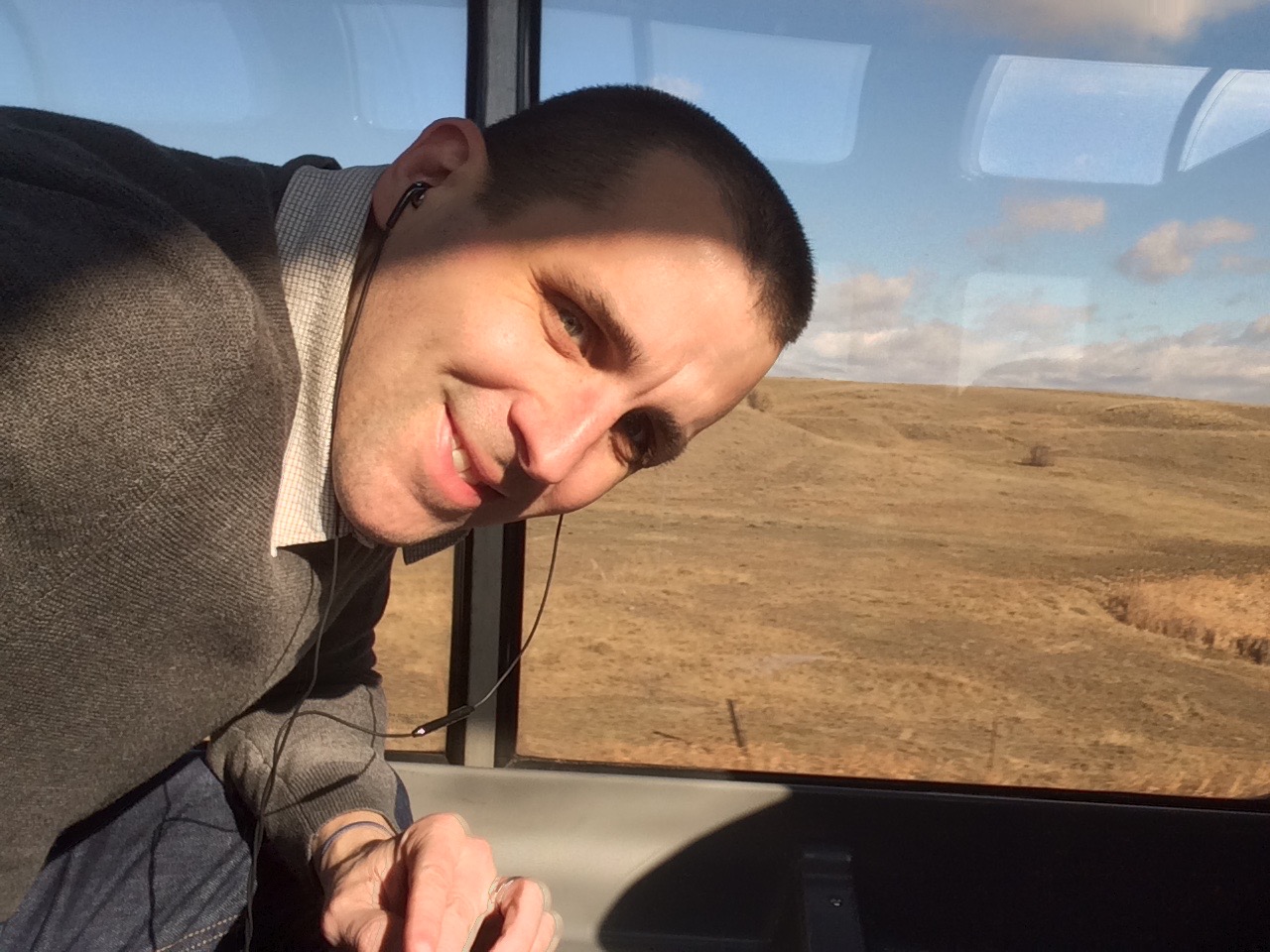
America is beautiful to see. With huge windows in every car, I felt drawn in (or more precisely, drawn out) to the landscape. The train routes follow the hills and waterways, curving in and out as the landscape demands. I had countless moments where I lost myself in thought as my eyes took in the beautiful countryside. I saw long rolling hills, high mountains, endless forests and powerful rivers. At times I forgot where I was and when I came back to my senses I’d wonder what (physical) state I was in, and what town I was passing by. Children in small towns often come to the station just to wave as the train comes in and heads out. Even in cities where train lines run through the rough backside of graffiti laden urban infrastructure, it gave me a better sense of how cities actually work. The USA is a wonderfully diverse and beautiful landscape, perhaps best seen as far away from our highways as possible.
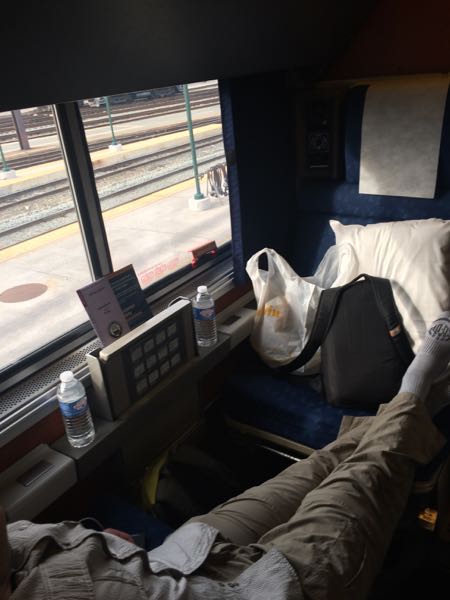
Constraints drive creativity. The small sleeper room I had contained many clever design choices to make good use of such a small space. It felt like being in a space ship or on a small boat, with little compartments and clever thinking at every turn. On one train my little sleeper had its own sink and bathroom (which stunned me as I only discovered this when asking the porter where the bathroom was on the train, and he pointed just to the right of where I was sitting in my sleeper room). The bunkbed where I slept from Atlanta to D.C. even had it’s own full width window, allowing me to watch my country speed past as the train gently rocked me to sleep.
Art is Magical. Even when I’m not writing for anyone else there’s something pleasing to my own mind to see thoughts that were once just in my head transformed into the permanence of written language. I haven’t published much this year, but the residency was a chance to work at my own pace, or not work at all, and I found it pleasurable in every way. If there’s hope for a better future for all of us it will come from the arts at least as much as it comes from our sciences. It’s our emotions that drive much of our best and worst qualities and only art gives us new ways to discover who we really are and who we most want to become.
I’m proud that Amtrak has invested in supporting writers and creators and I’m grateful to have been a part of it – I hope they do it again next year (which has already been announced and you can apply here).
Thanks to Julia Quinn at Amtrak for making my trip possible, all of you fans for cheering me on, and the generous folks in the Amtrak Facebook group who gave me countless tips for long haul train travel. You can read more about other residents experiences on twitter or at the Amtrak Blog (many bios have links).
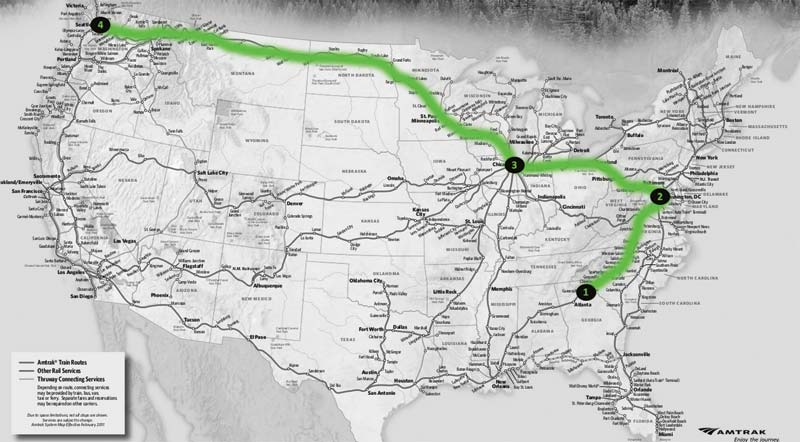
I’m honored to be one of the winners of the Amtrak Writer’s Residency. All 24 winners were announced last year, but I finally managed to work it into my schedule this fall. Here’s the route I’ll be taking over 6 days, later this month:
Day 0: Flight to Atlanta (not on a train, but I’m counting this as the start of my residency)
Day 1: Atlanta to Washington DC
Day 2: DC to Chicago
Day 3-5: Chicago to Seattle
Decisions I have to make (input welcome – leave a comment):
What do I work on (vote below)? I can work on anything I like, and if you’re been following me for years you may know I have three unfinished book projects: A) Finish the philosophical techno thriller novel I’ve worked on (and off) for 20 years B) the book about the London Underground (untouched in years) C) Return to my book about religion (stalled in April 2015 due to burnout) D) Start something new E) Write about the residency trip itself.
What should I pack? I’ve never been in a sleeper car on a train before, or done a long haul train trip. I’m excellent at traveling light, but wonder if there’s anything special I should bring.
How do I get exercise? I’m a fitness junkie and I’m worried I’ll go insane stuck in a box for so many hours in a row (I imagine myself driving passengers crazy by running up and down the aisles all day). I’m even thinking of using the two layovers I have in DC (4 hours) and Chicago (5 hours) to taxi to a gym, get a workout in, and then get back on the train.
Should I tweet and blog, or go dark? It can be annoying to follow someone on a trip like this as many people don’t want to hear micro updates. But the journey itself will be fun to document in real time and if I knew there was an audience for it I’d give it a try.
Dinner before I go? Anyone want to join me for a kickoff dinner in Atlanta on 10/23 or 10/24?
[polldaddy poll=9125518]
I spent a few days in Paris last week (to speak at USI 14). For fun I took photos of every interesting door I walked by. I didn’t seek out interesting ones with a plan. I didn’t want to be deliberate about it. Instead I chose to pay attention as I walked through the city.
Doors fascinate me for many reasons. They’re ignored by most people walking past them, but to anyone who lives or works there this is their daily portal into another slice of their life. For many of these doors I wondered: who lives there? what are they like? What does this particular door say or not say about them?
Without any further commentary here are the doors of Paris.
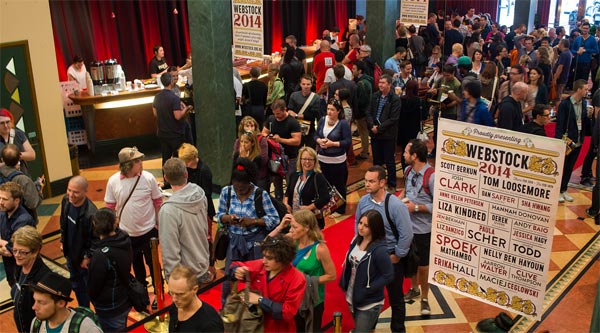
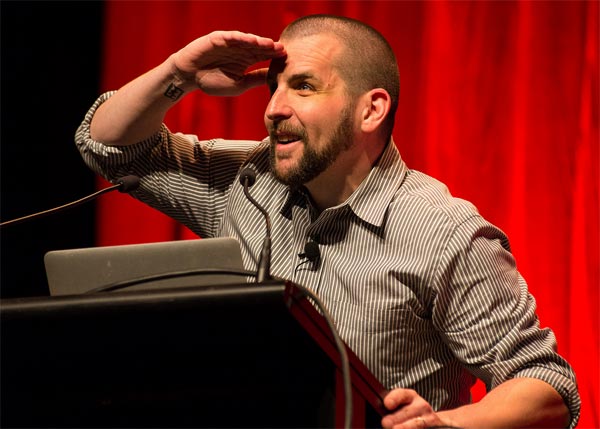
Last week I had the pleasure of speaking for a second time at Webstock in Wellington, New Zealand. Natasha Lampard, Mike Brown and all the organizers exemplify many great things organizers hope to achieve. They run an amazing event and I was inspired to share what I thought they did so well.
Like great design, a great event is notable in large part for what you don’t notice. It takes far more work to make things seamless and natural, making it seem like its all just magic.
1. Single track events force quality
By only having a single track of speakers Webstock places big bets on who they invite. Any event with multiple tracks is choosing quantity over quality, as no organizer can spend much time selecting and supporting dozens (or hundreds) of speakers. Therefore the best events are almost always single track events and afford the deepest experiences for attendees. It means the organizers are investing heavily in a singular, crafted, shared experience, making it easier for attendees to talk to strangers and make new friends. The speaker list for 2014 was excellent and I was honored to be on the roster.
2. Great venues create energy
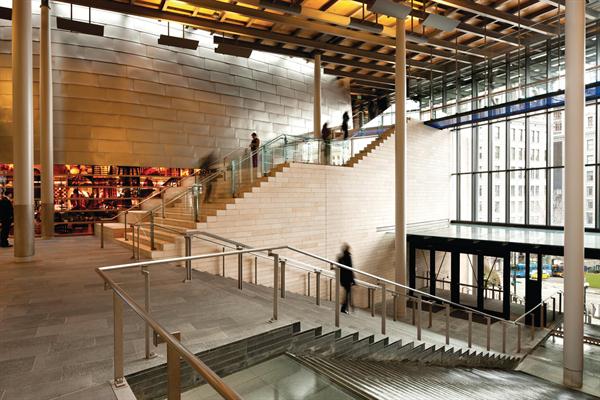
This year Webstock was at the St. James Theater in Wellington, a grand theater with two balconies. I can tell you as a speaker I do my best work in rooms built for speaking, which is what theaters are. No matter how fancy a hotel event space pretends to be, since the rooms are designed for multiple purposes, the acoustics, the lighting, and the energy always suffers. But in a theater, especially one with as much design detail as this one, wow.
The addition of a DJ spinning tracks (and not too loud so conversations are still easy to have) during registration and before talks began helped set the vibe before the event officially started.
3. Speakers Are The Stars
It’s shocking how many conferences forget that speakers are the stars. The marketing for most events is centered on who is speaking: shouldn’t choosing speakers and helping them prepare to do a great job be the most important thing organizers do? You’d think so. But often speakers are forgotten in the logistical shuffle of running a major event.
Webstock does an exemplary job of making sure speakers are taken care of. From the invitations, to detailed emails about what to expect and how to prepare, they thoughtfully help speakers give their best performances. Demographics on attendees and videos of past lectures are provided to help speakers prepare. There were no slide templates or other absurdities.
All speakers were invited to a special pre-event evening to socialize. This is a great speaker perk. It also helps build camaraderie between speakers that caries over into the event itself. Speakers need help to make connections and friendships and they might meet a fan or someone they’re fans of. The organizers took us to the amazing Boomrock, a stunning ranch on the side of a mountain, where we shot rifles, threw knives and fired arrows (not at each other of course), building our appetite for an amazing meal overlooking the ocean. They made sure we all had a great experience together doing something memorable and unique to where we were in the world.
Webstock ’14 had diverse and well curated topics. For a web/tech event 25-30% of the talks were not strictly about the usual topics of design, engineering or technology. I spoke about the future of work, Derek Sivers spoke about the meaning of life, Anne Helen Petersen talked about media and gossip. The event brought in a wide lens of stories and perspectives that because of their careful choosing, fit together brilliantly (afforded by having a single, curated track).
4. They put love and style into the details
From the first email I got from Natasha, it was clear these organizers are smart, funny, passionate and inclusive. This is a passion project for them and they want as much of their energy and excitement to rub off on everyone involved, and it works. Natasha is a fantastic and entertaining writer, even in the many typically dry procedural emails that come with event organizing, and unlike any event I’ve ever been to I smiled and felt energized every time I had contact with her. It’s a little thing in the grand scheme, but little things matter. I wanted to do a great job for them simply because of how much they seemed to care.
Little things they did right:
Great signage everywhere, well branded and on theme (note the visual references to the St. James theater)
Attendee badges are easy to read (and double sided, since they often flip over – more badge advice)
Talk lengths 30 minutes or less (most speakers also offered pre-event workshops)
High quality and healthy food
Choosing volunteers who are excited to be there and genuinely interested in helping peopple
An opening high energy 5 minute video, with a rocking soundtrack, highlighting all the speakers (each getting natural applause), the venue, the organizers and the audience (the closing text in the video said, simply, ‘we love you’). What a simple way to get the crowd’s energy up before any of the speakers take the stage. I was the opening speaker and their brief, but energetic, opening, helped me do a good job in the lead off slot.
One way to think about conferences is that they’re really a form of a party, where what people most want is to join a fun, exciting, informative and inspiring community for a few days. Webstock gets it right in so many ways. Most events can learn much what Webstock does so well.
The Seattle Social Media Club is hosting me to speak next week about Free Speech and Social Media. They hosted me in 2010 to speak on Calling BS on Social Media Gurus (slides and notes) and it’s good to be back.
I’m very excited about this talk: the history of the collision of free speech and technology is a subject I’ve studied for a long time. I’m honored to get a chance to talk about these important issues. Here are the details:
Title: Can free speech survive the social media mob?
When: Wednesday January 1/22, 7pm
Where: Seattle City Hall, 600 4th Avenue, Seattle, WA 98104
Livestream? I don’t know but I’ll update when I do.
Description: The disturbing trend of online mob “justice” continues to grow. Has the unprecedented power of social media made us more or less free to express ourselves? What can we learn from how social media handled controversies and events like the Justine Sacco firing, The Boston Marathon bombing and the A&E Duck Dynasty debate? This entertaining and challenging talk explores these questions, providing clarity and advice on how media experts and ordinary citizens can make a difference.
You can get tickets on eventbrite now. Hope to see you there. And you’ll earn that appetizer with a good pre-lecture workout by climbing the famous city hall stairs.
Selling books is hard. It’s a surprise for most writers, even experienced ones, how much harder finding people interested in your work is than writing books themselves.
So last month while I was on book tour, feeling down on my luck as I walked from a lecture at the Foursquare office to another one at NYU, I was surprised to notice a man on the corner selling poems. I’d certainly heard of street poets before, but I couldn’t recall ever having seen one in person. Born in NYC, I know the rules of the street. You don’t stop for anything. To stop means you are from somewhere else and are easier prey.
But stop I did. How could I not stop? What could be harder than selling writing on the street? And poetry no less? This must be a superior writing creature I thought, and I had to talk to him.
I stood and watched for awhile, and soon he came over to me, asking me not to block one of his signs. He said, with a smile “it’s hard for me to sell poems if people can’t see the signs, you know?” And I understood exactly what he meant as I was in town putting up signs of my own. I told him I was a writer myself, and we talked for awhile.
We talked about our favorite writers, our favorite poems, and all the while I couldn’t believe that there, in the middle of my tour, I’d meet someone that was having a harder time with this writing thing than I was, but yet who was more committed to his work than I was too: I didn’t have the courage to sit on a naked corner and pitch strangers on my writings.
I’d learn later his name was Donald Green. He’d been written about in the New York TImes years ago, and was a rising star, doing readings of his work on the radio and TV. He’s fallen on harder times, and his life on the street has been documented in various articles about him. He told me his family has always helped him pay for a place to stay, and he is living this life by choice. I wasn’t sure how much I believed him, but it didn’t matter.
I offered to buy his books of poems, and he offered in return to write me one on the spot. He asked for a topic and I told him: Serendipity.
A Positive Sign, By Donald Green
So A fellow writer,
I feel, a poet as I.
Though I hear from this writer, one of prose,
and of non-fiction, and of “how-to” this and that,
but just as I began the writing to him I felt the poet,
Wallace Stephens comes to mind,
The unusual in art,
as my sister’s textbook said,
a phenomenon,
or some thing of the kind,
a successful businessman, a successful poet,
perhaps Scott, the same with you?
Oh, stay alive, time can reveal?
But our meeting serendipitous?
Accidental Encounter?
or meant?
God above or destiny, or life’s way, deemed meeting?
Flow like much of life Scott, serendipitous?
Just chance? Just accident?
Mere occurrence?
Show how much is meant?
Is everything SET?
The force or life, or God has it all planned?
How much even is in ones own thinking? feeling? whether bad or good?
I’m here in NYC all week on book tour for The Year Without Pants (full schedule here). There is nothing fancy about book tours: it’s all hustle, from organizing them, to living through them. I’m not Stephen King or J.K. Rowling, who maybe have everything arranged for them. For me I take charge or organizing and planning, using my network to find places interested in having me speak about the book. I work out a schedule, and then it’s all just showing up and trying to pack in as much as I can: often I give 3 lectures a day plus interviews and some lunches and dinners with old friends (or reporters interested in the book).
Amy Packard and Tess Woods are publicists from the book’s publisher (Jossey-Bass) helping get local interviews and media coverage, and it’s great to have help. They get the books out to reporters and give me some to give away. But the author is generally sought after at the center of marking a book: every interview or radio/TV show wants to have a person, not a book, to interact with. No matter how much help you get, it’s intense, chaotic and fun in a twisted way as marketing a book has at best a distant relationship to making the book itself. I simply accept it as part of the job of being a full-time author. I’ve been lucky to work with two publishers (O’Reilly Media and Jossey-Bass) that have supported doing tours and been partners in making them successful.
Here are some short stories and photos from my first couple of days.
Day 1 NYC: ABC, CUNY Journalism School, NYTimes, WordPress Meetup
What’s always funny is it feels great to be invited on radio or TV shows, until you arrive. Then you realize you are just one tiny slot in a day filled with interviews similar to yours. Monday started with a 15 minute slot on ABC News Radio.
And as wasn’t a surprise, the front security desk seemed surprised to have guests at all. It’s amazing how confused these security folks often are at the concept of a show guest arriving and needing help to figure out where to go. Notice how their entire security system is on paper.
Whenever you hear someone on a radio interview, this is what they see while they’re speaking. Radio studios often aren’t great to look at, and TV studios often aren’t stunners either, except for sound studio where they actually film. Sometimes it’s hard to even make eye contact with the radio show host, as there’s a wall of equipment or shelves between them and I.
Next stop on Monday was CUNY’s Graduate school of Journalism, a beautiful building just a few blocks away from The New York Times, where I’d be speaking a few hours later.
Their main student lounge is set up like a TV newsroom, with a big open space and TV screens showing news, twitter feeds and more.
It was a thrill to head inside the new New York Times building, having read the Sunday edition of the paper regularly for years.
Just walking around the different desks, organized by sections of the paper, made me realize how much of a fanboy I was.
Tuesday night I spoke at he NYC WordPress Meetup (lecture #3 for the day). You can see here a no-frills lav microphone. Had a nice crowd of about 70 people. Thanks to Dan and Beau for the photos of me in action.
The meeup was held at the impressive Alley NYC, a startup incubator and community center, which, from the signs, had trouble with elevator behavior.
This morning I had two early interviews, and then headed to a lunchtime talk at Google’s NYC office. Notice how they got the title wrong on their otherwise nice poster (and the mistake was corrected! nice).
It’s rare that companies have books written about them. Most aren’t interested and those that are must find a journalist willing to put in the time required, which is often a year or more. It’s even rarer for the writer of a book about a company to get invited back to that company to talk about it (how very meta, but you all know I love meta).
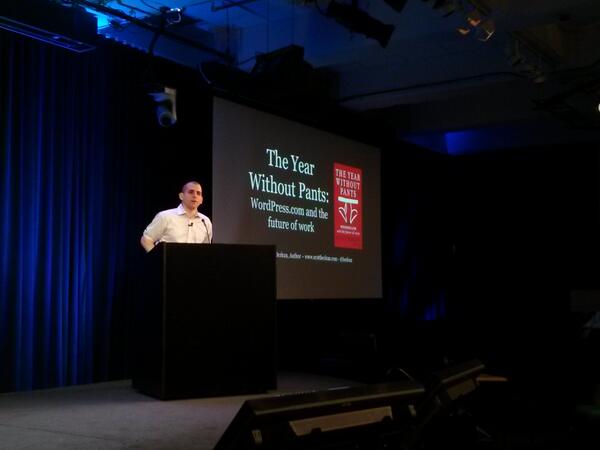
So when I was invited to come to Automattic’s big meetup last week at their new HQ in San Francisco, I was thrilled. Although I worried about what their response would be to The Year Without Pants, I knew whatever happened would be fascinating. I planned to talk for 20 minutes about the making of the book, focusing on things employees would want to know even if they didn’t like the book itself, and then do Q&A.
The company is now 200 people, twice the size from when I left. Nearly 70 of the employees were so new that this was their first company meeting and for them the book is the backstory of the company, a very different perspective compared to how folks at the company while I was there see the book. And I learned of other new updates the book’s “where are they now” chapter will need.
The talk went well, at least for me. I shared the movie trailer for the book, how the title and cover were chosen, as well as the backstory on how the project started. I also talked about the writing process and how many unusual challenges there were (imagining writing about your boss and coworkers). After a half hour of Q&A we retreated to the bar and, to my pleasant surprise, partying began. Someone generously (or cruelly) provisioned a bottle of Ouzo, a reference to a story from the book, and Team Social and friends celebrated long into the night.
For some of my former coworkers that I respected the most, the book was a fine, but predictable, read. For them, unlike the rest of the readers on the planet, working without email, from anywhere in the world, with little management and high autonomy, on the 8th most popular website on the planet is normal. It’s just a different reading experience when you were there, or nearby, than it is for everyone else.
Someone asked all the employees to sign the book which was amazing to see. I never expected something like that to happen.
Some current and former employees had already read the book and posted about it, and I hope more of them do. Even for folks who don’t like the The Year Without Pants I’m pleased if it leads them to share perspectives, stories and opinions related to or inspired by the stories in the book:
No matter how well the book sells or doesn’t it has been an amazing and fascinating experience as a writer to write a book like this one. Thanks to Matt Mullenweg and Toni Schneider for making the project possible, and for everyone on Team Social, and supporters at Automattic, for helping the project come together so well.
To promote my upcoming book The Year Without Pants I’ll be touring the NYC/Boston area 10/15 thru 10/28.
Just as in the past I’ll use my network to fill the schedule, but this time I wanted to let you folks in NYC/Boston help, if you’re interested. If you’re not interested in doing some legwork to get to see me speak in person, no worries – but stop reading now.
The day opened with brief comments from Daniel about how there are two kinds of people: creators and curators, which would be the two themes for the day. He spoke for just a minute, and then an unnamed warm up team from Second City Improv, Scott Goerhing and Kaitlyn Skully, came out. They were unexpected and excellent. Dan’s opening was by comparison short and cold, as commentary from hosts often is, but Goerhing and Skully charmed their way through introducing speakers, making safe jokes at the speakers expense (asking if I was behind the fashionable Birkin bag), warming up the crowd. An unexpectedly good choice of curation. They never outwore their welcome, and added warmth and humor to the entire day.
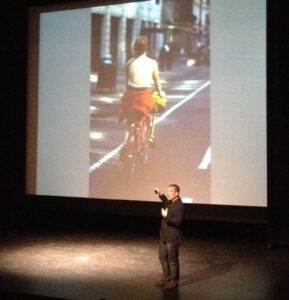
He briefly described his work and blog. He expressed that photography is a quiet act and its a surprise to go out and talk to large groups like this. He grew up by reading fashion magazines, which he thinks trained his eyes for how to see. At first I was concerned he was simply going to talk through his personal history, but listening to him explain why certain photographs were meaningful for him was fascinating. It’s hard to capture in notes here how much value there is in a generous expert honestly talking through work they admire.
When he moved to Brooklyn as a young man from Indiana, he didn’t know anyone. Walking on Atlantic avenue, he saw a postcard of a couple on a boat and it moved him. It had an emotional effect. The first real photographic images he bought. He talked through a series of images and what they meant to him. He likes to think his images start a story. Good photographs don’t tell you everything.
Photographs lose their initial meaning over time. They are taken in one context for one reason, but live on, and take on meanings, often superficial ones, by those who come later who do not know the context.
“The truth of a photograph is less interesting than the romance… allowing the romance is sometimes the most interesting part [as a photographer]”
He told a story of following a young woman on a bicycle, while on a bicycle, trying to time it right to take a good picture. And he worked hard to find the right angle and exposure, while moving. And later he realized a detail he’d missed: she had a metal right leg. A powerful detail that was entirely circumstance.
He wonders what photograph wil mean with digital photography and tumblrs, and the digital natives who don’t know what photography used to mean as an expensive, physical object, rather than cheap, easy, fast digital photography. Images on the internet are so easy to share that it makes the images themselves mean something else. He thinks it’s fascinating, unlike photographers of the past, that modern photographers can capture in the present, and 5 and 100 years from now, what people in any moment though of a particular photograph.
Aye gave the history of his work as designer working with the CTA (Chicago Transportation Authority) and other projects.
Transportation is the interaction of people’s choice and government. Includng tensions. The CTA has anxiety and a history of animosity between transportation users and employers “we’d have a great service if [it] weren’t for all those people”. In this sense The CTA’s main focus is to logistical expertise. They’re similar to FedEx – except these packages contain people. But as a designer, Aye was interested in the experience of being inside those packages.
After 11 months leadership changed at CTA, support for a designer (or for Aye) diminished, and he was fired. Now he’s a professor and wants to use what he learned to teach designers are everyone from the challenges he encountered. He created GGS to answer the question how can we help? And they realized what they needed was a ‘new model for public engagement.’ A new way for people to access the information and services CTA(?) already have.
Initially he resisted crowd sourcing, but realized there was a role for all kinds of research, including the messy, unfiltered elements of involving many people. He used his frameworks from being a teacher to consider the entire problem different: the city is a classroom. Which led to a new term: public design team. “Everyone of you in this room has a slightly different perspective on transit” and the spirt was to be open about finding ways to incorporate many of those views into the process.
Which led to…. a mobile app. To help people navigate the city. They launched a public kick starter campaign, which was terrifying. They set a goal of $125k, but only got $23k. Which was devastating.”After crying myself to sleep… he realized they were free from all of the expectations.. it didn’t matter if they screwed up again since they’d failed so largely before”
“Succcess hides learning” he realized. And what he’d learned was the project was much to complicated. They needed to simplify.
They developed three principles:
Give the team a role and a name. They came up with the title “Urban Agent” and people loved it. Volunteers could refer to themselves as “Agent #23”.
Ask questions that respect your team. There are no stupid questions but there are some that are deeply flawed. Assignments should be clear and real “observe your commute and look for transit tools – what could they do differently?”. Because they asked in a particular way they prevented people from whining. There were 300+ submissions.
Give the team tools so they can respond with solutions. “How can non designers help with design?” He believed the only prerequisite was to have motivation and an idea. 600 ideas were submitted, which were narrowed down to 70 app features. Then they went to wireframes. [but he didn’t explain what the final app is and how it did – if anyone has linkage leave a comment]
I had to prepare for my own talk and sadly didn’t take notes for Capron’s talk. If someone else took notes please leave a comment with a link.
Scott Berkun (me), Saving Your Creative Soul
I talked about the wide gap between consuming information about creativity and actually making things yourself. To make good things demands connecting with yourself, your soul, and the voice inside you that you have to work to hear. I referred to the film The Mystery of Picasso.
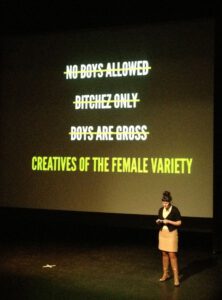
Elaine is an art director, involved with a group of female creatives called Quite Strong.
She opened by talking about advertising, and showed a short film by Gene Kilborn [killing us softly] about gender bias in ads:
Ads sell more than products – values, perceptions, morals
Cindy Crawford once said “I wish I looked like Cindy Crawford” – no one looks like they actually look
She studied women’s studies in school, and marketing and advertising and thought “what a bunch of assholes…[advertisers] ruining everything”. Apparently beer ads are known as being the most evil. But there is still room for good work: Budweiser did an add with the bottle cap as a crown. Compelling, simple and without any cultural issues.
She decided “I am going to change this industry from the inside”. On an early photo shoot she managed to hire a size 14 model, something unheard of – but they resized her in post production. She also worked on beer ads for Coors (w/Ice Cube).
She helped create Lustlist – a curated list of female talent they admire. Artists, directors, etc. to highlight their work and a place for advice for female creatives. In the beginning all they had was each other for confidence, but soon we were asked to speak at events. At the first of 2o speakers, 2.5 were women. Design conferences are better. But she noticed men speak differently and more egotistically, but that in some ways she admired that style: “hey what’s up, here’s my work, it’s cool, I get paid a lot of money for it… {mic drop}”. Women tend to focus too much on other people and the community rather than themselves.
6 out of 20 of top 20 are women on top ted talks. For the “Most Persuasive” top 20 list it was all men except one, where ironically the woman was speaking about women representing women in media. She joked it’s called TEDx, non TINAx or TabithaX.
With some colleagues she created the Moxie conference, with the tagline “Make that cheddar (money). Look good doing it.”
She was honest in saying “What merit did we have to throw a conference? We had no merit. But we wanted to practice what we preach” It was a success, and 40% of attendees were male, which they were proud of: their agenda wasn’t too big to include everyone willing to participate.
Question to ask when making work:
Is this coming from a conscious place
statement bigger than myself
You have the power to vote with your $$, vote with interests, likes & shares
“it’s either you [in the TED audience] or the people posting youtube comments, and they’re not stopping any time soon”
Kadavy is a designer and talked primarily about design literacy. He offered that when people across the web get angry about something it’s the sign of something big. He told the story of the origins of ComicSans font. It goes back to 1994 during planning for Microsoft’s Windows 95 launch. Microsoft Bob, a product in development at the time, had a talking dog as part of the UI. Vincent Connare, a type designer at Microsoft recognized the font the dog talked in, Times Roman, was out of context and a mistake. A cartoon dog should talk in a cartoon font. He went and created Comic Sans font. But it turned out to be too late to change Bob. Comic sans shipped in Windows 95 anyway and has been (ab)used ever since.
Connare never intended the font to be used as it has. For every 1000 people who say CS should never be used, there’s one guy who uses it anyway and says “I don’t care what you think” and anyway it’s just a font. Computers have granted everyone the power to be designers for better and worse. Connare was a craftsman. He’s emabarassed that his career is associated with this font, used in ways he never anticipated. Each of us is a craftsperson and can make things for others to see.
More people search for “comic sans hate” every year. [I wondered if more people do more searches every year]
Guttenberg, who made Europe’s first movable type printing press, made it possible to take an idea from one brain and give it to something else. In other words printing and publishing networked people’s brains.
Two big obstacles:
The more people there are making things, the harder it is [because of competition] to get it to people’s brain (A modern mobile phone is a network and a printing press)
When making for others what you like and what they like won’t be the same
He created an unnamed site that failed and then started redditgifts without co-ordinating with reddit. He was a reddit user and knew their inside jokes. He’d also been involved in one of the early kickstarter campaigns, based on the Jetblue travel challenge, in 2009 (Fly for 30 days, up to 15 cities, for $600). Two people did it and blogged about it. This led to an idea for something related to reddit – gifting to strangers (aka secret santa).
Their first rule for people who signed up was: Don’t be a dick. Since this involved strangers, the internet and sending things, they feared people who send gag or mean things. They built a very simple website that didn’t do much. That first Christmas in 2009 4380 participants in 52 countries participated. It was awesome for him, but super scary for many reasons. Now that it worked, they’d need to build out the site to cover:
proper signup
a profile of likes / dislikes
matching process (equivalent of pull names out of a hat, but smarter)
A way to report you got and how much you spent
if you get a gift – you post pictures
Reminders system
They wanted to make it easier to “friend stalk” participants so a stranger could learn enough about them to send a really good gift.
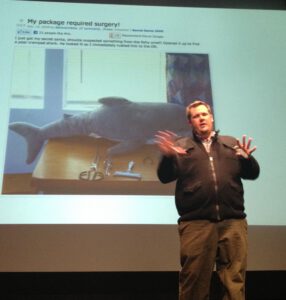
Beyond the tech challenge, wondered if people would abuse it and send garbage? it was scary and Exciting. The First gift sent was copy of the game Half Life 2. The next gift Dan mentioned was called Package required surgery (photo here)– they packed a set of gifts, based on research of that stranger, and stuffed them in a stuffed shark. “We put your present in the shark you are going to have to do surgery to get your gifts out”. The person who received it brought it full circle: and took photos as if it were real surgery. Other gifrst includes $1500 in cash. Hand paintings. Amazing – was famous on the web.
[He showed many great photos of gifts and the responses from the recipients. I’ll try to dig some up later online if I can]
They wondered Was it just Christmas? Or could we do this around a day of our own invention? They tried another day. Named: Arbitrary day.
2010 – signups quadrupled. Showed picture of crazy portraits (found their picture and painted them a portrait).
2011 – Jimmy Fallon participated as did Stephen Colbert. $1million in gifts to strangers were sent. Someone sent a case of live crabs to eat and the receiver posted as a joke “I got crabs from an internet stranger.” They did another version for U.S. troops and another that worked one-way (not reciprocated).
2012 – even bigger – $2 million, 127 countries
WHY? Is it working? Why does it grow? He saw a recent TED talk about using money to buy happiness, it can help but you have to spend it on strangers. That’s basically what redditgift is to him, this idea improved and amplified by the web.
He’s an artist in what is sometimes called Glitch art, where something that is commonly called ‘broken’, like a blinking street light, or a tv that only plays static, is recontextualized into another creation and used for another purpose. He believes glitches are powerful because they break us out of the context of being a consumer: What’s wrong? Is it my tv? my web connection? The software? We pay attention and the illusion the maker tried to create is broken. All systems are unstable and messy if you pay attention, just like we [as human beings] are.
Glitch safari: looking for glitches in different mediums and places. Referring to updating software: “My art sometimes breaks when things get fixed.” When stuff stops working the way I want [due to upgrades and such], it forces me to make new work.
His work is often called Brikolage, working with curating found objects. He looks at something like Word, the Microsoft application, is a collection of sounds, scripts, icons and code, and to him all of this is fair game. [And showed video of one of his works based on Word – I couldn’t find it but here’s a similar one called Windows Rainbows and Dinosaurs].
Satromizer – iPhone app for glitching he made with a collaborator.
Glitches are more than a stunt: but a philosophy of creation and awareness. Glitches offer us a chance to see things we depend on and forget about differently. He invites us to take a moment when we encounter them and consider what it means.
Betsy Hoover, Online organizing directory for Obama Campaign
She asked the audience to think about a social problem that requires a community to solve.
She studied at Xavier and was interested in community building. Went door to door in Cincinnati to ask about what they liked and disliked about their neighborhood. She heard 6 people tell her they wanted a speed bump, to protect their children. They were surprised many people had the same issue. She brought it through the right government channels, and made it happen. And this inspired her to do even more.
She worked on the campaign, and after they won South Carolina Primary the campaign was broader, and she was interested in using online tools. Rather than go door to doo she found MYBO which was pivotal in the campaign.
She continued doing online community and found the switch from offline to on was very similar She never imagined the internet would be central to her work, but it’s not surprising now. These were people who cared and the task was to help them relate to each other: organizing.
Discovered subject lines with the most casual subjects did best. They were treating the recipients as people (She joked “Sorry for all the emails (not really) but thanks for all the action”).
In 5 weeks someone who joined rose form being an unknown local volunteer rose to play a key role in the Ohio campaign. [I think her point was the online tool created local engagement that would have been unlikely without it].
Always have to meet people where they are. Not on obama.com, but on reddit. Many people don’t self select to join a community. But Reddit was a risky place to be (as a president). 30k people registered in one day, their highest spike in the campaign until near the end.
Modern Americans are hard to reach by phone. They move, they don’t answer cell calls to numbers they don’t know. But 85% of unreachable people can be reached online, through facebook, through their friends. Friends as messengers is the most powerful way.
If you are an organizer, you are not the best representative to get the people you don’t have already. Your friends or subordinates might be, but you definitely are not.
The internet is not a holy grail: it’s just a tool. Use it to build relationships.
[He arrived late and apologized for being dressed casually: he was in a bike race. He was slated for 5:30 and luckily didn’t need to go on until 6:00, which he joked about a bit. He carried all this well and got laughs but it was disrespectful on principle]
His company started as a small coffee roaster, now has coffee bars across the U.S. and 1000 wholesaler accounts, and buy from 20 counties, paying above fair trade values.
What’s required to build a great brand?
Conviction: you do what you say you’re going to do. Patagonia is a great example. That’s how you make brands that last.
Unimpeachable quality: if you build brand well it will last forever. Four Seasons started as a motor inn in Toronto. When it moved into London it had to change to compete. They decided on unimpeachable quality as their goal. Every detail smacks of quality (Also mention Krug champagne).
People see through lack of authenticity There are many inventa-companies (“we thought of this while out on a hike”). Levi’s embodies this. Gold rush history, 200 [it’s more like 130] years later the jeans have the same quality. Dockers however have lost their way. In coffee they see many other brands jump in and them jump out. They don’t commit completely, or aim to deceive customers about what they are.
Innovation and evolution. JCrew launched as preppie brand when he was in college, but now have reinvented themselves. Went from preppie and sleepy to leading edge. The tiring part is, just when you’re getting sick of your brand, the public is just starting to get it, they’re chasing you and are behind you. You need to be patient, but always working on what’s next. There are brands that just fell asleep for 3 or 4 years [and don’t survive].
Integrity. It took 18 years to have the success he has now, and deflects praise he gets from others (“Google started after we did”). If you are going to build a great company and brand you have to have the utmost integrity. It’s easy to do things that are cheap and low quality but it won’t last.
Be deliberate. Where do you want the brand to go? Even successful companies lose their confidence and way. Apple is a good example for their patience and dedication to quality.
He talked about how bike races don’t need to talk or make excuses. Great brands also stand on their own, with little artifice [which didn’t jive to me with him being cavalier about being late].
Here are a few speaking engagements over the next few weeks:
April 1st, Bellevue, 6:30pm, Microsoft Retail Store (details) – Speaking about speaking
April 6th, Chicago, TedXDePaul (tickets on sale and go fast) – on creativity and curation
May 1st, Minneapolis, MN, Keynote at SATURN Software Architecture conference, (details) – talking about the new book
Tue May 22nd, San Diego, An Event Apart (details) – on getting feedback without frustration
If you’re interested in hiring me to speak at your event, start here.
I’ll be in Ireland next week, giving the Keynote at the Technology at Work conference organized by Invest NI.












 This is now the edited version of my notes from
  Photographs lose their initial meaning over time. They are taken in one context for one reason, but live on, and take on meanings, often superficial ones, by those who come later who do not know the context.
 Elaine is an art director, involved with a group of female creatives called
  They wanted to make it easier to “friend stalk” participants so a stranger could learn enough about them to send a really good gift.