As a writer I think often about storytelling and different ways to tell stories. I recently watched Bitter Lake, a BBC documentary by filmmaker Adam Curtis (recommended to me by Ario) and I can’t recommend it strongly enough. The film is something everyone should watch for three reasons.
First is its ambition. Many Americans feel they are betrayed by media and that we are fed oversimplified stories that don’t serve our interests. Yet we do little to seek out alternative kinds of storytelling and storytellers. The opening narration to the film makes clear its ambition to offer something better:
Increasingly we live in a world where nothing makes any sense. Events come and go like waves of a fever leaving us confused and uncertain. Those in power tell stories to help us make sense of the complexity of reality, but those stories are increasingly unconvincing and hollow. This is a film about why those stories have stopped making sense… it is told through the prism of a country at the center of the world, Afghanistan.
Second is its form. Most documentaries use the same structure of voiceover and interviews with experts to tell a linear, dense story of an event. Curtis is known for more ambitious storytelling where the viewer has to put more of the pieces together themselves. This is the kind of intelligent storytelling we claim to want. It demands an investment from the viewer, but delivers on it. It reveals how the obsession with simple answers betrays the truth we claim to want.
Bitter Lake has much less narration and expert commentary than you’d expect. Instead Curtis sifted through hundreds of hours of rushes, the unused footage recorded by news and television crews, to share moments that are surprisingly real. I say surprising because in watching Bitter Lake you realize how stereotyped all of the footage you’ve ever seen of Afghanistan has been. Here you see children playing, soldiers dancing and people living their lives. And you also see moments of shock, violence and uncategorizable scenes too strange and real to label (vaguely reminiscent of clips from Koyaanisqatsi, but without slow-motion or endless Phillip Glass riffs) . It has as dream like effect and Curtis leaves it to you, the viewer, to decide for yourself what some of the shots he shares mean, or how they fit together if they do at all, just as you might have to do if you were traveling yourself to a foreign country and having a real experience.
Curtis himself offers:
These complicated, fragmentary and emotional images evoke the chaos of real experience. And out of them I have tried to build a different and more emotional way of depicting what really happened in Afghanistan.
Third is the story of America and Afghanistan, the subject of the film. Some of this story I knew, but there were many surprises here that sent me immediately to the web to research and explore. I didn’t know the U.S. in 1946 invested heavily in developing Afghanistan, (with unexpected and disastrous consequences) which means the massive reconstruction of recent years was a repeat of a failed project of the past, making many of the same mistakes. And I learned how the complex relationships of oil, weapons sales, America’s relationship with Saudi Arabia and its (perhaps unavoidable) hypocrisies fueled so many of the troubles in the middle east for the last 50 years, including 9/11, the rise of radical Islam, and the sad stories that have followed. I left the film understanding the larger stories in a profoundly better way (accepting its complexity), and with new, sharper questions too.
Many books are made into movies, but most movies aren’t very good. Movies are hard to make, period. Even with a great book (Wild is based on the memoir of the same name) it’s hard to transfer what makes the book great into a different medium.
For any writer, or reader interested in memoir and storytelling, I recommend going to watch Wild, staring Reese Witherspoon. Here’s why:
It’s a film told from a woman’s perspective. Half our species are women, despite how rarely they are central, or even peripheral (see Bechdel test) to the plots of films. And despite the ads for the movie, the protagonist is not simply a “confused young person on a journey”. She’s well portrayed as a smart, passionate, creative, sexual and more than anything, interesting as a person. There is a fully realized human being at the film’s center – how often can you say that about any book or film?
Visual memory as storytelling. I won’t go into detail which might ruin your experience, but the film bets on a very different way to explain the main character’s thoughts and memories. The approach they take is closer to the actual experience of memory and thought, as best we understand it today through science (and through art). Even if you don’t like it, it’s brave and unusual for a major film to use this approach.
Non-traditional story arc. The word verisimilitude means the appearance of being true or real, and the shape of the narrative of the film is unusual, but possibly more realistic in how we experience and tell stories. As a film that centers on a long hike there are many easy cliches to fall into, and Hollywood travel films often gleefully jump into them. The construction of the story itself is more challenging than I expected and I appreciated this while watching the film, and even more so, after it was over.
I read many memoirs and wrote one recently – if you’re interested in personal non-fiction, even as a reader, you should see the film. I haven’t read the book itself, so can’t comment on how they compare.
I’m a fan of creative dystopia and when I saw the graphic novel Snowpiercer at Elliot Bay Books I immediately picked it up. The premise is ridiculous, but metaphoric: all the survivors of the human race are stuck on a train together, a train that must keep moving for everyone to survive. Go ridiculous metaphors! What is a good graphic novel without them?
Unfortunately the book isn’t very good. It’s underwritten in most ways and never takes full advantage of the interesting premise. The movie however is much better. I’d recommend it generally for science fiction fans.
The film centers on the struggle between the lowest class of people, those stuck in the back cars called the tail. They live in poverty, have barely anything to eat and struggle to survive. A revolution is brewing and they’re planning a desperate attempt to work their way forward and, if lucky, take control.
I recommend the film for two reasons. The primary metaphor of confined class struggle is explored in different ways. When resources are scarce, or you are at war, what is the best way to govern? It’s no surprise those at the front of the train, who live in luxury, force the belief that where you are born on the train is where you must stay. The second reason I recommend the film is because of its many thoughtful flourishes rarely seen in American action films. Although the film is violent, there are moments when things slow down to capture a snowflake floating by, or the curious handling of a large fish by soldiers just before an awful fight is about to begin. There is a patience and craft at work here that’s hard to ignore. The performances are good, there are surprises and some fantastic sets that take on the challenge of how 1000 people could survive on a train for 20 years.
Of course it is still a sci-fi film and there are some cliches and absurdities you must either suspend disbelief for or willfully enjoy.
I’m fascinated by religious history and love movies, so it’s no surprise I’ve seen many films with religious themes. Even when I’m familiar with the texts they refer to, I often go back to reread and compare how the filmmakers handled the many challenges of trying to make a narrative movie about texts written for very different purposes. Most bible movies fall under the pressure to convert these stories into modern forms. The Ten Commandments, as over the top as it can be, is one of the best of these attempts. While The Bible, starting George C. Scott, Richard Burton and Elizabeth Taylor is perhaps the worst (though its coverage of the tower of Babel is the only one I’ve ever seen on film).
Noah (2014) is one of the stranger movies about a biblical story you’re ever going to see. It is an interesting, but also frustrating film. I’d recommend it primarily if you are interested in how a talented artist used such an old and familiar story as the framework for many bold and unexpected turns. Purely as a telling of the tale from the bible it doesn’t work as well, and it’s also choppy as a hero driven disaster film, which is perhaps the simplest way to frame the narrative of the story. There are anachronisms everywhere, so many that I lost count (everyone is white, they speak with a British accent, they have finely tailored clothes, and on it goes). But this was ok. From the beginning of the film it’s made clear this is an artist at work. The rules he is following are his own and I found this liberating and challenging.
The passages in the bible about Noah are barely a few pages, and much of them are about the ridiculous plans God gives Noah to build the ark. I always find engineering instructions in religious texts to be comical, as I’m not sure who they’re trying to convince that anyone would build anything the way they describe even in ancient times (engineers were clearly not included in the meetings about how to tell these stories). It often reminds me of the techno-babble in Star Trek, designed as theatrics mostly to impress the uninitiated.
Director Aronofsky takes full advantage of how much is missing from the Noah story, in some cases for better and others for worse. It’s a beautiful film. There are gorgeous montages, wondrous landscapes, and finely crafted recreations of bits of the Genesis story (although interpreted in ways surprising to many Christians, who forget that the Old Testament was written by Jews, as a Jewish text, with their own interpretations which were favored by these filmmakers). The pacing of the story is odd, almost clumsy, with a heavy reliance on Hollywood cliches. This was surprising given Aronofsky‘s body of work, where he has always placed his vision, however flawed, above falling into these kinds of empty patterns. My favorite speech of the film is uttered by the bad guy (a character absent from the Genesis story itself), and it never gets the resonance it should simply because of whose mouth it comes from.
Making films about the Bible always upsets someone, as most religious factions are continually shocked to learn all of the other factions interpret these texts differently than they do (cue The People’s Front of Judea). I fail to see why films are expected to follow their source material precisely, religious or otherwise. Film is a different medium and trying to replicate a book in film is a mistake (part of why so many movies about the bible are so bad: they’re overly reverent for the trivia). It’s the spirit of the material, the themes and messages, that are most important to capture. This version of Noah has been criticized for breaking with details from the story in the bible. I didn’t mind most of these departures, I just couldn’t decide why some of these choices were made (e.g. In Genesis all of Noah’s boys bring their wives with them, but in the movie this is not the case). Theses departures often muddied the messages and questions, rather than clarifying or strengthening them.
The film is well acted. The performances are good. There are stunning, truly powerful visual moments. And even the hypocrisy of God’s instructions and behavior, a fundamental theme of the Old Testament, is made clear at times. But the muddy screenplay fails these contributions. This makes it tough to recommend the movie generally. If you like Aronofsky, the Bible, challenging films, or films with religious or philosophical themes, then go see it.
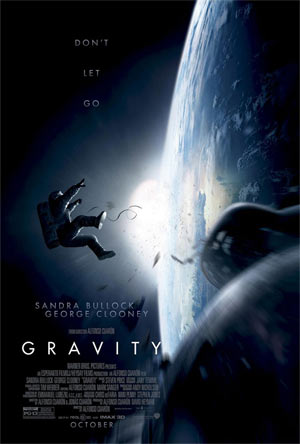
Side story: as I kid I remember the joy of stumbling on a movie on TV where I had no idea what it was and loving it in part because I had no idea what was going to happen. That almost never happens anymore. We are such proficient consumers now that we know far too much about films before we see them, and most reviews and previews are effectively Cliff’s notes versions of the stories. I need more film serendipity so I can have more film pleasure. Gratefully I didn’t know much about Gravity other than the trailer.
My theory of movie reviews is to share why people should see, or not see, a film without ruining it. Never tell the plot. Never give away anything. Good critics can do this.
Review: Gravity is good. The film Gravity is very good too (ha ha). You should see it. You probably saw a preview or a post and know it’s about space. This is true. I recommend the film for three reasons:
It is a patient film. Any time a filmmaker doesn’t feel the need to jam every second with action, explosion or wisecracks it shows they have respect for the audience’s intelligence, and confidence in what images they’ve put on the screen. Gravity is beautiful and has many amazingly good looking scenes that will wow you in between moments when you are holding on to your seat, or sometimes while you are holding on to your seat.
It is about space. I like space. I bet you do too. Most space films are very noisy even though, as we learned from Kubrick’s 2001: A Space Odyssey, space is very quiet. Gravity gets some of that realism about space right and uses a movie theater to transport you into what space probably feels like. There are some sequences that will make your jaw drop. This is what movies, in the grand sense, should do.
Sandra Bullock. She is given a chance to give an authentic performance unlike most films you associate her with.
As with all movies about space I’m sure there are entire newsgroups dedicated to comparing the space physics in Gravity with real physics but I assume you go to see films with your suspension of disbelief filter set to on.
Definitely see Gravity it in the theater. I saw in in 2D since 3D is stupid (you know it is).
I watched the documentary Detropia on Netflix Streaming recently and I highly recommend it. With the recent news of Detroit declaring bankruptcy, something shocking for a major city, the stories and images from the film rose again in my mind.
If you want to understand how a great city has fallen and how good people have been struggling to turn things around, this is the film for you. Film has storytelling powers beyond what headlines and news reports can match. If you’re interest in cities, economies, globalization, design and the future of America, don’t miss this.
I visited Detroit in 2010 and it was an urban experience unlike any I’ve ever had. The city had a population of 1.8 million in 1950, but now is barely half that. Walking the downtown streets past abandoned buildings that happen to be some of the best art-deco architecture in America was both disturbing and mesmerizing. If you have any interest in design or urban planning, you can’t help wonder: how would you turn the city around? How would you redesign infrastructure of a huge city to work now at a smaller scale? What policies and failures set Detroit on this course and what can other cities in America learn?
The film deftly frames the story of the city around the lives of a handful of citizens, a business owner, an artist, an activist, and a union official, and lets them lead the telling of the story, anchored lightly by facts, history and some stunning cinematography. Even if you don’t agree with the assumptions offered, I guarantee the film will raise plenty of excellent questions to make it worth your while.
Screenwriting is hard, but what’s harder is selling a screenplay and getting a film made. The best documentary I’ve seen about the business of screenwriting is Tales From The Script, currently streaming on Netflix.
The movie is a series of interviews of the screenwriters behind many famous films of the last decade:
William Goldman (Butch Cassidy and the Sundance Kid)
Paul Schrader (Taxi Driver)
John Carpenter (Halloween)
Frank Darabont (The Shawshank Redemption)
David Ward (Sleepless in Seattle)
David Hayter (X-Men)
Ron Shelton (Bull Durham)
and many more
They each tell brutally honest stories of how they got started, what meeting with film executives is like, the surprising trajectory of their careers, and more. Plenty of lessons for writers of all kinds.
In many ways the film is an endorsement for the DIY movement, as I couldn’t help thing all throughout the film “Why would I bother with the system when I could just do the whole thing myself?”
Weeks ago I saw the movie Johnny Mnemonic in a clever format called Hecklevision. In Hecklevision anyone in the audience can send text messages that appear on the screen. In my review I mentioned how the concept is interesting, but the particular movie and crowd didn’t live up to the idea. I decided to give it another try, and last night I saw Top Gun, in Hecklevision at Central Cinema in Seattle. It was the killer movie for the Hecklevision concept.
This time it was a packed house, even though it was a Monday night. And since everyone was very familiar with the movie, the heckling was much better. A high percentage of people participated rather than just watching which changed the vibe in the theater for the better. At times there were so many jokes appearing on the screen, they scrolled off while I was still laughing at them. As you’d expect the humor was often crude, but often clever too. I was impressed by how fast some people could generate funny comments. It seems the bigger the star, and the bigger the clichés, the better the heckling will be. In this regard, Tom Cruise at Val Kilmer turn out to be superior heckling material, compared to Keannu Reeves and Dolph Lundgren.
I’d definitely recommend Hecklevision if you can go with a large group of friends, or can find a showing of a popular film that will draw a big crowd.
Last night I finally made it to Hecklevision at Central Cinema in Seattle. They show bad movies and allow the audience to heckle in real time using their cell phones. Anyone in the audience can participate and it instantly appears on the screen. It’s an idea likely originated at the Alamo Drafthouse in Austin.
The movie of the night was 1995’s Johnny Mnemonic, staring Keanu Reeves. An awful movie that seems worse when you consider it’d be followed by The Matrix just 4 years later.
Hecklevision is a clever concept. It adds a layer of interaction on top of unintentionally bad films. Like watching bad TV with friends, you can revel in mockery and have a great time at the film’s expense. Central Cinema serves beer and real food (as all theaters should), adding to the communal vibe of film watching.
The problem is unless you are familiar with the movie, watching in Hecklevision requires split attention. You’re trying to follow the movie so that the heckling makes sense, but also giving attention to the comments as they appear. It’s like subtitles, but worse. Unlike subtitles, the presentation of heckles isn’t synced to anything, making it tricky to follow along, especially during action sequences. A film like Star Wars or Top Gun, that many people have seen many times, might make for better Hecklevision as everyone knows what’s coming next.
The other challenge is for hecklers. It takes time to type in a sentence on a cell phone, and by the time many funny snarky things are typed in, the movie is 15 or 20 seconds further along. The joke doesn’t work as well anymore. Unlike real heckling, which is in real time, Hecklevision trails behind. I got halfway through typing some funny comments, but gave up half-way through as by that time they weren’t funny anymore. You need to be fast to participate.
The last observation is the crowd. Since real heckling isn’t allowed, the audience is quiet. Since attention is split between the movie and the comments even when someone laughs its hard to know what is being laughed at. It’s not uncomfortable, but it was disorienting. On several occasions I wanted to say something out loud in response to a heckle, realized I should type it in instead, but gave up as the spirit of the moment was gone. The overall vibe was a calm Monday night in a half-empty theater and few had been drinking. A late Friday crowd likely provides superior results.
I loved the idea and was glad I went. The entertainment value depends heavily on the mockability of the movie, and the quality of hecklers you have in a particular crowd. YMMV. If you’re interested in user experience and interaction design it’s worth it for its novelty alone. For me, if could type on a laptop keyboard my ability to participate would have improved dramatically.
There is some intrigue and mystery about sci-fi ideas.
Many stupid things are done by many characters at many points.
The plotting undermines everything else several times. If you expect much, you will be frustrated.
Summary: it’s worth watching. Don’t expect much for your brain, and you’ll be pleased.
It can be entertaining to discuss plot holes and connections to the rest of the series if you watch it with friends.
I’ve said before we live in the best age in history to be a creative. It has never been easier to manifest ideas in the world. The tools, the sources of funding and the means to promote work are easier to access than ever.
I recently watched a film called Girl Walk All Day. It’s a simple movie. A young woman and several other characters dance their way through NYC. It feels like an extended music video. The surprise is I enjoyed it more than The Avengers, which I saw the day before. The Avengers, despite its spectacles, was simply boring, whereas there were dozens of interesting things about Girl Walk All Day.
Girl Walk All Day, directed by Jacob Krupnick, strikes at the challenge of indifference. Much of the film is shot improvisation style, and you can watch how everyone around the actors responds to them dancing in various unusual places. I often feel like we sleep through our days, living life as an endless routine, bored for no good reason with own lives. The film was a poke in the eye for people not to take everything so seriously and to do something. At least something fun.
The soundtrack for the film is a marvel in itself. Created by Gregg Gillis, it is comprised of a continuous remix of hundreds of famous songs from the last 20 years. Combined with the improvisational nature of the film, it’s a perfect mix of surprise and familiarity.
I was thrice inspired:
The idea is simple but they did so many things well it’s better than its parts
It begs the question: what can I do with $25k and 50 days? It should beg that question of anyone who daydreams about ‘what they could do if they got a chance’ while bored out of their minds at work – it proves how easily you can make your own opportunity. If you don’t invest in your own ideas, how can you expect someone else to?
This film Jiro dreams of Sushi models itself on its subject, a legendary sushi chef at Tokyo’s Sukiyabashi Jiro. Both the movie, and Jiro, are methodical, patient, simple, enigmatic and inspiring.
I enjoyed the film primarily as a meditation on work and living a life dedicate to perfecting a skill. Jiro is 85 years old, and has been making sushi for decades. He came to become a chef on his own terms, without support from his family. The film centers on his sushi restaurants, and how they prepare and serve food.
There are tangents into his life and the lives of his two sons (also sushi chefs), which reveal much about their collective approaches to life. It’s a simple film, just as the methods Jiro employs are simple. But in both cases that simplicity allows for great care to be put into every little decision. Sukiyabashi Jiro is one of the few restaurants in the world with a Michelin 3 star rating.
The film helped me ask myself several important questions:
How do you know you have the right priorities?
Why does craft matter? How much of your life should you put into your craft?
What does work / life balance mean? Is that even the right dichotomy?
Is excellence more important than pleasure?
Are each these people happy? Are they fulfilled? Why? Why not? How can I know?
Where do I see craft of this level of skill around me in my world?
If you like any of these questions, and like sushi or craft, you’ll find the film of interest. It’s a meditative and beautiful film, with many moments without dialog as you watch work being done, providing plenty of space to fill with your own thoughts, and perhaps, your own dreams.
American Masters recently released a two part documentary about Woody Allen (available online in U.S.), which I highly recommend if you are interested in learning about the creative process. While I loved his early movies, I didn’t follow the rest of his career closely (although his recent Midnight in Paris was excellent). Regardless, this documentary is an excellent balance of direct commentary from Allen, choice clips from his films and insight from critics, co-workers, family and others.
Here are two gems:
“There are a lot of surprises that happen between writing it, doing it, and seeing it on the screen, most surprises are negative. Most surprises are that you thought something was good, or funny, and it’s not. I’ve made just about 40 films in my life and so few of them have really been worth anything. Because it’s not easy – if it’s easy it wouldn’t be fun, it wouldn’t be valuable.”
“By the time you get the thing together it’s such a mess, and you’re flitting around the editing room making all sorts of compromises, and saying well gee, if I put the last scene first, and the middle scene at the end of the picture, and get a narrator, and use dissolves, and use opticals, and put this in slow motion and use titles here, you’re struggling for survival. And I still screw up a lot of the time. So that’s why I’ve often said… the only thing standing between greatness is me. There is no excuse.”
Recently I watched a documentary about the history of the Jelly Belly company, called Candyman: The David Klein Story (Netflix streaming). I highly recommend it. It’s an unusually honest and simply told tale about one man with many ideas, who changed an industry, with mixed feelings about the results.
What’s most compelling about the documentary is the characters are so interesting. David Klein, the center of the documentary, is a charming and genuinely nice man, whose travails through the competitive world of candy manufacturing are captivating, fascinating and, and at times, provocative. It raises various questions to any viewer about how they might have done things differently, or if they even posses the inventiveness to enter those situations at all.
I highly recommend watching Candyman, as it’s an unusually fresh and unvarnished tale of ideas, entrepreneurship, business and ethics, all wrapped around a tiny little tasty invention.
It’d make for great viewing this holiday season as it’s a topic people of any age can relate to, and ask question about, leading to discussions about what you might have done differently. Perfect for the young inventor or entrepreneur in your extended family.
(Note: The original version of this post was lost to the angry muses of web development, and entirely re-written. If it seems different from how you remember, you’re right).
I like Terrence Malick films, but I don’t recommend them for everyone. The Thin Red Line is one of my favorite movies of all time. It’s up there with Fight Club and Memento in the short list of films I’ve seen a dozen times or more. His latest film just came out, called The Tree of Life, staring Brad Pitt.
The problem with his movies for most people, particularly The Thin Red Line and Tree of Life, is they are long, abstract, non-linear and have fuzzy narrative structures that intentionally defy easy comprehension. They are not sitcoms or thrillers: you have to put more of your attention in to get something out. The upside is every moment in his films is beautiful and unusual. He reaches as far as he can with the medium of film to express ideas and feelings hard to capture any other way. If you made it through Koyaanisqatsi, Mallick is easy to watch, as there is comparatively lots of narrative – but most people don’t make it all the way through Koyaanisqatsi. In fact in the matinée showing I saw of Tree of Life, one couple got up and left half-way through.
Actual review starts here: The main story is about a boy growing up in Texas (played as an adult by Sean Penn) in the 1950s, with an overbearing father and a loving, but submissive mother, and how they deal with joy and crisis in their lives. Like 2001: a Space Odyssey, there are many scenes wrapped around this story that are abstract, and about the nature of life and the history of the universe. The movie wanders in and out of the main story in epic, but sometimes disorienting fashion. Many epic themes: fathers, mothers, doors, trees (no surprise), love, hate, birth and death. The mystery of grace, a theme of the Thin Red Line as well, is central here as well.
And there’s something about how he films people that feels like memory. The camera moves in unusual, but not distracting, over-the shoulder ways. His colors and textures magically feel more like my own memories of childhood, warm and slightly worn out, rather than the perfectly sharp and clean feeling most films have.
Every negative review I’ve read of the movie is accurate. Mallick could use a sense of humor. His vision is overbearing and relentless. But so are the positive ones: he makes art unlike what you will find from Hollywood. He offers a different kind of uplifting experience in the theater. Something about his films acts like a seed in the mind, growing in potency after you leave. There were moments in the film I’ve been thinking about again and again since I left, and the stretches where I felt bored have been reduced away. Unlike most movies where the pleasure is only found in the watching, Tree of Life, if you have the patience, pays off in the thinking and feeling for long after you leave the theater.
There’s something captivating about movies where you don’t know all the rules, but care to stick around to find out. This is why I like some foreign films, the ones that aren’t too weird, in that they grab your attention and mind in ways American films rarely do. They are actual artifacts of drama, instead of exercises in “guess which cliché will happen next”.
Winter’s bone is about a young woman in Missouri who, to save her family, has to take on many hardships and risks. And at its core as a quest driven narrative it works well. But what makes the movie so engaging is how it captures the sense of a place, and a people. All of the characters feel like a part of the world being filmed (and it turns out, many of them are locals), and there’s a patience to the dialog and the plotting that lets the fears of this world, and the questionable nature of the characters, stand in relief.
It’s not an easy film to watch – but it is a fantastic and heroic film.
To my initial disappointment, unlike the original Smell-O-Vision, or its arch-rival AromaRama, SIFF didn’t bother to install expensive ventilation systems to pump artificial scents into the theater. Instead they went with a low frills approach – each person received a paper bag filled with candy and smelly things. This turned out to be exceedingly clever and worked far better than those fancier systems ever did.
The pre-show instructions, delivered by our very own Oompa Lumpa, explained that on-screen prompts would tell us when to smell, eat, chew or open the various objects in our bags. He also told us that “tasting is just smelling with your tongue”.
Here you can see what the on-screen prompts look like. They also showed subtitles for all the lyrics to all the songs in the movie, making it a sing-a-long as well as a smell-a-long.
And it worked well. When 200 people all start eating chocolate at the same time, the room does smell like chocolate. When everyone eats cherry bubblegum, it smells like cherry. This simple approach to the problem was definitely more effective than Smell-O-Vision ever was.
A particularly fun moment is when Charlie and GrandPa Joe are in the Fizzy Lifting Drink room – in the theater we were instructed to blow bubbles, and blow we did, filling the the theater with the same bubbles that were on the screen.
The theater was 60% children, which usually means a nightmare of film annoyances. But this event was so fun, creative and entertaining, and the grand silliness of the movie, combined with all the activities everyone is supposed to do, made it great fun. I’m a fan of the film (70s satire at its finest) and this might have been the best experience I’ve had watching it.
Good movies about software are hard to make. That’s why few people try and those who do mostly end up with mediocre films. David Fincher (Fight Club, Curious Case of Benjamin Button) gets at least one thing right in his new film: pace. This movie, for a drama about young adults making software, is smart, quick and unrelenting in its progression. The Social Network is a good, well acted, well scripted drama, which provokes questions about ideas, ownership, ethics and relationships (End of short review).
I didn’t read the book the film is based on, Accidental Billionaires, as the author’s style of dramatization and invention (He also wrote Bringing down the house) has earned him a reputation for stretching the limits of what can be called reporting. Its foolish to expect Hollywood films to have much interest in upholding literal truths.
However I have researched Facebook’s history and it’s clear Zuckerberg was not a good guy in his early years (The New Yorker profile suggests Zuckerberg conceeds this). He managed to upset many people he worked with, was sued by some of his first employers and his best friend / co-founder of Facebook. The details of the movie are exaggerated as films, by their nature, tend to be, but the spirit seems not far from the Mark (pun!). And it’s this spirit that’s the most interesting aspect of the film.
Nearly everyone is portrayed as shallow, arrogant, selfish and superficial. Some are fools, others are brilliant, but the tone is youthful confusion over what matters most. And this reflects our dilemma over what to make of the worst elements of social media: a playing out of high school cliques, displays of ‘status’ to impress others, and a confusion over what a friend or authenticity actually are. The movie itself shows “a social network” with Mark at it’s center – but its a sad, broken and treacherous one.
The film has been criticized for poorly portraying women, which is true, but this misses how the film poorly portrays everyone. Nearly every character is an embarrassment in some significant way, and the movie is largely criticizing the shallowness of elites (Harvard, Silicon valley, lawyers, VCs, the upper class, etc.). The movie is a critique of the kinds of people who would choose to profit from changing the world based on the model of “facebooks” (e.g. yearbooks), relationship status, feeds and friending people. The point is: it’s a 19 or 20 year old’s view of the universe, for better and, as the movie emphasizes, for worse. It’s notable Zuckerberg’s fiancé, with whom he was dating the entire duration of the time shown in the film, isn’t mentioned much less seen. But otherwise it’s hard to find particular bias: I doubt anyone feels great about how they are portrayed in this movie.
I’ve never met Zuckerberg, but his portrayal is reminiscent of people I knew in my Computer Science classes at CMU and in the tech sector today: young men who are arrogant, shy, brilliant, awkward, angry, passive-aggressive, misunderstood and possibly vicious.You’ll find some people like this in any CS classroom or in any tech start-up or IT department. One appeal of computers is they do exactly what you tell them, much unlike people, which tends to attract people with particular abilities and disabilities. Bill Gates near cameo in the film is telling – go watch his deposition video and it’s clear he and Zuckerberg, as portrayed, have much in common (Of course anyone deposed is bound to be cranky, but still).
And more interesting, Bill Gates, Steve Jobs, Larry Ellision, Andrew Carnegie, Andrew Mellon, Henry Ford and dozens of others of captains of industry weren’t lovable, likable or ethical either early in their careers (if ever), despite how we lionize them later. Films of their early lives would have similarities to The Social Network. Simply put, no one is forced to be a CEO or start a company. Those who do are often fueled by greed, arrogance, pride, insecurity or a need to prove something to someone who probably isn’t even paying attention, a point it’s clear David Fincher intended to make.
But much like the film Wall Street, which showed the tragedy of the power brokers in finance but instead created a hero (Gordon Gecko) for a certain group of people, The Social Network, which was clearly designed as a tragedy, will have the same fate. Many young entrepreneurs will see having a business card with “I’m CEO, bitch” as a goal worthy of spending their lives chasing, missing how much personal carnage this psychology created for this particular CEO and everyone around him.
To get out of the 101 degree heat here in Seattle, I decided to take the afternoon off yesterday and go see a film. Only thing playing at the right time was Transformers: Revenge of The Fallen.
I don’t hate Michael Bay films, but I rarely like them since I like movies that make sense. I admit Armageddon was fun, but I can’t say much for the others. Except for The Island which I thought was quite good – probably his best film. If not The Rock. Ok, fine. I guess I do like his films. But if I do, it’s in part because I’ve learned how to prepare for them.
To prepare for Transformers 2, which I did enjoy, here’s what I did:
Don’t think of it as a movie – it’s a mega abstract conceptual art project at a bargain. I paid $7.50 to see a film that cost $150 million to make. There are few bargains this good. By not thinking of it as a movie the pressure to have it make sense went away, and the cheezy jokes, cardboard cutout characters, or racial stereotypes didn’t bother me. Instead my mind was free to wonder how many people were in charge of Megan Fox’s lip gloss. Or the conversations the CGI folks must have had about how a functioning robot that walks and gets hit by grenades and tank shells could convert in seconds into a functioning jet. Not thinking of it is as movie, and considering it a conceptual art project involving lots of special effects, freed me to daydream, which is a good thing to do when nothing is exploding or being chased in a Bay film.
Sit as far back as possible. He loves cramming as much CGI violence and camera movement as possible into the frame and it’s unwatchable unless you’re in the back few rows. Avoid the temptation to get close. You will lose.
Turn off all plot seeking brain cells. They will be damaged. This is not Memento. This is not Shakespeare. Any positive effects disappear if you activate your higher brain.
Read all the non-spoiling bad reviews. I skimmed through metacritic which lists all the high profile, and often hi-brow, reviews, and many roasted him alive. Even the complimentary ones ripped him in some serious way. This helped set my expectations very low. So low I debated going in fact. Friends don’t let friends OD on metacritic.
Forget memories of preceding film in series or actual history. I did see the first Transformers film, but deliberately avoided remembering any of it so I wouldn’t be disappointed by how much is repeated.
Imagine you are talking to a 12 year old boy. It does seem most of his movies are made for 12 year old boys, so it’s good to imagine you’re going to talk to one before sitting down in the theater. If the movie is based on a children’s toy you should know exactly what you’re in for in terms of sophistication. Transformers 2 is a finely made film for 12 year old boys, but if you’re not one yourself, you have some prep work to do.
It was a great way to get out of the heat and see some cool things blow up, including the now standard complement of various monuments and famous buildings. And if the preview for 2012 was any indication, any buildings Bay hasn’t destroyed on film will be taken care of when that film hits the theaters.
Reference:
What is Bayhem Film Style? (“we are really visually sophisticated, but totally visually illiterate” 7:26) [h/t Paul Mitchum]
The new IAC building in Chelsea (NYC) has one of the world’s largest video screens, and this media professor used it to project the film Run Lola Run, as a sequence of hundreds of stills. The effect is like a real time, moving time-line of the movie.
I hope this professor teaches better than he runs the camera, as his frequent movements annoy, but it’s still worth watching.
 Many books are made into movies, but most movies aren’t very good. Movies are hard to make, period. Even with a great book (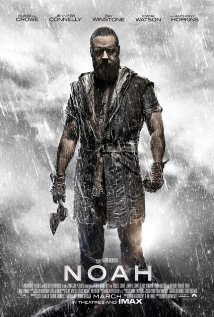
 Side story: as I kid I remember the joy of stumbling on a movie on TV where I had no idea what it was and loving it in part because I had no idea what was going to happen. That almost never happens anymore. We are such proficient consumers now that we know far too much about films before we see them, and most reviews and previews are effectively Cliff’s notes versions of the stories. I need more film serendipity so I can have more film pleasure. Gratefully I didn’t know much about Gravity other than the trailer.