(I gave the opening comments at a keynote panel on The Next Industrial Design Revolution for IDSA’s Future of the Future event. Here’s an edited version of my brief talk).
The first industrial revolution may have been the most dramatic we will ever have. This is an unpopular notion as we suffer from what Tom Standage called chronocentrism – which is the belief that the present is the most amazing time ever in history and our most recent inventions will transform the world like nothing before. I don’t believe that. I don’t think you will either if you thought about it for a minute.
Consider life 100 years ago, and the the shift from hauling water on your back, walking up from the river every morning to having indoor plumbing or “instant water” as a modern marketer might have called it. Or the shift from horse power to electricity, and lighting dozens of candles with your hands to indoor light at the push of a button. Electricity had far more profound impacts on society than many of our hyped inventions of today.
As a simple test: if you could only have one of A) your mobile phone with internet, or B) running water, electricity for your home and modern medicine, which would you choose? We’d all eventually choose B. We take for granted the most profound technological advancements central to our lives.
We also forget that the first industrial revolution centered on steam power and the mass manufacturing of textiles, the central industry of the industrial revolution. It wasn’t consumer technology, it was factory machines. And it’s overlooked that this revolution was predicated on slavery. Central to the revolution was a cheap mass labor force. It created the economic advantages these new inventions accelerated. And the lesson for us today is that in every revolution, at least in every industrial revolution, ethics and morality of some kind are likely overlooked. Here are three questions to help us.
Question #1: How Is Your Work Moral For The Future?
If we believe that “design is an extension of our identity”, as the conference program defines it, how do we explain consumerism? How do we explain advertising? The enormous consumer debt in the U.S. is predicated on the desire to upgrade to the latest versions of products we make. We are paid to manipulate people into buying and upgrading. How then do we reconcile our salaries with the moral challenges of American capitalism? How do we explain the environmental crisis and it’s connection to product and technological manufacturing? To the invasion of privacy that many of the most popular technologies today inflict on their own customers? Just as slavery was the unspoken crime of the first industrial revolution, what is the silent immorality of the one we are in now?
The next generation is more aware of moral issues than perhaps any generation before. They were born into a world with major economic, environmental and social problems, a troubling legacy that we are leaving for them. Is what you are working on today designed for 5 years? 10? 50? If not, you are designing more for our generation than the next. This is not generational design, so much as indulgent and selfish creation. Our chronocentricsm blinds us from what we claim design does: improve the world.
Question #2: Will you respect “unprofessional” creativity?
When a new technology lowers barriers to entry, progress and regress happen simultaneously. For example, HTML was a huge step backwards for design, in that it took away the layout and typography control the technology of print had developed for centuries. But it was a huge step forward in inviting an entire new generation of young people without preconceptions to create and publish.
This is a fine line we have to balance: we have to be capable of respecting creative but untrained outsiders, and finding constructive ways to engage and elevate what their work. Rather than taking the natural stance that “people without our background are not designers”, we should be generous and curious. If we want to influence the future we have to make our knowledge accessible to the next generation. If we don’t they will simply pass us by. They are not waiting for a torch to be handed to them, as that’s a metaphor so old it predates all of us in this room.
Question #3: Is the value of your expertise more than pretense?
We are here at a glamorous professional event that presumes design degrees and professional events are valuable. But we are biased: all the people who question the value of these things are not in the room to disagree.
We must admit that as tools continue to improve, and the affordability of creation increases (kickstarter, 3D printing, etc.), the assumption that our profession and our professional society is necessary will be continually challenged. Great designs are being made by people without our pedigree and we are likely to dismiss them for this reason alone, presuming we have the power to dismiss.
But generational change is unforgiving. They are not waiting for our approval. The tools this generation has allows them to go directly to making, and to finding an audience, and for many of us this is terrifying. We can assume they will fail, or find their way to the path we’ve been on, but the history of revolutions suggests otherwise. Only if we are lucky will we even be asked, by younger and faster creators, how our past experience is relevant. It’s up to us to reach out to them, with open minds, to apply our wisdom to their work on their terms, not ours. Our terms are dying while theirs are just being born.
For years experts in psychology, design and even technology have decried Powerpoint and its many evils. Every few months another blog post, or presenter, explains in detailed outrage why the a presentation they saw was a a horror show of bulleted lists, overwrought diagrams and ancient templates (including this recent story NSA/Prism story).
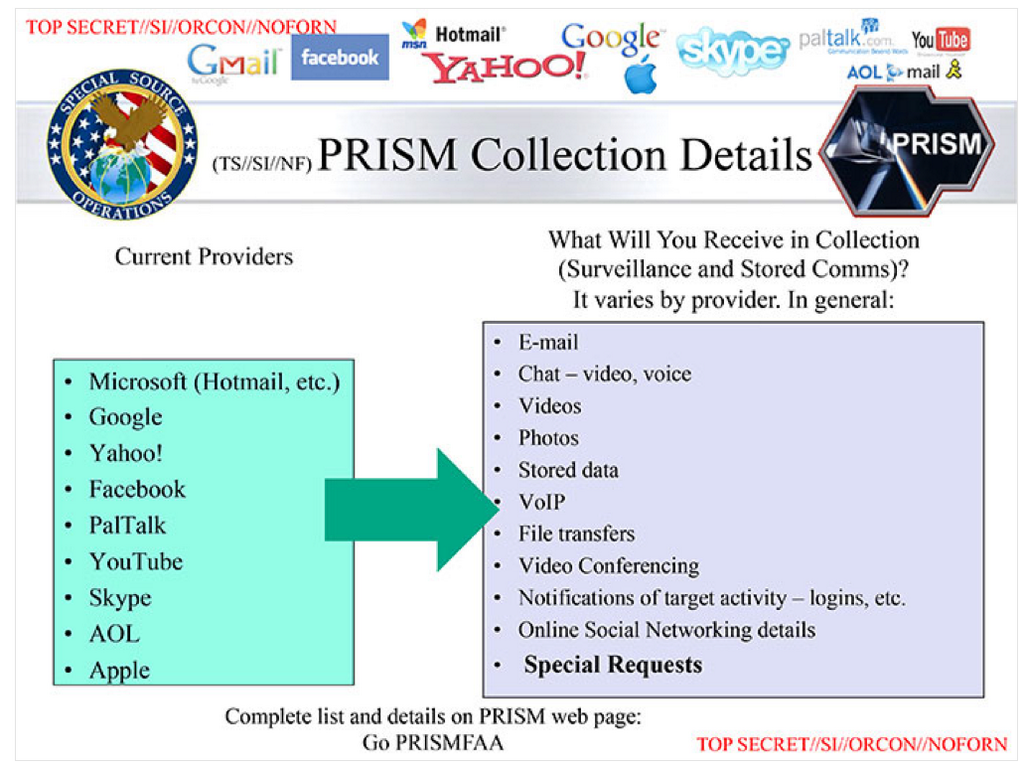
So why then are bad slides so popular?
- Bad slides are less work. Nearly everything in the world we know to be stupid is easier to do than the right thing. Ignorance is often less of an issue that the lack of interest in doing the extra work to be better. For unpleasant things, most people, most of the time, are happy to do just enough not to be horrible, and move on.
- The slide is used for more than the presentation alone. Garr Reynold’s calls this a slideument, a reference to how the slide deck is expected to function without the speaker, sent around in emails. In large bureaucracies is common for the slide deck to be circulated before, and after, the presentation itself.
- Organizational tradition demands bad slides. If most people at an event do the same old boring, hard to understand, ugly distracting template, bulleted list wall of death, to do the right thing requires standing out and taking a risk, something most speakers do not want to do. They want to fit in and take few risks. The rule makers are often those most out of touch with what good presentations, and their slides, should be like.
- It makes it look like you’ve done tons of work. To the average eye, a dense, heavy, slide deck looks like more work has been done that the refined, clear, clean slides heralded by the best speakers. It’s a fast way to make it appear that you’ve done much work, when in reality a simple, clear, concise slide deck requires much more work. People are often impressed, at least at first, by volume, rather than quality.
- They really don’t know there’s an alternative. Some people don’t get out much. They don’t see many presentations. Even if they’ve seen a TED talk online they don’t make the connection that what they do in their workplace can borrow some of those choices. So when it’s their turn they pull up an average of all the ones they’ve seen and try to use their presentation software, tools that promote bullet lists above all else, to approximate it.
- They’re asked for bad slides. Some event organizers ask to review slides, as if that’s a good quality control measure. When handed a slide deck of 15 pictures, they have no idea what the speaker is going to talk about, and this makes them nervous. It’s not uncommon for speakers with slides that follow Garr Reynold’s advice to get feedback that make their slides worse.
- Speakers use slides as their own notes. Slides should be for the audience, not the speaker. But many speakers destroy their slides by cramming back-up information that would only be used by the speaker. It’s ok to leave cues for yourself in slides, but they must be minimal enough they don’t ruin the audiences experience.
I’m convinced there will always be bad slides. There will always be ugly, bullet laden slide decks, or Powerpoint abused visuals, filled with text and diagrams few will read much less understand. Until conference organizers, professors, and bosses explicitly encourage a new, improved style of communication, we’ll be living with these complaints for a long time.
I deliberately didn’t spend much time in my book Confessions of a Public Speaker on slide design, since if you plan a talk properly you focus on slides last, and they come out simpler and better since they’re never the focus. And of course Presentation Zen and Slide:ology do a good job of explaining slide design craft.
Chris Atherton‘s excellent presentation at TCUK09 details the cognitive psychology of good slides – why aren’t these concepts and research more well known?
What do you think needs to happen to help presentations, and slides, evolve?
[Note: post updated 6/6/2013]
Here’s a question from the mailbag:
Last week I held a presentation to my company (around 60-70 people). My strategy for the post-lunch session was to keep the audience involved by asking questions. This was to prevent people from falling asleep from the food coma.
What I did was have a slide with a question, ask the audience, see what came up, and then reveal the answer I had in mind. I got a few interesting answers and it felt like it was partially keeping people from falling to food coma. Afterwards I got some appreciative comments from programmers who attended both about the contents and about the style of the presentation.
One problem: Our CTO thought that the way I’d asked questions when I already had the answers prepared was demeaning. He felt strongly about this in terms of “that’s something you just don’t do”. To me, I wouldn’t be standing there holding a presentation if I didn’t think I had answers that not everyone in the room did. Asking people to think about things rather than spoon-feeding them “truth”, to me, is a way to help the process of learning.
What do you think?
There are few things “you just don’t do” as every audience is different and the rules change depending on what they’re expecting, and how good you are at using a technique. So it’d be rare I’d ever say “you can never ever do X”.
It’s also important to realize there are many ways to reveal those answers, some which might be demeaning (“you guys were too stupid to say things like this”) but others that are entertaining, interesting and enlightening (“Here’s what I had, but your answers were better for these 2 reasons, except that you missed…”). So how you do it is as important as what you do.
The main problem I see is whether the questions you were asking were what the audience wanted to learn. I’d rather do one of these:
- Ask 5 or 6 people who were going to be in the audience ahead of time what their actual questions were and use them instead of guessing.
- Only ask them questions that reflect something I’d taught them in the lecture. So after demonstrating how to do long division, I’d give them an easy long division problem. Then the questions tests my ability to teach as much as it tests what they know. Any wrong answers means I failed, not the audience.
In the end the CTO is entitled to his opinion, but it’d be wise to have the opinions of the audience recorded in some simple way so his perspective is informed by what the majority felt. Having a better way to judge the value of a session is probably the best problem to solve here.
One of the themes I explored in Confessions of A Public Speaker are paradoxes around lectures. Here’s my list of strange observations:
- Many people hate lectures but attend anyway. The word ‘lecture’ is often used as a criticism, as in ‘don’t lecture me’. Communication that only flows in one direction has never been much fun (and there’s evidence it’s a hard kind of communication to learn from) but people attend lectures and conferences in droves anyway. Perhaps it’s the easiest and cheapest way to get information they want?
- Lectures are popular but most speakers aren’t very good. Despite the pervasiveness of lectures in universities and at professional conferences, most speakers are not very good. Somehow despite the universal nature of lectures, and the key role they play in some professions (teachers / professors) good speakers are still rare. How can something be so old, and so important, but generally done so badly? (See an open letter to conference organizers and do we suck at the basics?).
- Attention spans are shorter than ever, but lectures on average are as long as ever. Everything has gotten shorter (except perhaps for feature films and TV shows), but most lectures are an hour or longer and most college professors have 60 to 90 minute lecture sessions. There are now popular short forms like lightening talks, pecha-kucha, and ignite, but they are far from mainstream.
Any theories on why these paradoxes occur? Or have you observed other contradictions worth exploring? Let me know.