Why Design Is Hard was published a year ago and since then I’ve given dozens of talks about the ideas from the book. I’m always grateful to be invited to speak and that there are folks who want to hear what I have to say.
The good folks at CanUX agreed to record my keynote talk about Why Design Is Hard and I’m happy to share it with you here. Hope you enjoy it. It’s also available to watch on Youtube here.
Note: the opening story about the Notre Dame cathedral fire is actually from the book How Design Makes The World.
We know that designers are hired to change things, as no one hires a designer to keep everything the same. The challenge is that we want those changes to happen on our terms, using our ideas, methods and beliefs. This is a big problem, as the way we understand design is different from how ordinary people like clients, coworkers and executives do. This means it’s no surprise designers often feel ignored, misunderstood or even lost. Yet somehow we’re not prepared for these feelings. And over a career it can lead to disappointment and resentment because we expect things to be different from the natural way people and organizations tend to work.
Design culture makes us prone to cognitive dissonance, where two competing ideas exist in the same mind. For example, many designers want to feel special, because in some ways we are, but yet we’re surprised when other people do not understand us or find us pretentious. We want other people to use our ideas, but don’t feel we should have to explain or persuade. We want privileges like power and control, but don’t want the politics or relationships required to earn and wield them. Logically we can’t have it both ways, but often we behave as if we should. It’s true that all people are prone to cognitive dissonance but as an uncommon profession, it hurts us more than most.
The problem is not so much that we’re lost in these competing expectations, but that we’ve been encouraged to expect someone else to save us from them. Design education and design culture set many of us up to expect a different world than the real one. We often complain “I shouldn’t have to”, “why don’t they” or “they just don’t get it” which can be healthy venting. But we forget that the word should is an appeal to an authority, like a parent or boss. It presumes they have the wisdom to know better than their current behavior. This is our mistake, as who exactly is this magical authority we are asking to do the right thing and why do we expect them to know what is right? Or even if they know, to have the right incentives to want to do it?
We forget that our knowledge isn’t common as we are experts in a specialized field. If we can’t convincingly explain the basics of our profession, why should we expect anyone in power to already grasp them? Where would they possibly learn them if not from one of us? Our job is literally to make things simple, effective and beautiful – if we can’t do that in explaining design itself, whose fault is it? It’s like we’re linguists landing on an alien planet and are angry that they don’t speak our language. We can decide it’s a stupid planet, which might be true, and leave, but if we choose to stay? What if we think all the planets are dumb? Whose problem is it then?
This realization isn’t fun, the big ones rarely are, but it’s a better explanation for why situations we experience as “designer hostile” are likely just design ignorant. They really just have no idea and don’t know what they don’t know. Or the organization has major dysfunctions that prevent everyone from doing good work, not just designers (which means we may have more allies for change than we think if we look for them).
It’s helpful to take design out of the equation when trying to understand what’s really going on in most organizations. Instead, ask who makes the decisions I should be making? What assumptions led to this? How can that change? Whose help do I need and how can I earn it? The power designers want has to come from somewhere, but we should realize most people who have power have little motivation on their own to give it away.
Somewhere in our education was the silent assumption design appreciation is everywhere. That we can just show up to a new job, sprinkle ideas around and watch them grow. Design schools are centered on design. So are design books, design conferences and design friends. But this is a subculture. The vast majority of important design work is not done in subcultures or in design magazines. Instead, it happens in the thousands of businesses and organizations in the world whose goals and values aren’t centered on design. This becomes obvious if you look at who starts organizations and why they start them or the design quality of things made by many successful companies.
Yet somehow we’re surprised, or even offended, when we face design ignorance. The truth is the more important the work you are doing, the more ignorance of design you will face. We should see it as an opportunity for progress, rather than an annoyance to avoid. All designers should be good at explaining the basics, but we’re not.
To stop feeling lost we have to first be honest about where we are. Few organizations are going to shift to our language, unless we learn theirs first. We have to stop waiting for someone to “save design” in our organizations. We have to open our eyes to human nature and how organizations work (or don’t work). We may have to admit it’s influence that limits us, and that it’s probably not that our design talents aren’t good enough. What good is more design skill if it’s ignored? Maybe there are other skills we need to improve first? Ones that chip away at the real roadblocks we face? Accepting all this isn’t easy, but it’s healthier than choosing to stay lost, and bitter, waiting for the fantasy of a design-centric company or a design-literate world to magically appear in front of us.
We forget that every place we read about where designers have the level of respect we desire was shaped by a design pioneer who led the way. Who are the real design heroes? It’s probably not keynote speakers or design luminaries who make us feel good and preach to the choir. Instead it’s leaders who get less public attention who persuade, teach and gain the influence required to set up their design teams to succeed. If the workplaces we find ourselves in leave much to be desired, it simply means there is more pioneering to be done. Who is going to do it?
Do you wish you had more influence on product decisions? Or that more of your talents were put to effective use on projects? This is for you.
The tech world often uses the term evangelism but you should avoid it. No one likes to be on the receiving end of evangelism. The self-righteousness inherent in deciding ahead of time to convert other people to your views without knowing anything about them has a dubious history and is often self-defeating. The first lesson is to use a wiser approach.
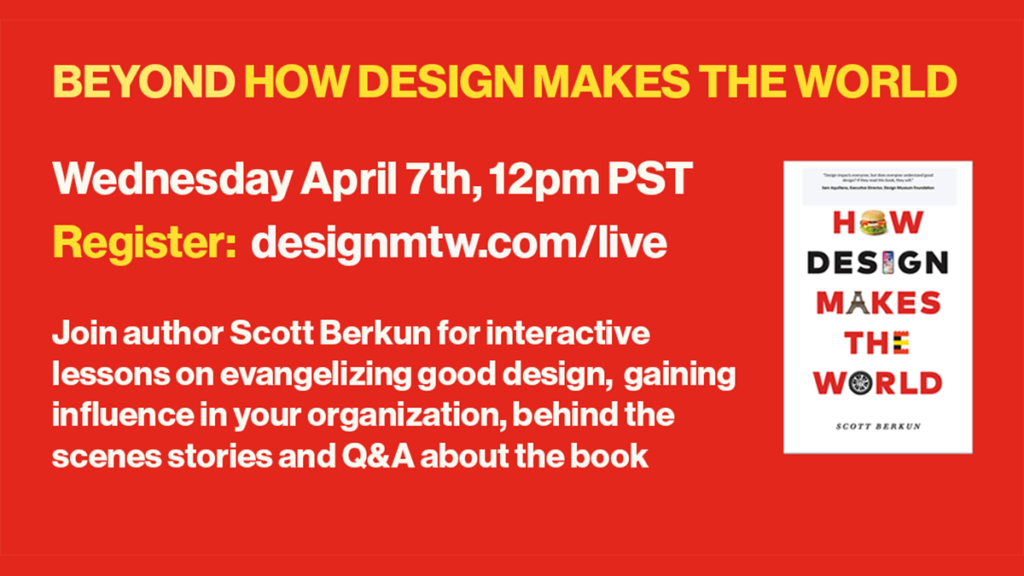
I realized this years ago and wrote How Design Makes The World to give designers and UX pros more constructive ways to show regular people the value of what we do. If you want lessons on this approach, join my free live event on Wed April 7th, I use stories and questions as the primary methods and they are central to the book and my advice. These are the most powerful tools for engagement that we have. The advice in this post comes from the same spirit.
A common mistake repeated at events and in articles is to start by teaching design theory. Or starting methodology warfare. Grand theories are intimidating just like overly complicated user interfaces. They don’t meet people where they are. We fall back on jargon and methodology-speak because it’s a place of confidence and we presume it will convince people of our authority, when in most cases we don’t have any (if we did, we wouldn’t be reading articles about design evangelism).
Convincing people is a social process. It’s not based on intellect or superior arguments, and if you start there it is likely to backfire. No one likes to be told they are wrong. Instead you must first learn about the goals and problems other people have and find ways for your ideas to be useful on their terms.
Here are my ten lessons:
A better model is to be an ambassador. Unlike evangelism, an ambassador has to learn the local culture and language. They are better designers of their message since they learn about who they are working with before they try to influence them. Ambassadors are not passive: they have an agenda. But they see charm and positive action, not venting and bitterness, as the way forward. They study the locals before acting and see their fluency with local culture as a key advantage. They know that earning the ear of powerful people is one of the most effective ways to get things done. Being a leader is a good model too, but for that you must earn followers.
There are three tactics: broadcast, personal and situational.Broadcast is when you give a big presentation: wide reach but shallow depth. Personal is when you talk to someone individually and try to persuade. The most effective is situational: your team faces a problem and you help solve it (using knowledge you hope they will adopt more in the future). You need them all, but situational is the most important as it’s the only direct credibility you can earn. Broadcast becomes more effective when you can refer to personal and situational evidence of success, but it can also be the way you learn about people and situations to focus on.
Aim for small wins, not conversions to a belief system. No one transforms their beliefs all at once, except in movies. Instead of grand theories, find clear places where your idea solves a problem for one specific person. Pick the person who is most receptive to you (or least against you) and has some decision making influence. Ask about their problems. Find one your skills can resolve and offer to help. Provide value on their terms first and build from there.
Common organizational situations UX design can contribute to solving are “how do we know what the right features are?”, “how can we save engineers time?”, “how do we improve customer satisfaction?”, “how can we increase revenue?” or “how do we earn customer trust?” Enter these conversations or initiate them, but use their language and goals first. If the title of your meeting request or first sentence of your advice is is one of these things, people will give you their attention. As opposed to “Give designers a seat at the table” or “You’re wrong because of the design thinking law of transverse usability matrices which dictates we re-initialize the project’s flux capacitor.”
Allies matter more than ideas. Once you solve a small problem for one person, they are an ally. Everyone likes people who solve their problems. You can enlist an ally to help you convince someone you don’t know, but they do, to let you try and solve a similar problem for them. Eventually when it comes time to convince a leader, it’s your allies on their team that will make all the difference. Moving upstream in the decision process depends on allies more than your ideas or your charisma. Sometimes people have the same problem you do and they can become natural allies (who is equally frustrated by their lack of influence? Can you help each other solve the problem?). And don’t forget: your boss should be your biggest ally and share your goals.
Your bigger goals require more powerful allies. Who has the power to make the organization change the way you want? It’s likely a VP, a director of engineering or a general manager. You often need smaller allies to gain medium ones and medium ones to gain big ones. But at some point you will need a relationship with whoever has the power to make the changes you desire. They have to know you personally and trust you. Before you try to persuade a powerful person, have two people that report to them already on your side (or who make the pitch for you).
Design maturity grows one step at a time. Organizations only grow at a certain pace. If you expect to jump from level 0 to design nirvana in a month, you will never even get to level 1. Ambassadors are patient. They study the pace of change in their culture, and other similar cultures and define stages of progress (you should have a design maturity model). It’s demoralizing to the people you are trying to convince if you often express, even passively, how backwards you think they are.
Engineers have more power than you realize. They have great influence over which defects they fix (including UI issues) and what the work estimates are on project tasks. They are a great source for small wins. Having even one engineer as an ally can make all the difference. How do you start? Express curiosity about their work, earn some trust, find out their frustrations and see if your skills can reduce them.
The messenger matters as much as the message. We judge messages on how much we trust the person giving them. It’s hard to influence someone who barely knows you. Match the size of what you are asking for with their level of trust in you so far. As you grow trust, the size of your requests can grow with it.
Like good product design, don’t blame the user. We’d never let an executive say “it’s the customers fault they can’t figure out how to use or product.” We should apply the same design ethos to our internal efforts as we do in products. Of course there are organizations that are so dysfunctional or poorly led that progress is improbable, but resist this judgement. You may have simply not found the allies you need yet, or developed the ambassadorship skills, to turn things around.
Often people ask me “Why should I have to do all this?” to which I say, you don’t! I agree that often designers are set up to fail by leaders of organizations. But recognition of this doesn’t change anything on its own and can be self-limiting. If you feel it’s unfair that your knowledge isn’t presumed to be valuable that’s fine, but do ask yourself, where does this feeling come from? Why do we expect regular people to know anything about good design or how to manage designers? How will they learn if a designer doesn’t teach them?.
The question is: do you want progress or not? Designers and researchers will always be minority professions. There aren’t that many of us. The word should implies there is some authority out there we can appeal to that will take responsibility but I don’t think there is one. The question is do you want progress? If you do, it’s up to us. If that’s you, I’m here to help.
Did you enjoy the book? Or own it but haven’t read it yet? This session is for you.
To help you get as much value from the book as possible, this session will give you a fresh perspective on what you learned. I’ll give a quick recap on the core ideas, with new advice on how to apply these lessons in your work and your organization. I’ll share some new and behind the scenes stories as well as answer your questions on how to put the book to work for you.
When: Wednesday, April 7th, 12pm PST What: Beyond How Design Makes The World / Design Evangelism Register:click here or on image.
If you’re familiar with my my books and talks, you know I’ve written about many subjects, including creativity, leadership, public speaking, and philosophy, but back in 2000 I mostly wrote about design.
Before I became a full-time writer, I worked for years as a PM on UX projects like Windows and Internet Explorer, and eventually became the design advocate for Microsoft, where my job was to teach and promote good design across the company. I thought someday I’d write a short primer style book on good design, I just didn’t anticipate it would take 20 years until I did it with How Design Makes The World.
For this best-of list I picked articles that were popular but are still relevant today. I hope you find something you like. Here’s my best writing on design from 1999 to 2020:
Have a question on design you wish I would answer? Get in touch.
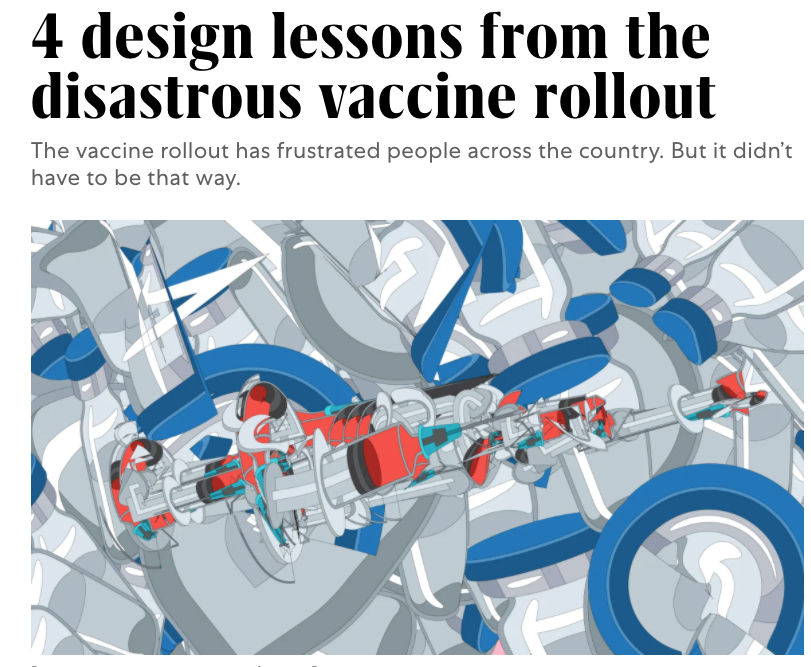
There’s been plenty of news about Americans struggling to register to get vaccinated for COVID. I noticed a story missing from the news: no one was asking about the problem from a design perspective. So I wrote this piece for Fast Company that explains what we all can learn.
It’s easy to dismiss news like this and shake our heads. But it turns out the mistakes made here weren’t just about web design, but about management, planning and lip service policies, issues many organizations in the public and private sector struggle with too. Few organizations ever do usability studies and, like the vaccine websites, they have the results to prove it.
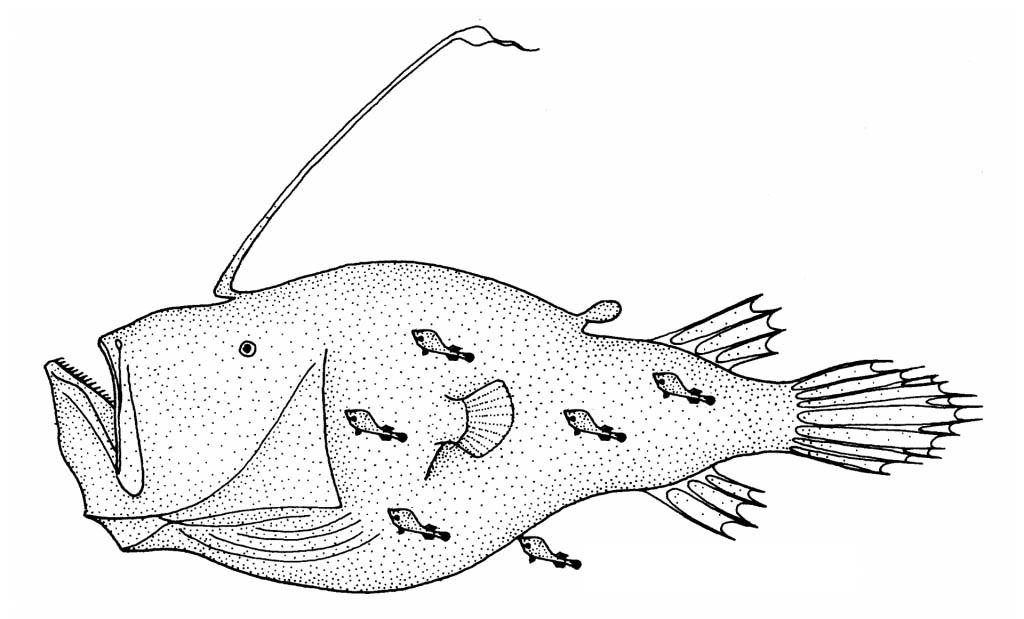
Anglerfish are famous for the glowing lure they dangle from their heads that they use to catch small fish. But this is not the most interesting thing about them. Their most fascinating trait is how they mate. Males of the species, who are much smaller, lack a functioning digestive system. To survive they must combine, or fuse-mate, with the females. This means they bite into the female’s skin, releasing an enzyme that bonds them together for life. In exchange for the nutrients they need to live, they provide her with sperm. If this sounds desperate that’s because it is: only 1% of males live long enough to find a mate.
If the equivalent of the shiny lure atop the anglerfish were part of a tech product, deceiving people into making bad choices, we’d call it a dark pattern: a deliberate deception that causes harm to one party but benefits the other. But we don’t use this label to apply to nature because… well I’m not sure why. Evolution is about good design for survival and we can learn from its history, even if we don’t agree with its morality. But the history of design most UX designers know starts with the Macintosh. We have a narrow view of how design fits into the world, even into the world of business, and that works against us.
Corporations, like anglerfish and other living things, are designed to survive. They evolve and use tactics that manipulate perception. Consider how the tail of a male peacock is a kind of advertising. Or how that ultraviolet light in orchid petals, crafted to attract insects for fertilization, is part of its “plant marketing strategy.” There’s perhaps nothing wrong with trying to get others interested in what you have to offer. It seems fair and natural, doesn’t it?
Yet there is also the Cuckoo bird. It lays an egg in other bird species’ nests without the mother knowing. When the young cuckoo hatches, it pushes its unhatched step-siblings out of the nest to fall to their death. It’s a killer baby bird! We’d call this immoral, or homicidal, if humans did it, but we struggle to rationalize our morality with the natural world we’ve evolved from and are still a part of.
Founders, as a kind of creature to stay with the metaphor, don’t start companies to “make great user experiences.” Instead their goals, as explained to investors, are to generate profits, growth and value for shareholders. How society, the environment, customers and employees fare is often secondary. They may make things that improve our quality of life, but they are not generally altruistic. They hire people to help with their stated goals, and not for any other reason.
Remember that we had to shame automobile companies for years to put in seat belts. We had to fight for decades to get the makers of cigarettes to admit they were unhealthy. These were among the most profitable industries of their eras, and Big Tech has parallels to Big Auto and Big Tobacco. We might want a better designed world for everyone, but the literal design of corporations, the nature of their species so to speak, makes them creatures with more selfish ambitions.
In Mark Hurst’s recent essay, Why I’m losing faith In UX, he explains how he sees a decline in the last 30 years of User Experience design. He calls out how Amazon Prime’s cancellation process is now 6 pages long. And how leaders of Facebook, Google, Amazon, and Apple have lied under oath about the harm of their products. He calls out how ” design thinking” as popularized by Stanford’s d.school has empowered Silicon Valley to exploit people. He offers that in Big Tech the meaning of UX has changed from user experience to user exploitation. There’s merit to what Hurst is saying, but he’s missing the larger picture of the animal he is grappling with.
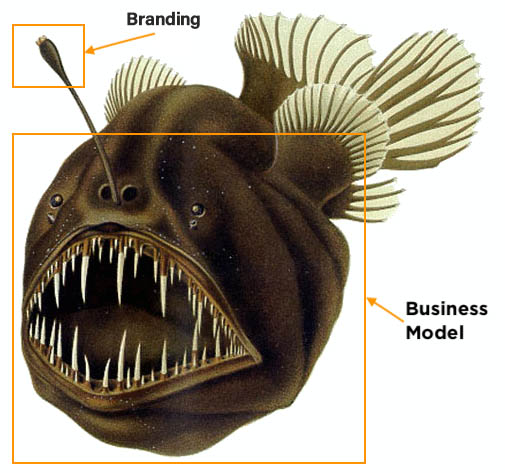
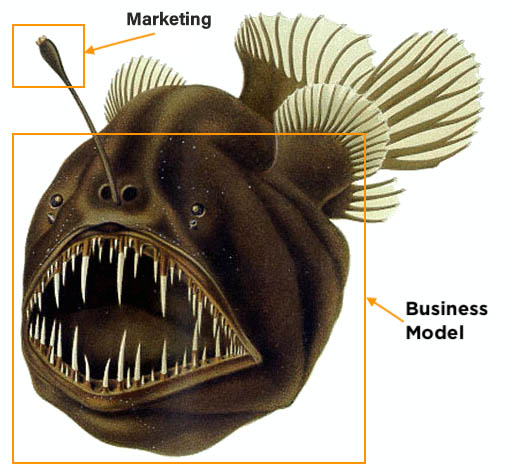
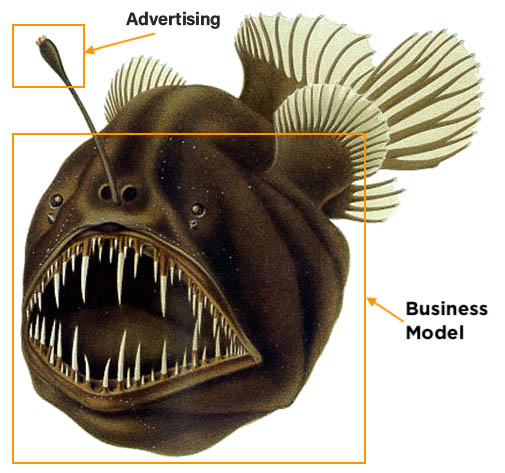
Hurst references Erika Hall’s popular tweet that offers a diagram (shown below) about the relationship: “This is all too often how UX design is considered and practiced.” I think she’s saying that while some designers do good work on the (small) things they control, they contribute to a negative net impact on the people they are designing for, given the dubious ethics of the underlying business that pays them (actually the meme implies customers will be eaten alive! But smarter predatory businesses want you to be a zombie, who buys things in ads and has good cash flow).
This should not be a surprise. We know that often the user is the product, but many of us have absorbed that cynically into the equation of UX work. Sometimes it’s confusing though. Hurst doesn’t mention that you can have agreat user experience in one sense and be exploited, or exploit others, at the same time (e.g. Uber, Facebook or even cocaine, at least at first). Maybe we shrug now and then, saying “I’m just the designer” and it’s not our jobs to define the business or defend its ethics. Or that working for a questionable company, given our personal situation, is the only option that we have (like the lonely male anglerfish). For many reasons it’s easy to feel like we’re attached to a larger creature, hanging on, along for the ride.
One mistake we make is thinking this is specifically about UX. It’s not. Advertising, marketing, branding and even engineering are more likely to be the lure, as entire apps and services can be the free temptation hovering above a darker business model. It’s far more a diagram about predatory businesses than anything else.
Somewhere in Hurst’s story, and in the design community, was the latent hope that UX was going to reform capitalism. Or be immune from it. That sounds ridiculous, but there is no other explanation for our surprised outrage that these businesses do what they have always done, but now use UX as part of their tactics. As if we are so special and our knowledge beyond appropriation.
I don’t think Hurst’s lost faith is actually in UX. User Experience design is primarily a set of skills. You can’t lose faith in UX design any more than you can lose faith in carpentry. Instead he has lost his faith in the willingness of predatory (big tech) corporations to do the right thing. Placing faith there was the mistake, given what we know of the species. To believe most corporations, given their history, would, without regulations and against the wishes of their stockholders, invest in good design and ethical practices above other considerations is about as foolish as hoping anglerfish will go vegetarian. Even the billionaires who choose to do good do their philanthropy through foundations, not corporations.
This is depressing and I’m sorry. It’s not entirely your fault that we’re in this situation. Design culture has always been self-aggrandizing. Something rarely mentioned in design schools or books is the possibility that good design may have little impact on why some businesses succeed or not. There is a reason why Norman doors, for all of their usability flaws, are still popular in the world. We laugh at them, and countless other obvious “unusable” designs of confusing microwave ovens, tech gadgets or the latest trending social media app, but the joke is on us. We think we are seeing incompetence, but instead it’s evidence there can be successful businesses where our services aren’t important and we’d prefer to stay in denial.
Hurst overlooks that Amazon customers are happy even with bad UX. It is one of the top five most loved and respected brands in the United States, despite the design and ethical issues he rallies against. Google, a common target of distain from UX experts, is among them too. The truth about Amazon customers is they care more about cheap prices, two-day delivery and a great return policy than anything UX designers are likely to improve. In the places where this isn’t true, perhaps Alexa or Kindle or their next new service, they likely will invest more in design. Currently Amazon’s strongest revenue growth is in AWS and it’s possible their consumer businesses won’t be as important in the future. There’s a logic here, we just don’t like it.
Should customers have different priorities? Including concerns about how poorly Amazon employees, and suppliers, are treated to achieve those low prices? Should citizens demand corporations do less damage to society? I say yes, but my opinion is irrelevant to Amazon. And Walmart. And the stock market. And it’s irrelevant in a way to all of us who want the growth stocks in our mutual funds and 401ks to rise, while we rarely ask what the real cost of that growth might be. I want this to change but that can only start by being honest about how things are.
Returning to the anglerfish, for no particular reason at all, certainly not for any metaphoric relevance to where I’m headed, there’s another fascinating fact about its biology. Females accept multiple male sexual partners. And when each male latches on, it slowly loses organs it no longer needs. It loses its eyes and its fins, its kidneys, even its precious heart gets reabsorbed into its new host. It is no longer a creature itself. It is just a sexual appendage. It hangs on, sensing its fellow men but unable to see them, surviving day after day with no purpose and no function, except to provide parasitic underwater sex on demand.
For a typical business, UX design is seen as a specialization. Businesses have many specialized roles they hire for. They fit into a larger strategy for profit and growth decided by people who are in generalized roles. Even if you work on a large team, under a Director of UX, many of the important design decisions you have to work with are likely not made by designers. The budgets, schedules, and requirements come from people who know far less about making great/ethical products than you or your team does, in part because making great products isn’t their goal. Unless someone influences their thinking, that is the way it will stay.
Your faith in UX, as promised in the title of this essay, comes in an unexpected form and it starts here. You must trust that you are good at UX design and that your focus, for a time, must go elsewhere. If most of the big design decisions are made by people who you think are bad at design, or are unethical, you need to broaden what you think design is. The VP, the PM, the engineer, if they’re making decisions that “should be yours” or are “terrible”, then they’re designers too and powerful ones. This means there are only three reasonable choices:
Move into a role where you make the important decisions.
Unfortunately the most common choice might be #4: complain and/or do nothing. It’s human nature to prefer the familiar, even if disappointing, to the unknown. It’s a safe choice because many make it. It’s less scary than the alternatives and it’s often immediately rewarded as others will complain with you. They may also tell you #1 is a betrayal. That you won’t be a “designer” anymore, despite how if you do it you’ll be making the decisions you felt you should have been yours all along (as well as paving the way for the next “designer” to have more power). For #2, some will say “Why should I have to?” and the answer is you don’t. You don’t have to do anything. However if you want something to change, participation is required.
The day you were hired you likely knew more about good design than most of your organization, including the executives. Put your faith in your UX knowledge and use it as a foundation to stand on, instead of a weight holding you down. Ignore the standard design books, design conferences and design media for a time. Don’t keep sharpening the sharpest tool you have if it’s clearly not the one you need.
Instead learn about how consultants persuade. Studying business for designers is good, but even better is to immerse yourself in a founder or product management community. Study their arguments and their theories on their turf. Ask questions. Learn to speak their language, so you can be a better translator. Maybe you can do it locally, if there’s someone on “the other side” in your org you get along with well. Ask them to mentor you. Make them an ally. Treat the powerful people you want to influence as if they were your users: you want to study them, charm them, so they can be users of your ideas.
It can seem insurmountable that one individual could ever gain much influence. If the host creature, or organization, is large and powerful, what hope could there ever be to redesign how things work? This is how we must imagine the sad male anglerfish feels as he rides along, playing the same small role for all time. But what he can’t know, that you can, are other stories. What he can’t do, that you can, is make new choices. You are free to change your relationship to your organization, to your work and to yourself.
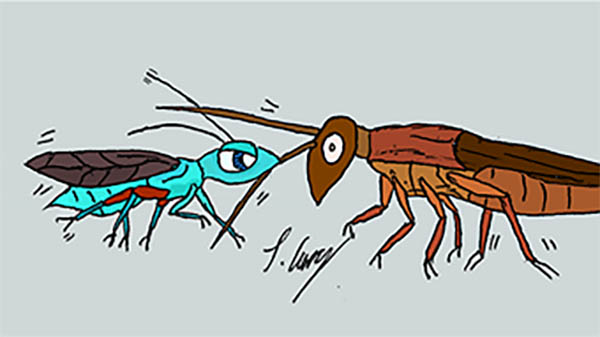
Consider, for example, the abilities of the emerald wasp. It’s a fraction of the size of the creature it needs to influence (a roach). It’s so small it’s not seen as a threat. It’s underestimated, but it has studied well and perfected its skills. Once it finds the right place and time, in an instant it strikes and lets the design of its persuasive chemistry do the work. Soon it has control of the mind of what once was its superior, pulling it gently along, without even a struggle, to do its bidding. Now imagine if our emerald coated friend wasn’t working alone, but had allies with a shared mission? What might be achievable then? In nature, and design, anything is possible.
(Note: American corporations should be better regulated to act more as members of society, and penalized for profiting from behavior that damages the greater good, but this is a systemic issue beyond the scope of design which is why I didn’t address it directly in this essay. I’ve received constructive feedback on this omission and wanted to address it in some fashion. Added 2-6-2021).
(Minor edit: “being honest about where things are”, 20/2021).
Over the years it’s been rewarding to see how many courses use one of my books. I write to teach and it’s great to know I can help teachers do what they do.
If you’re someone who uses one of my books in a class, you should get in touch.
Now and then there are bonus materials I produce for my books (like this Speaking Checklist for Confessions of a Public Speaker). If I know you use my book, I can notify you when this happens.
How to get a video made for your class:
Tell me the name of the class
Include a link to the syllabus if you have one
Name a topic or question you want me to talk about
These are fun for me to do and it’s a way I can give something back. I’d like to thank you. These are fun to do and helps me learn and often gives me ideas for new things to write about. I appreciate what you do and honored you’re using something I made.
This deal will last through Friday. The book makes a great gift for anyone curious about design, or who you wish understood how good design actually happens. It’s full of great stories and written for just about anyone.
We also made a short film about everyday bad designs, that also celebrates all the good designers who often don’t get the recognition they deserve.
Early reviews include:
“Nobody’s better at explaining how the world really works than Scott Berkun.” —Jeffrey Zeldman, web design legend and cofounder of A List Apart
“What makes a Jacuzzi better than a Segway? Why do street grids work in some cities, but maybe not in yours? What’s wrong with calling an interface ‘intuitive’? This fascinating book will help you see design everywhere and question why it works–or why it fails.” —Ellen Lupton, curator of contemporary design at Cooper Hewitt, Smithsonian Design Museum
“An invaluable, essential resource that demystifies and democratizes design for everyone who lives with it–which is to say, all of us.” —Khoi Vinh, principal designer at Adobe and former design director of the New York Times
“Scott Berkun captures the essence of what makes design so incredibly important in our lives. He frames how we should think about design in a fun and accessible way. How Design Makes the World explains why our world is the way it is, and lays out the questions we need to ask to make it better.” —Jared Spool, founder of User Interface Engineering
“Everyone in the tech world knows that they need design, but few understand what it is and how it will help them succeed. Scott Berkun illuminates both the problem and the solution. A brilliant book.” —Alan Cooper, design pioneer and author of About Face
The question: what well designed common object goes unnoticed because it works so well?
The premise: We forget that what we do everyday depends on countless inventions, discoveries, designs and systems. Just to flick on a light switch requires centuries of work and effort on the part of people we never even think about. It’s powerful to take a moment to look thoughtfully at the designs around us. There are inspirations and stories waiting for rediscovery.
The opening story explains how bad design was a primary cause of the Notre Dame fire that nearly destroyed the entire cathedral last year.
Click here or click on the cover to download the PDF.
Yesterday my feed had many references to a new Marc Andressen essay titled It’s Time to Build. I understand its popularity as it has an enthusiasm that’s in short supply in the tech world today.
But what he has to say floats about the fray in a disturbing way – thousands of people are dying from a problem we aren’t sure we know how to solve. Unemployment is rising towards 20%, which means basic needs for many is now a struggle. The government decisions happening now will determine how many more thousands of people die, especially front-line workers and the poor. And his essay doesn’t give consideration to them at all: having everyone build now will solve everything is his empty answer.
There’s much more. Let’s dig in:
Every Western institution was unprepared for the coronavirus pandemic, despite many prior warnings. This monumental failure of institutional effectiveness will reverberate for the rest of the decade, but it’s not too early to ask why, and what we need to do about it.
This sounds compelling at first as I hoped he’d explore what the rest of the world did right, so we can learn from them, but that is nowhere to be found in this essay, despite how well documented our lessons are. What did they do right? Is not a question he seems to have studied. A sign of things to come, or more precisely not to come.
Many of us would like to pin the cause on one political party or another, on one government or another. But the harsh reality is that it all failed — no Western country, or state, or city was prepared
Here he has made pandemic response binary, either you pass or you fail, which is not how things happen in the world. There’s always a spectrum for how to evaluate outcomes. If he wanted to write about the future he could have, but he starts in the present and makes everyone equal as a way out, which dodges learning anything from what’s happened.
Some U.S. States and European nations responded much better than others, as evidenced by the countless charts we all study daily. But that spectrum isn’t convenient for what Andreessen really wants to say, so he frames the world as pass or fail so he can confidently say that everyone (except for all of Asia which he won’t talk about) has failed.
And pinning the blame means you blame someone who was not involved (which he calls here pinning the cause). You can’t say this about someone whose job is precisely to prevent a thing that ends up happening.
For example, if a CEO calls the threat of a competitor a hoax and tells his staff to ignore it, despite their knowledge and interest in doing something pre-emptive, and then that competitor devastates them a few weeks later, and the stock price tanks, and 20% of staff are fired, it wouldn’t be pinning the blame. Instead it’d be holding the people in power accountable for the consequences of their actions.
Andreessen is avoiding politics by not mentioning Trump, or his staff, or any government agency, all of whom are accountable in degrees for what has happened. Andreesen wants to avoid alienating anyone but he’s doing it at the expense of credibility. Later on he writes:
“We need to demand more of our political leaders…”
But he does the opposite in this essay. We pay our leaders to plan for, respond to and be accountable for the outcomes of major events and he gives them a free pass, without even a mention of who has served their citizens well.
We see this today with the things we urgently need but don’t have. We don’t have enough coronavirus tests, or test materials — including, amazingly, cotton swabs and common reagents. We don’t have enough ventilators, negative pressure rooms, and ICU beds.
A cursory look at the successful pandemic responses showed that if you act early and shut social interaction down quickly, you never need vast quantities of ventilators or ICU beds. I’m not saying we should copy what they all did, as there were many tradeoffs, but we should start by learning from it, instead of leaving it out completely from essays on the subject.
Even if prevention wasn’t possible, we could have had the supplies we needed. They were for sale. But someone has to decide it is worth keeping massive expensive inventories that are rarely used. A hospital owned by a corporation that wants to stay lean to keep profits high, is unlikely to do this. What corporations call inefficiency, in the short term, is often very important in the long.
It’s governments that historically are well suited to insure societies against uncommon but devastating events, like wars, famines and natural disasters. Without shareholders and profit motive they can prioritize differently. America’s prized $748 billion military mostly stockpiles missiles, guns and aircraft that will never be used for their purpose, but we pay anyway. Why? In case we need it. That’s what a government can do. Why the same logic isn’t used when it’s about the health of citizens is a better line of inquiry than simply pointing out that we didn’t have enough of something. A small percent of that military budget might have been enough.
This was not a building problem. It was a priorities problem. A logistical problem. A leadership problem. You could call it many different kinds of problems but building isn’t high on the list.
Making masks and transferring money are not hard. We could have these things but we chose not to — specifically we chose not to have the mechanisms, the factories, the systems to make these things. We chose not to *build
Finally we really get to what he wanted to say all along: BUILD!
But he’s off the rails already. Sure, making masks that sit in a warehouse and transferring money to individual consumers are easy. But that was only part of the challenge. The other parts were:
How to pay for a stockpile of masks/resources that are unlikely to be used for decades
How to quickly distribute masks/resources across 50 states, or between dozens of counties within states, and through various agencies who may not have coordinated before (or pay for the training and exercises to make sure they are always ready)
How to build a public tech money transfer infrastructure within existing legacy (e.g. COBOL) systems that can service citizens during a national crisis
These are hard problems to solve, or in his language, hard solutions to build. He doesn’t frame the problem this way because… I don’t know why.
Maybe because it doesn’t support what he really wants to say? Or maybe he has little experience with massive government infrastructure problems with 30 year old COBOL codebases and didn’t talk to anyone who does, like the folks at 18F or USDS who are technologists who work in the U.S. government and can explain exactly why these challenges are far harder than they appear.
I agree with him that these should be solvable problems but part of the answer is having more of our best young technologists choose to work to help society in profoundly important ways instead of being recruited to join one of Andreessen’s startups that’s going to go try, but likely fail, to disrupt something or other that everyone involved admits isn’t really that important but happens to have a bigger “growth opportunity.”
You don’t just see this smug complacency, this satisfaction with the status quo and the unwillingness to build, in the pandemic, or in healthcare generally. You see it throughout Western life, and specifically throughout American life.
Who has smug complacency? I do not know who he is talking about.
If anything, most of America is angry, scared, lost or grieving, and feels let down in one way or another, which is neither smug nor complacent.
Is he including the people who work at his startups, or use their products? Or the millions of people who use the products his startups are busy competing with to convert into their own customers? Who is he rallying against here? I don’t know and he doesn’t say.
We have top-end universities, yes, but with the capacity to teach only a microscopic percentage of the 4 million new 18 year old’s in the U.S. each year, or the 120 million new 18 year olds in the world each year. Why not educate every 18 year old? Isn’t that the most important thing we can possibly do?
I actually agree that education in America is in a bad place but we’re in a crisis. And even if we weren’t this isn’t a problem of building. It’s a problem of systems, of leadership, policy and bureaucracy. I don’t think Andreessen has watched season 4 of the Wire. If he had, he’d understand how school quality is inextricably linked to city and state politics. It’s a really hard and long term problem that is rarely solved by budgets and technology alone.
You see it in transportation. Where are the supersonic aircraft? Where are the millions of delivery drones? Where are the high speed trains, the soaring monorails, the hyperloops, and yes, the flying cars?
We are now fully in bad example territory.
Supersonic aircraft? The Concorde was expensive. And noisy. And is convenience of faster air travel really important for the foreseeable future?
High speed trains? Much of the world has them, but America has not invested much in infrastructure in 50 years. Our highways are bridges are literally falling apart. And our culture has a huge preference for cars over public transportation. In a democracy that makes it pretty hard. Like masks, high speed trains exist, but someone has to decide to pay for them and we haven’t.
Soaring Monorails? I live in Seattle. I know about monorails. They are inefficient and expensive (They also don’t soar – birds do. Maybe he meant speeding monorails? But they don’t get very fast either.) There isn’t one non-imaginary city that uses them effectively (and DisneyWorld doesn’t count).
Hyperloop? Is he only going to mention technological ideas that most experts think are ridiculous for very clear reasons but the uninitiated love to romanticize?
Flying cars? Yes! He did it! Had he mentioned jetpacks too he would have had the full set.
Had he simply listed important problems that he feels we have underinvested in (education, infrastructure, emergency response, climate change) I’d be fully behind him. But that’s not what this is. It’s an underthought list of tech-lust thinking. He was trying to be inspiring here but these are terrible examples.
How about free internet for all? (A timely problem since underprivileged kids can’t do schoolwork from home right now). How about ensuring basic health care for everyone or even that every family has enough food to eat for the next few months? Those are building problems too, but they don’t sound as cool to the tech-centric as his list does. Historically the truly important things technology can do for us in the long term don’t seem cool, but maybe a silver lining of the pandemic is that will change.
Building isn’t easy, or we’d already be doing all this. We need to demand more of our political leaders, of our CEOs, our entrepreneurs, our investors. We need to demand more of our culture, of our society. And we need to demand more from one another. We’re all necessary, and we can all contribute, to building.
I’m doing my part my demanding more from his essay. And you can do the same by demanding more of mine.
I’d prefer you also go into the part of your community that is struggling right now and help them get the basics they need. If you go to them (virtually of course) and listen, and pay attention, and learn, I bet you’ll find plenty of easy things to build that will help them right now.
Even better, find people already building solutions, and have been working on these problems for years, who need more money or other support. Builders are often bad at helping if it doesn’t involve them building something themselves (e.g. the mostly pointless pandemic hackathons), even if they’re not the best person to do it.
There is only one way to honor their legacy and to create the future we want for our own children and grandchildren, and that’s to build.
I can agree with this. Provided we’re talking about building societies, safety nets, higher quality of life for communities and the tools they actually need to make that future, I’m in. Or building better tools and telling better stories for reminding us how interconnected our fates are.
But first we have a crisis to solve. And unless you’ve lived through a pandemic before, it’s time to learn before we act. We have to look to our experts who know the options and the tradeoffs and how they played out in the past. And more than anything, resist the temptation to jump ahead and likely repeat the mistakes that have been made before.
And/or are you passionate about good design, of products, of cities, of societies, and want more people to understand it, care about it and fight for it? Especially with all that’s happening now?
Then I need you! You are a great candidate for this street team.
A street team is a small group of people passionate about a book, or a topic, who are willing to volunteer a little time in return for early access.
You probably already talk to your coworkers and friends about why they should care more about good design or a well-designed world (or wish you were better at it). This book was designed to be a natural ally and asset for you.
What you get if you join:
a free pre-release copy of the book
images, quotes, excerpts and other easy to share material
weekly goals so we can work together as a team
a fun and good project to root for
Training on how to persuade people to care about design
rewards like signed book copies and free coaching sessions for most active folks
Direct access to me as I’m on the team too!
What you do:
Write a review on Amazon / GoodReads
Share images and quotes to your network, on Facebook, Twitter or other media
Recommend the book to influential people you know
Teach people why good design is important (the book makes this easy)
Did I miss a good one? Leave a comment with a link. Thx.
When Dr. Jan Mikulicz-Radecki designed the first surgical mask, he was questioned by his peers: they didn’t believe that by creating something so simple, millions of lives could be saved. And when chief nurse Caroline Hampton complained about her hands after assisting with surgery, William Halsted was inspired to design the first surgical gloves and asked her to be the first to test them. These stories are just two among thousands about how ideas became things we depend on. Most ideas go nowhere, it’s true, as it takes more than just having an idea to change the world. We need people who know how to make ideas real. And for this, designers are among the best we have.
Every challenge we’ve overcome in human history was led by a designer of one kind or another. Someone designed the first city, the first market, and the first hospital. It was a leader who designed regulations to keep people safe (or not) or crafted plans to help them recover after a crisis (or not). Design is everywhere we look and in everything we depend on. It explains what resources we can get or wish we had, fueling the fears that we find hard to shake. Mostly design is an act of hope. It’s the belief there is a better way and that creativity and persistence will find it.
We take good design for granted, as when it works we assume “it just happened that way.” When we flick a light switch or take a hot shower, it never enters our minds how many people with different design skills worked hard, over decades, just so we could live our lives free from thinking about their work. It’s only when things fail that we start to ask questions that perhaps we should have considered all along. Design questions. What were the goals? What tradeoffs were made? How could this fail (or have been designed to be more resilient?)
Often we dismiss design as a matter of luxury: designer handbags, designer jeans, designer living rooms. But we’ve been forced to see the limitations in the design of our systems, like schools, markets, and hospitals, which like a light switch, we assumed would always work without a thought. Design defines our social safety nets, our shared plans for emergencies, and our systems that either help us, or prevent us, from working towards the greater good, especially when lives are at stake.
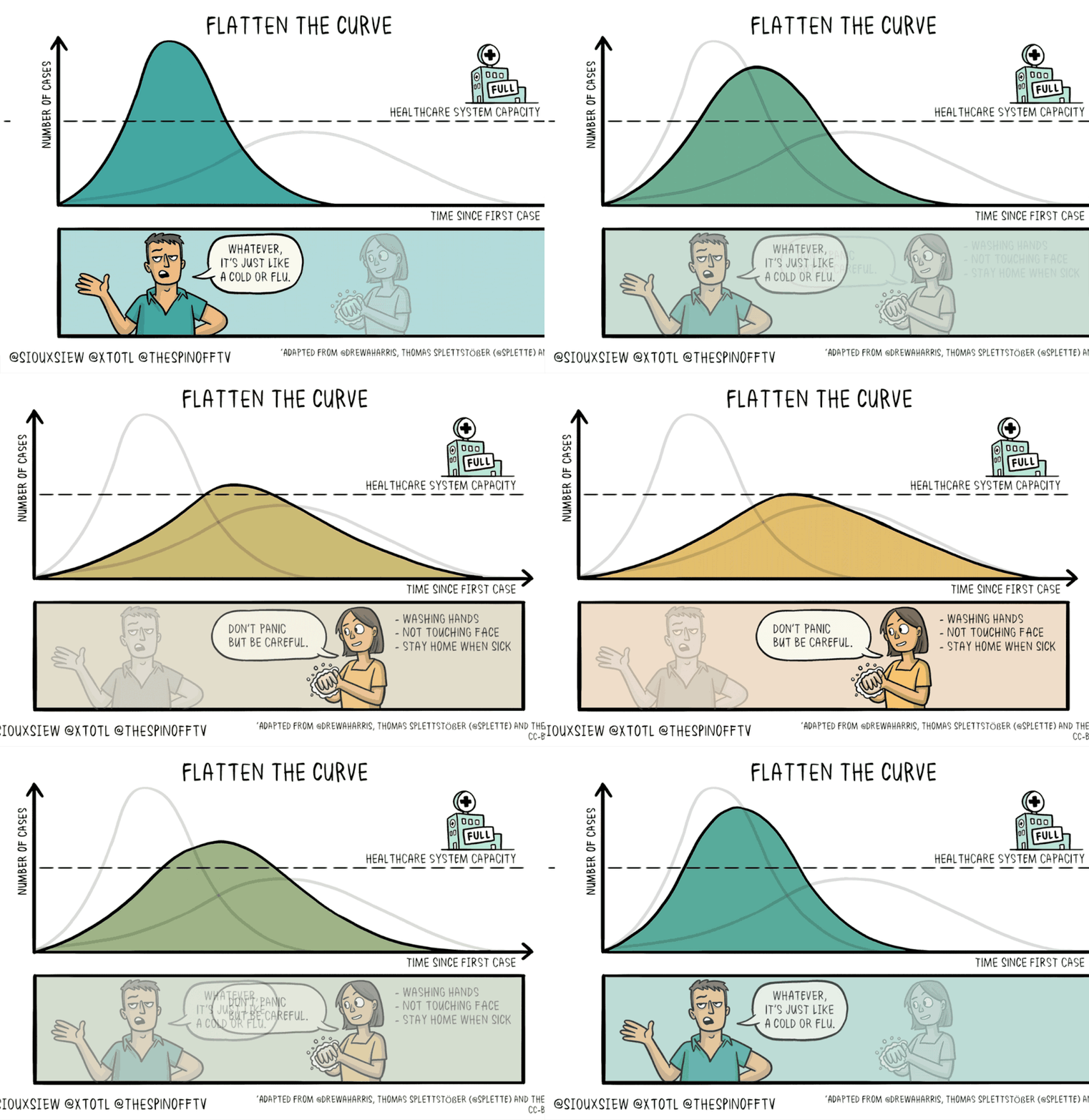
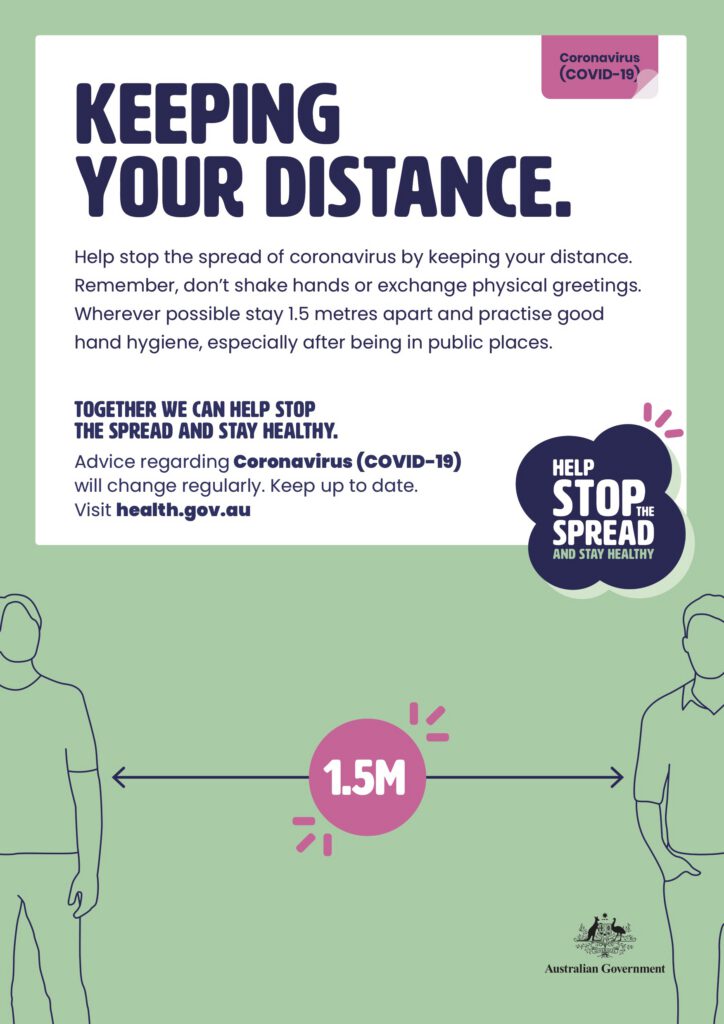
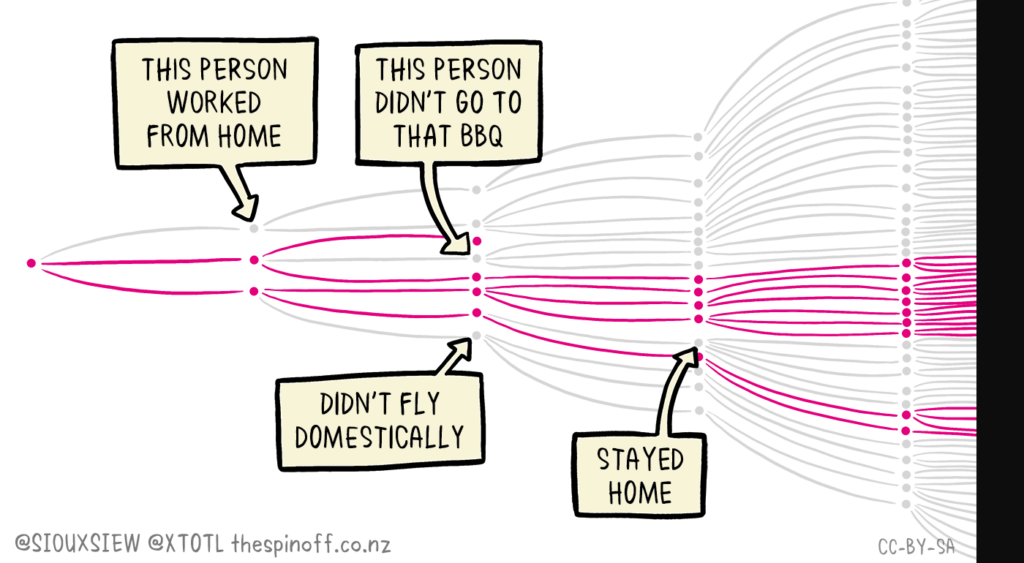
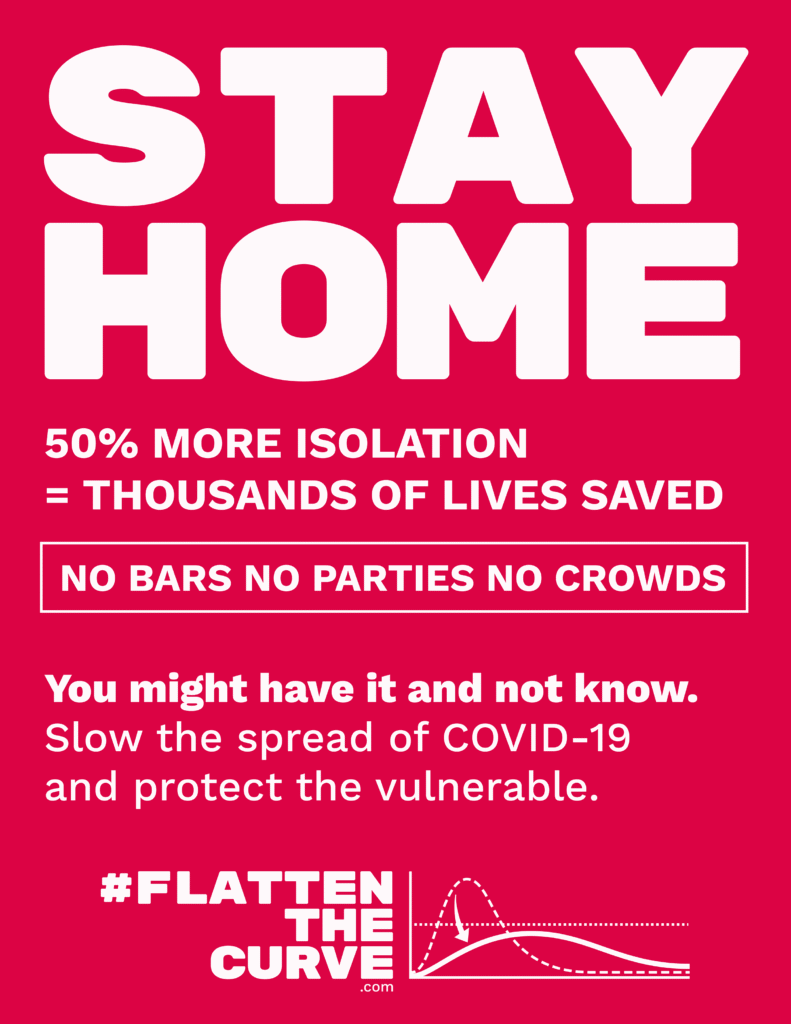
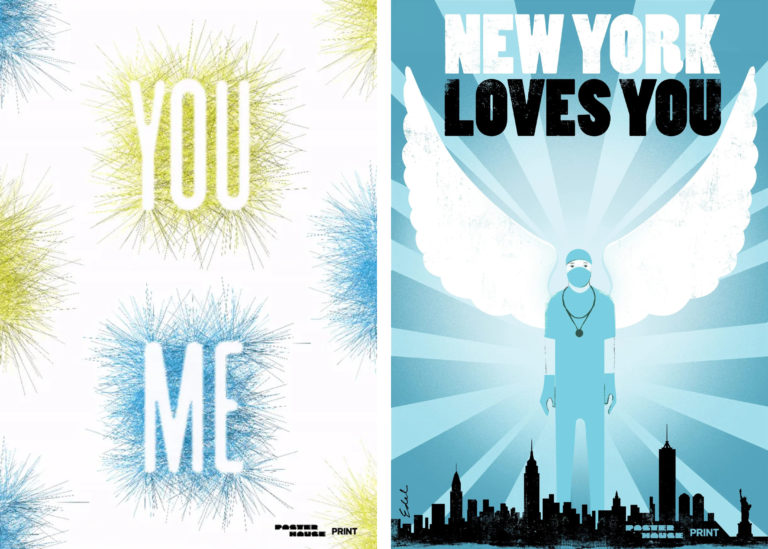
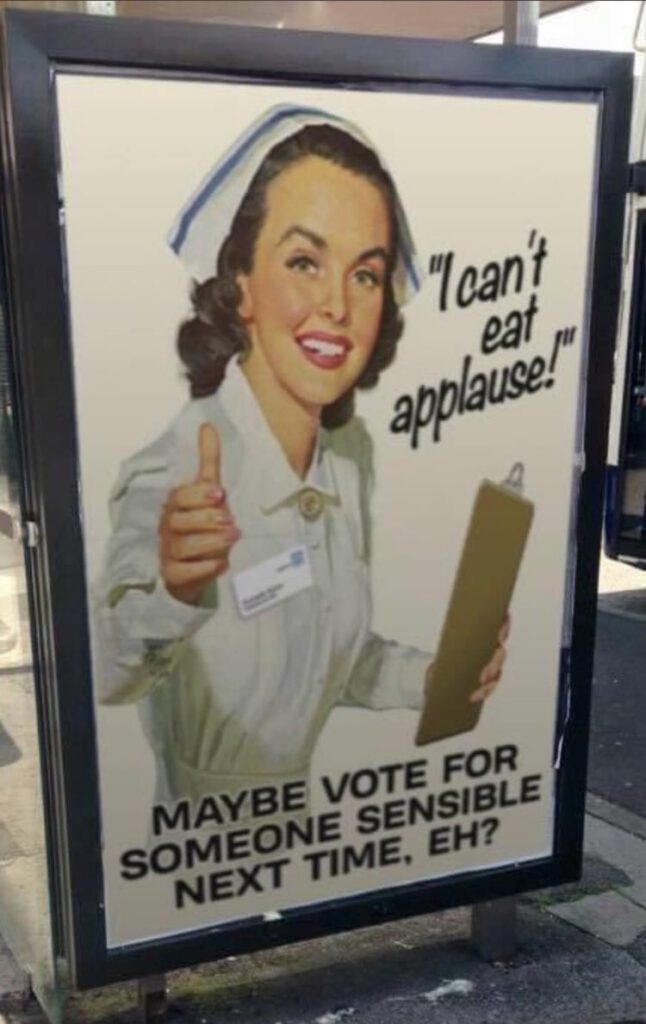
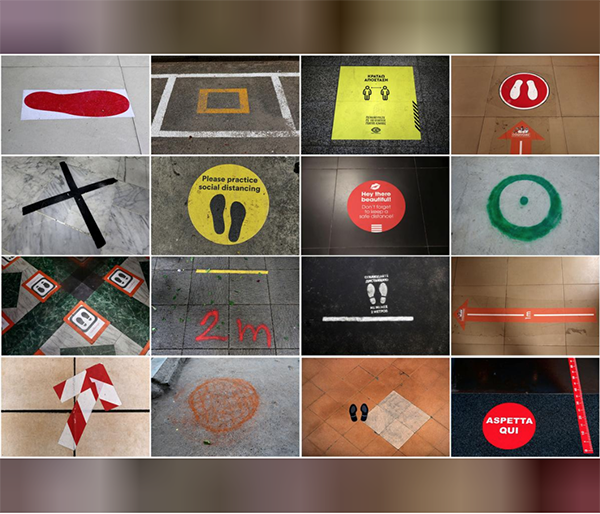
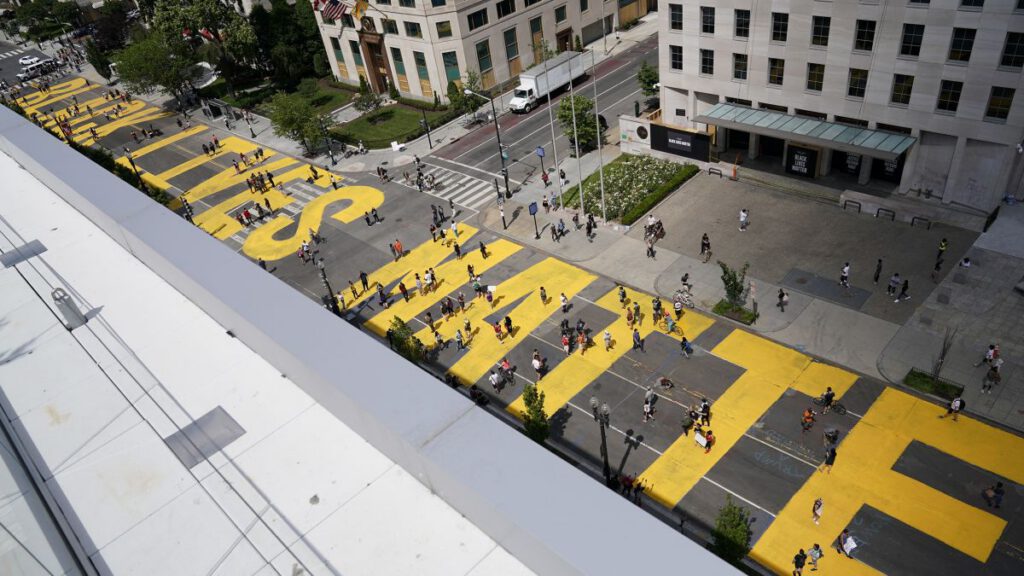
Someone designed every chart, each curve and line, updating you about the state of the world, and the cities where your friends and family live. Another kind of designer designed the database that makes those charts work. Someone designed every sign or video you see about “flatten the curve”, “physical distancing” or “how to wash your hands”. Someone designed your sick leave policy, and the policy for the people who drive your bus or make your food, assuming you and they even have one. Someone is working right now to design a vaccine, or better logistics for your supermarket or even a society that works with fewer people working.
There are designers everywhere working hard right now and the work they do matters more than it ever has before. Websites, services, systems and laws are being designed, and redesigned, right now, and their quality will determine who struggles, who survives and who thrives. We all must learn and think more about good design: it profoundly impacts our lives and the sooner more people understand how good design is done, and demand it, the more likely we’ll see it where we need it most.
I wrote the book How Design Makes The World to teach everyone, from any walk of life, how to better understand good design and look at their world in a new way.
Most designers agree the world would be a better place if more people understood good design. But since designers are always in the minority, outnumbered by managers, marketers, programmers and more, who is going to show them the way? Enter the design ambassador.
Design ambassadors already exist, they just don’t go by that name. They’re the ones who know how to talk about the value of good design in ways most folks can understand. They’re comfortable talking to executives or project managers, confidently making business cases for design resources. They’re OK with the management politics for budgets and strategy and working to gain influence. They’re patient in teaching, for the 50th time, the same basic ideas and concepts to new clients or coworkers, no matter how senior or junior they are.
They do this because they know no one else but designers can or will do it. If we want a better-designed world, or product or organization, or more respect for design, it will only come from designers gaining power or the ability to influence it. Design ambassadors know from human nature the challenge isn’t about more design knowledge: it’s about persuasion, teaching, coaching and inspiring others to think differently.
Are you a design ambassador? Will you share what you know with me?
Do you know a great design ambassador I should talk to?
Do you want to become a better ambassador for design?
Would you help me find, organize, or create, resources design ambassadors need?
If you can say yes to any of these, please leave a comment or get in touch. Thanks.
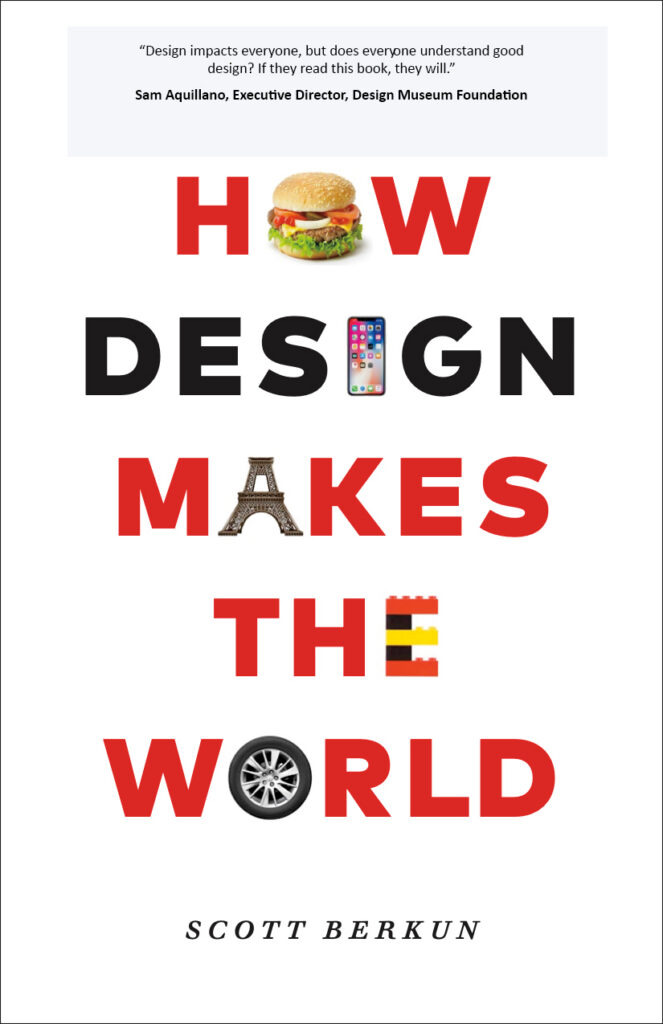
I’m excited to announce my next book is almost here. It’s called How Design Makes The World and it teaches anyone how to better understand good design.
It’s been 5 years in the making, yet it’s one of my shortest and most fun to read books.
This book teaches everyone:
What good design is and why it’s so important
How our lives are defined by designs, good and bad, made by others
How to ask better questions of everything we buy, use and make
And it gives designers and makers:
A fun and fast way to explain what we do to coworkers and friends
A tool for making organizations more design mature
Stories to use to be a better ambassador for good design
Early praise and reviews:
“This fascinating book will help you see design everywhere and question why it works—or why it fails” – Ellen Lupton, curator of contemporary design at Cooper-Hewitt, Smithsonian Design Museum
“An invaluable, essential resource that demystifies and democratizes design for everyone who lives with it—which is to say, all of us.” – Khoi Vinh, Principal Designer at Adobe and Former Design Director of The New York Times
“Design does indeed make the world, and Scott Berkun has written a highly readable book about this fact.” – Henry Petroski, author of Small Things Considered: Why There Is No Perfect Design
While studying to write the Myths of Innovation I read hundreds of accounts of how world changing inventions were created. While many of those stories are in the book, there are countless more worthy of telling.
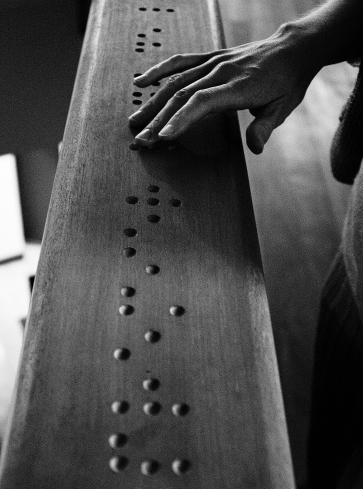
Today is the birthday of Louis Braille, one of the inventors for the amazingly clever system of writing for the blind.
We forget that languages have a design. Good ones are efficient, robust, precise, easy to learn and fast to use. Most languages emerge over centuries and are shaped by culture, which makes it all the more impressive when someone successfully creates a new one in just a few years. (As an exercise: how you would you design a better language than English or your primary one? This was once an interview question my former boss Joe Belfiore used to use).
The story of the invention of Braille goes back to Napoleon and his desire to find a way for soldiers to safely communicate at night, silently, without light (as soldiers were spotted by snipers and killed when using lamps). A captain in the army named Barbier developed a system called night writing, but it was rejected as being too complex to learn and use. It required two values of 6, or 12 dots, to make a letter.
Louis Braille either met Barbier, or learned of his ideas, in 1821. In 1824, after years of work, Braille developed critical simplifications to the design, including moving from 12 dots to 6 per character. At first the system was used to literally translate each character, but as its use spread unique shorthands and contractions were added. Louis Braille was only a teenager when he finished the system, publishing it in 1829 and a revised, further simplified version in 1837.
His own school didn’t adopt his system until 1854, after his death. During this time many variants were tried, including some based on the tactile alphabet, with letter forms printed raised on the paper. Louis Braille learned a system like this as a child. A popular one was called Moon writing (published in 1845), shown here.
These systems take up more space, but have the advantage of requiring less training and finger precision. For various reasons systems like this never became dominant. Slowly Braille’s system gained adoption in Europe and America by 1916.
Technically Braille is the first system of digital writing, since the letters are encoded and can be manufactured and stored or printed mechanically. It is not a universal language however, as the encodings typically translate letters, demanding the reader know the language they are written in (see International Braille, which explains how in 1878 they standardized some elements for Braille across languages).
With the rise of screen reading software the use of Braille is in decline. But it remains a stellar example of design and invention.
[Minor edits and image improvements: 1/4/21 – all photos now creative commons from Wikipedia]