Do you wonder why we obsess about categories and labels for things? It goes back to Plato, Aristotle and the birth of Western philosophy. They pioneered ways to use language to understand the world, but there were some unintended consequences.
Richard Farson wrote:
“The great contribution that Eastern philosophies can make to our own thinking is that they have little difficulty embracing the co-existence of opposites. That’s because they were very little influenced by Aristotle. He had the idea that things should be categorized; that if something was true, then it couldn’t be not true. He left that mixed legacy, that unfortunate dichotomy, to us Westerners and we honor it to the present day.”
We’re aware of eastern philosophies like Yin and Yang, how dark and light forces can stay in balance, but we rarely internalize those ideas as deeply as other cultures do. Instead we think the goal is for one force to dominate the other (e.g. good vs. evil), rather that dualism where both forces are needed (day and night).
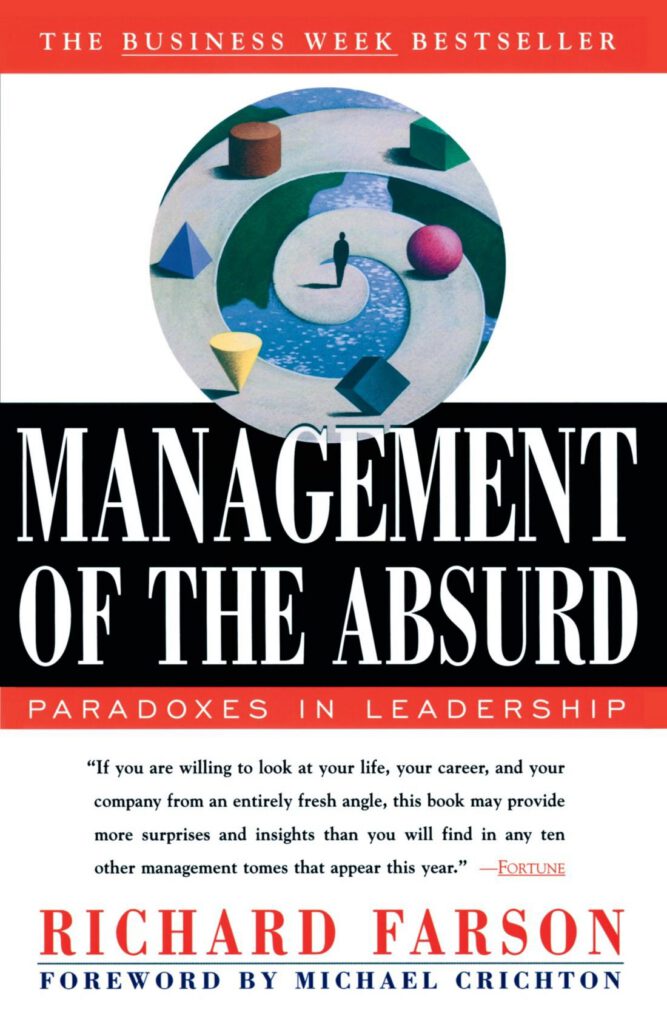
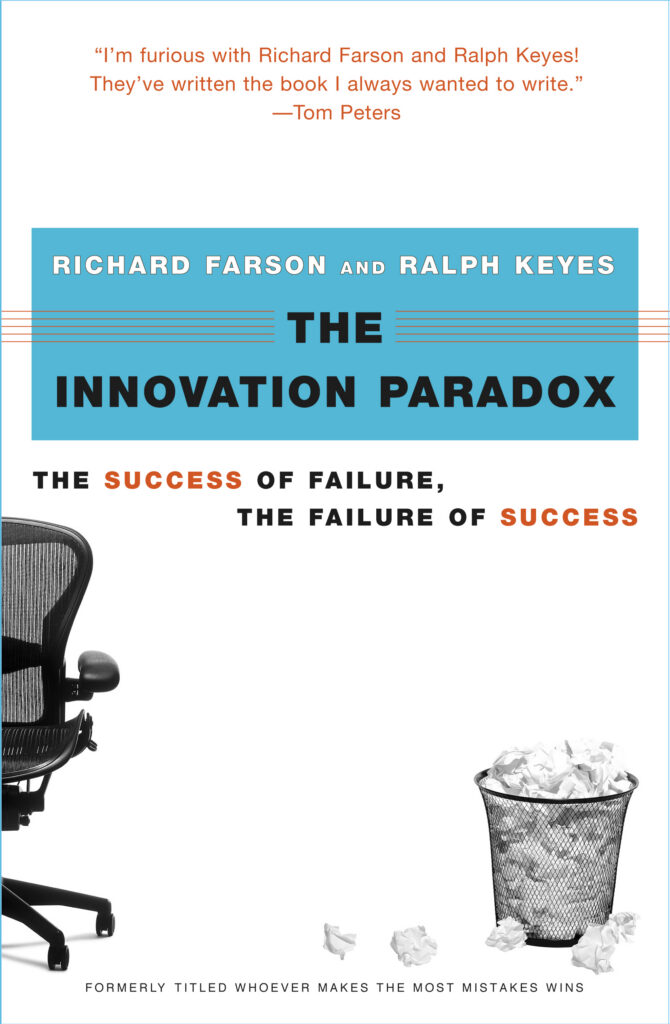
One of my favorite business authors is Richard Farson, who wrote two books that explore these ideas in the context of work, Management of the Absurd and The Innovation Paradox. As the titles suggest, there are fundamentally strange things about how work works, or doesn’t work, that we tend to to ignore. We struggle to process absurd realities about life and avoid even talking about them. Part of the popularity of Sun Tzu’s The Art of War in the West is it’s paradoxical premise that the best way to win is to never have to fight.
Generally books like these don’t tend to be popular in the U.S. They’re too weird to most people and do not promise easy answers for how to be productive or succeed. And yet it’s these kinds of books that are my favorites. Books that don’t quite fit in a category and don’t promise conventional satisfaction, like Shlain’s Art and Physics or Anne Dillard’s Pilgrim at Tinker Creek. They provide the deepest experiences by capturing what’s puzzling, weird or simply hard to explain, and helping us to hold on to thoughts and feelings over time. These ideas stay with us longer because of their mysteries, because of what’s left unresolved that keeps us curious for years or even a lifetime.
Here are some of my favorite quotes from Management of the Absurd.
‘There is a difference between absurdity and stupidity… Paradox and absurdity keep us off balance. In so doing, they produce the humility, vitality and creative surprise that make life so worth living. But they cannot be controlled. They will always defy the attempt.”
“Some senior managers who have been at the job 30 years don’t necessarily have 30 years of experience. They may have one year of experience thirty times.”
“Technology helps us in countless ways, but it always backfires. The term for this phenomenon in medicine is iatrogenic, meaning “physician induced.” Examples are complications from surgery, side effects of drugs, infections that result from hospital stays. There are more than a thousand different diseases that would not exist if not for the practice of medicine and the existence of hospitals. Half the time any hospital staff is spent treating iatrogenic disease.”
And from the Innovation Paradox:
The price of success too often is a loss of focus and daring. The tendency is to try to protect one’s accomplishments by shifting into cruise control. This syndrome gets played out repeatedly in the television industry. One network climbs to the top, begins to play it safe, repeats what worked in the past, slips behind, then gives may to a competitor on the bottom who’s taking creative chances because it has no reason not to.
According to an old military axiom, the weakest point always follows success. At those times it’s hard to resist the temptation to loosen up, take a breather, and abandon the intense concentration needed to fight your way up the next hill. Once a battle is won, soldiers are liable to ignore the sound of a twig snapping beneath the boot of an approaching scout, or overlook the glow of a distant campfire. Like soldiers, mountaineers say the most dangerous moment of their ascents is after they’ve reached the peak of a mountain. That’s when they’re most likely to fall into a crevasse or slip on a ledge. Surgeons, too, can find it difficult to stay focused once an operation has apparently succeeded. Until then, the demands of operating absorb their attention so completely that the scalpel seems almost to move itself.
Success is at least as hazardous as failure. It means redefining our sense of self around being a success rather than an unfinished portrait (This is a much tougher task that it sounds to those that never had to try.) We also no longer have failure to blame for feeling unhappy. If success can’t make us happy, we then must ask, what can? If we don’t feel successful and our life is problematic, it’s easy to see a connection. Obviously we surmise, the reason we have so many problems is our lack of success.
In the 1950s it was thought that the success of television would lead to radio’s demise. Instead, radio reinvented itself as a talk-show drive-time medium and roared back stronger than ever. Far from wiping out the market for fresh produce, as was feared, frozen vegetables whetted our appetite for fresh ones in countless new varieties. Convenience foods fueled a renaissance in gourmet cooking. Fast food inspired a passion for leisurely dining.
This deal will last through Friday. The book makes a great gift for anyone curious about design, or who you wish understood how good design actually happens. It’s full of great stories and written for just about anyone.
UPDATE: This book is in progress – head over here for details: designmtw.com.
My next book is about teaching basic design literacy to everyone.
The pitch: Everything we use, from social media, to our homes, to our highways, was designed by someone. But how did they decide on what was good for the rest of us? What did they get right and where have they let us down? And what can we learn from the way these experts think that can help us in how we make decisions in our own lives?
The goal won’t be to teach readers to be designers (which takes experience and practice). Instead, it’s to get them to design literacy. Which means to understand why design is so important, the basics of how good designers do it, and to be able to think critically about what’s well designed and what isn’t in their daily life and the world. It’s also a book designers will want to read, as it explains design in a fresh, inspiring and powerful way.
The plan is to make this a fun community project (join the list here). It will be funded through Kickstarter, so we control the intellectual property and can donate parts of it away (to schools or other groups) as we choose. Backers will be able to help the project as it develops, including participating in UX methods I’m using to write the book itself.
Project advisors include: Jared Spool (founder of UIE), Kim Goodwin (author of Designing for the Digital Age & former VP of Design at Cooper), Christina Wodtke (lecturer at Stanford and co-founder of IIA), Lisa deBettencourt (co-founder of Pearl Partners & co-founder of IXDA), Sam Aquillano (Executive Director, Design Museum Foundation), Laura Klein (Principal at Users Know), Nick Finck (Distinguished Faculty at General Assembly, CXO at Craft & Rigor) and Bob Baxley (former design director at Apple and Pinterest).
The team has two important (part time / freelance) roles I’m hiring for:
Graphic Designer. You will be the lead designer for the book (cover design experience please), as well as for the related materials evangelizing design itself through the project website, the kickstarter campaign, fun marketing materials like posters, stickers and other side projects you propose. You’re expected to be a collaborator on the book itself, from the title to the chapters themselves and to participate with the project community. I’m open to working with a design studio for this role, or a Voltron-like team of freelancer friends, as this job description is admittedly unicorn-y.
Design researcher. A book is a designed object just like any other and the researcher will apply user-research methods during the development of the book and related materials. They’ll work with the author to define a research plan for the book (which may never have been done before from a UX context before!), help with general research (who already teaches design literacy well?), conduct research and offer findings, and make recommendations to the author and other collaborators. You will be invited to collaborate on the book itself, from the title to the chapters themselves and help with the project community.
To apply, do the following:
In 10 sentences or less tell me why design literacy is important to you
Provide a link to your resume or LinkedIn
When are you available to start?
Designers: include a link to the related bits of your portfolio. Researchers: a link (or brief summary) of the most related, or the most unusual, research you’ve done.
Bonus points for a reference or two.
There is no step 6! Since it’s nice when applications have one less annoying step than you expect.
Basic info on your rates / fees for an unusual project like this
Send the above to this address, with the subject “for hire: design literacy (designer or researcher)”
And/or if you want to follow this project, please join this list for updates. Thanks!
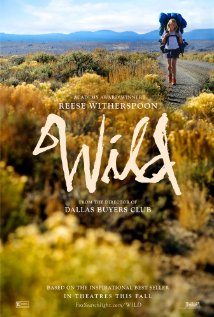
Many books are made into movies, but most movies aren’t very good. Movies are hard to make, period. Even with a great book (Wild is based on the memoir of the same name) it’s hard to transfer what makes the book great into a different medium.
For any writer, or reader interested in memoir and storytelling, I recommend going to watch Wild, staring Reese Witherspoon. Here’s why:
It’s a film told from a woman’s perspective. Half our species are women, despite how rarely they are central, or even peripheral (see Bechdel test) to the plots of films. And despite the ads for the movie, the protagonist is not simply a “confused young person on a journey”. She’s well portrayed as a smart, passionate, creative, sexual and more than anything, interesting as a person. There is a fully realized human being at the film’s center – how often can you say that about any book or film?
Visual memory as storytelling. I won’t go into detail which might ruin your experience, but the film bets on a very different way to explain the main character’s thoughts and memories. The approach they take is closer to the actual experience of memory and thought, as best we understand it today through science (and through art). Even if you don’t like it, it’s brave and unusual for a major film to use this approach.
Non-traditional story arc. The word verisimilitude means the appearance of being true or real, and the shape of the narrative of the film is unusual, but possibly more realistic in how we experience and tell stories. As a film that centers on a long hike there are many easy cliches to fall into, and Hollywood travel films often gleefully jump into them. The construction of the story itself is more challenging than I expected and I appreciated this while watching the film, and even more so, after it was over.
I read many memoirs and wrote one recently – if you’re interested in personal non-fiction, even as a reader, you should see the film. I haven’t read the book itself, so can’t comment on how they compare.
I always start with a one page design brief, explaining the goals for the cover. Since Ghost is a memoir, I spent much of the last year reading memoirs in preparing to write one. I picked some of the best memoir covers I found and shared them with Tim, and we talked about them over beers. We both liked the simple typography and the bold design choices (singular colors, simple imagery, etc).
Round 1
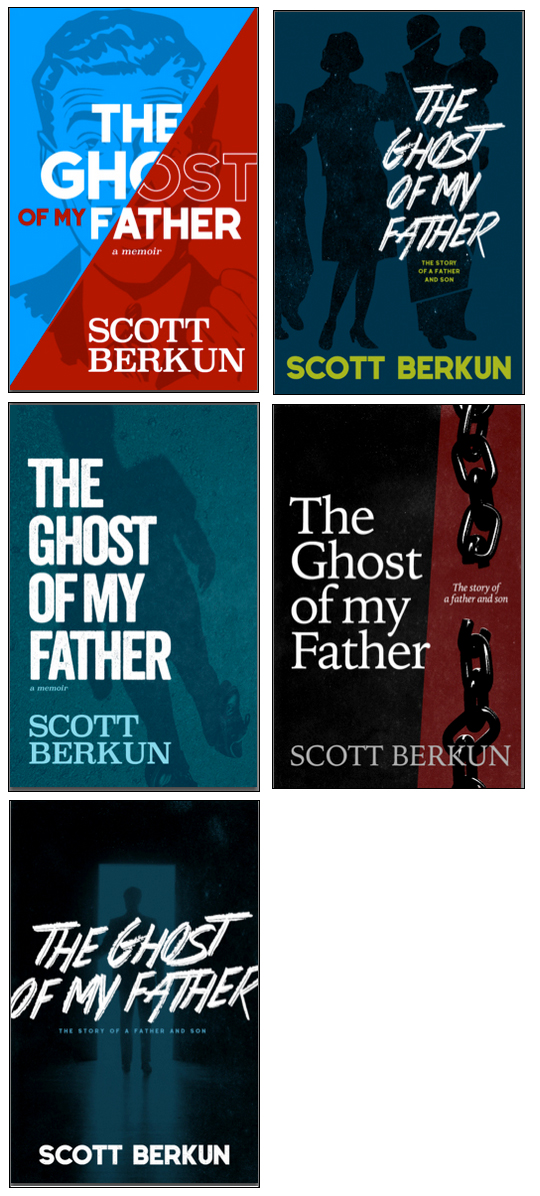
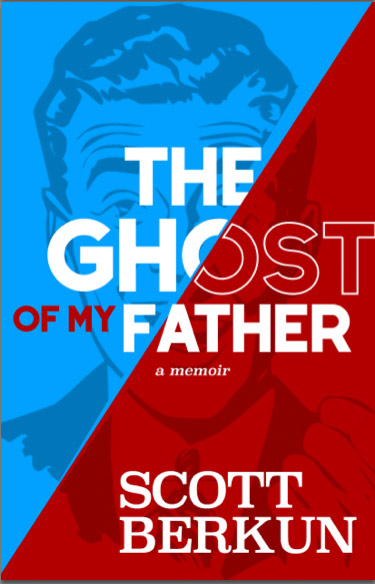
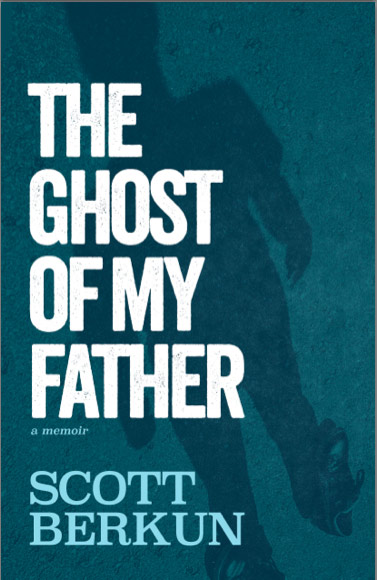
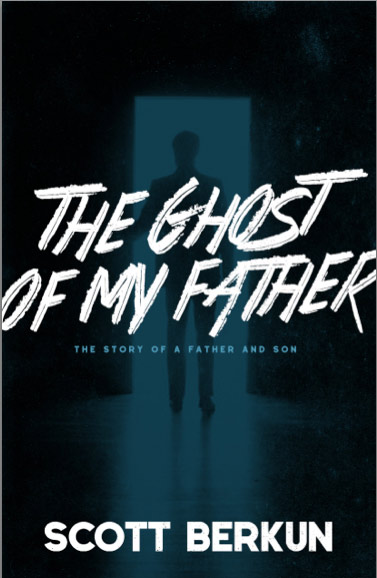
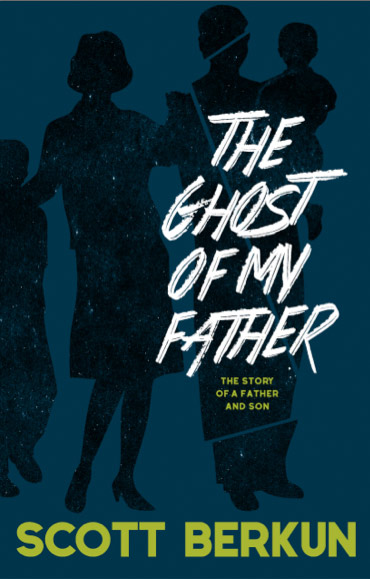
I like working with Tim because he understands the fun of the first round. Round one is the time to try widely different ideas and break rules. He put together more than a half-dozen initial concepts. Some were all out pop-art (upper left) and others felt more like thriller novels (bottom left) but I was pleasantly surprised by how different the concepts were: shadows and cut-outs were excellent metaphors for a book about a distant parent.
I asked readers to vote on the design, and 359 people kindly volunteered their choice. The 2nd option above, with the family in shadows, won with 33% of the vote. I never let votes make choices for me, but it generates discussion and helps me think about the design, even if I don’t necessarily agree with the winner.
Round 2
We talked about how strong the metaphor of the chain from the first round was, but not the style (too much like a literary novel from the 1970s) which led to one of my favorite concepts of round 2, with a vertical chain over a patchy blue background. It was my favorite design for round two and a front runner for the final design.
Round 3 – New Concept
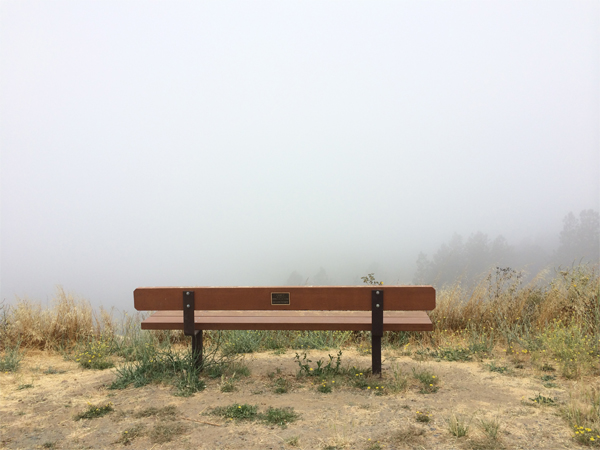
By chance a friend, Teresa Brazen, posted a photo of a hike she took on Facebook. It seemed a perfect theme: a place for contemplation, and perhaps sharing time with someone close, but that was obscured and uncertain (in much the way a difficult, but important relationship can be). It seemed worthy as a concept and I sent the photo to Tim with some brief thoughts. He liked it and ran with the idea.
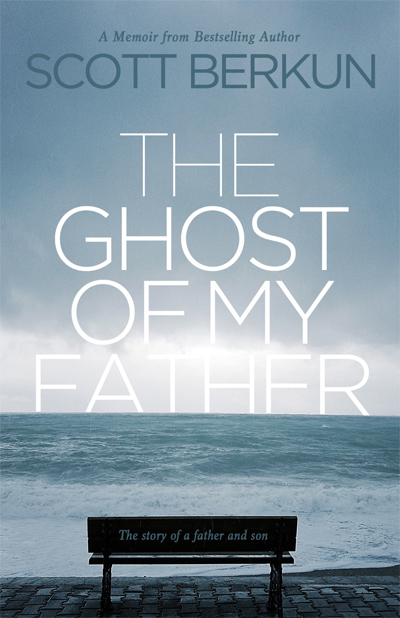
We kept my favorite design from round 2, as it was the strongest concept so far, but spent the round focusing on the new bench concept. Tim found stock photos that captured the spirit of Teresa’s photo (the rough, dense visuals of the landscape in Teresa’s photo made it hard to use for something like a book cover).
Round 4
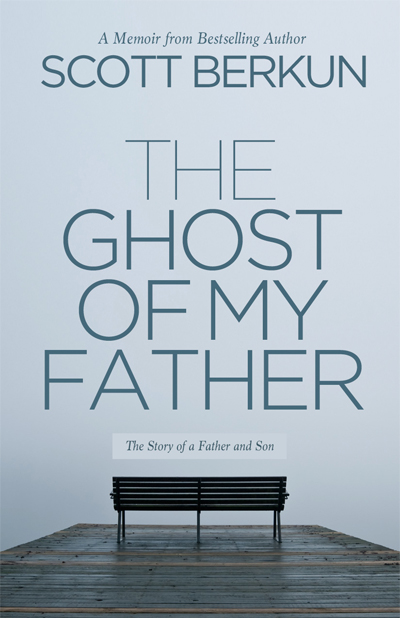
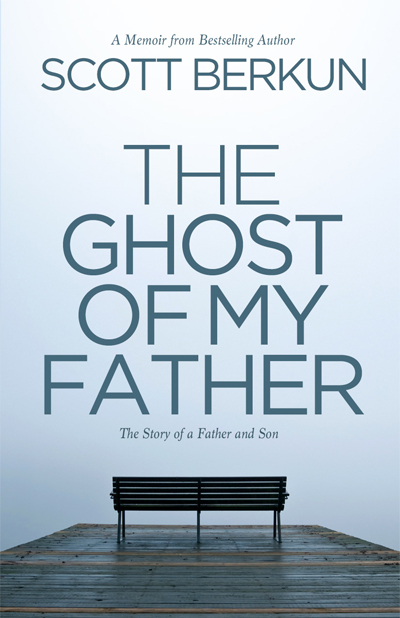
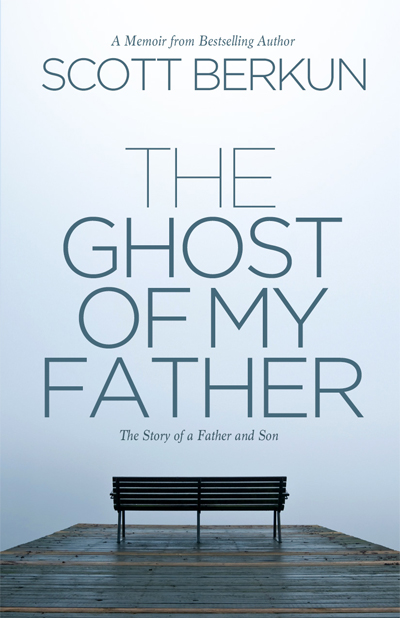
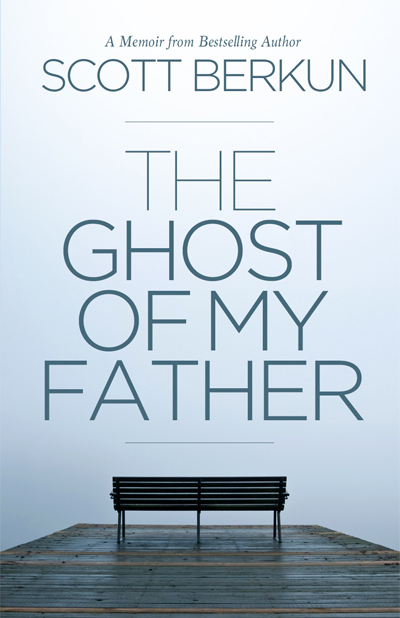
We finalized on the bench concept, and went with more abstract photo. Not being able to see where the ocean meets the sky suggested so many things about how, when you look closely, there is a surprising fuzziness to our memories and connections with some people we think are important in our lives, and the book is a head on exploration of this challenge. With most of the big decisions finalized, we got down to the graphic design details of spacing, font weight and composition. I still wasn’t sure if we’d have a subtitle or not, and after some advice from my kickstarter backers, I went dropped it. Simplicity wins.
Final Design
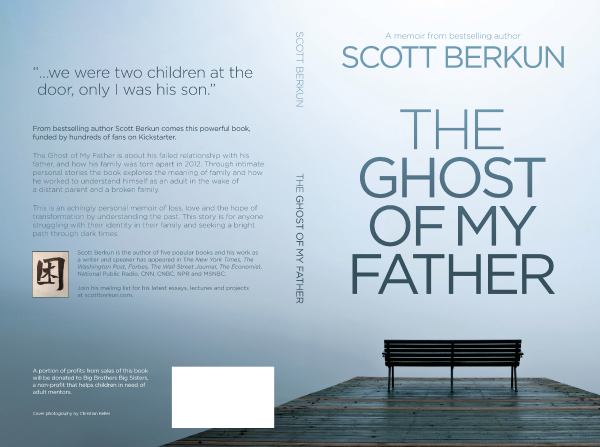
Here is the final design of The Ghost of My Father. Below you can see the full front, back and spine design.
Updated edition
I wrote a new chapter for the book, after my father died, and we rereleased the book with an updated cover. We added a blurb to the bottom, and a visual highlight to make it easy to tell the difference between editions.
We settled on orange as the best contrasting color, and added a thin highlight strip to the spine as well, so anyone can spot the updated version even if it’s on a shelf.
You can buy the book on Kindle or Paperback, or read an excerpt (PDF). Kirkus reviews called it “A sobering, lucid memoir about the uncanny, precarious nature of family, masculinity and childhood.” It’s the best and most personal book I’ve written and if you like my other writing, you should really give this one a try. It changed my life to write it and may change yours to read it.
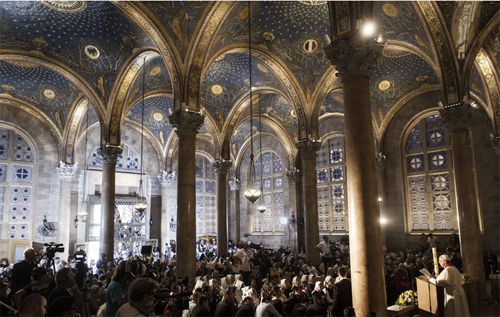
In 2012 I visited Jerusalem for the first time and had an amazing experience. I’ve long been a student of religious history, as it’s a subject that combines so many fascinating threads about human nature (psychology, culture, philosophy and more). During my visit I was struck by how little information the important sites in Christianity (as well as Judaism and Islam) provided to visitors about what they were seeing, and an idea for a book was born.
The premise: There’s so much arguing between religions, and perhaps even more within them. Wouldn’t it be great if there was some kind of religious referee, a person without any particular faith but knowledge of them, who could help sort things out? Or make interesting observations as an informed, and mostly respectful, outsider? That will be me (or that’s who I will be attempting to be). The book will combine my first person experiences visiting these amazing places, with insights from history, theology and comparative religion. It will be primarily a travel book about these important places, but focused on exploring deep questions about history, humanity, belief, and the past and the future.
The details: I’ll be in Israel in December spending a week in Jerusalem, observing and studying some of the most famous religious sites in the world. Chapters of the book will be subjects such as “Walking The Via Dolorosa“, “Watching at the Church of the Holy Sepulchre” and “Meditating at the Temple of The Mount“. This will be preliminary research and I’m not certain the book will come together, or if this rough outline will hold, but there’s only one way to find out!
Photographer: I’ve hired photographer Itay Cohen to work with me on the project, and we’ll be visiting the sites together. You can see more of his amazing work in his portfolio.
Researchers: The historic and theologic depths involved are enormous and to help me prepare for my visit, and develop the book, I’ve hired Nina Skafte (M.A. Religious History, Oxford) and Margaret Harris (working on PhD in Cultural History). More research volunteers are welcome, and if you have expertise and interest let me know.
Publication: I have no specific plans for how or when the book will be published. I may discover the concept of the book doesn’t hold together at all, who knows? I’ll make decisions about this after the research trip.
If you’re interested in this project, please leave a comment or contact me. It’s another big risk for me as an author and I hope you’ll at least support my willingness to take risks. I may set up a separate blog for the project and leaving a comment is the best way to get invited to follow along.
I’ve written many posts about religion in the past, and you can read some of the best ones here:
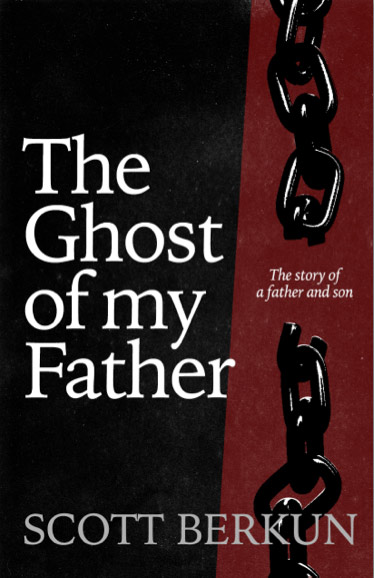
The book is titled The Ghost of My Father. It’s a memoir about the most difficult relationship of my life. It’s a departure from previous books and I hope you’ll follow my lead. You can read previous posts about the project if you missed them. Please join the special email list for the book to be first to know when it will be available (and get early excerpts and other insider surprises). It will be a self-funded independent production and I can use all the support I can get.
Today I was thrilled to discover Kordik sent along his first round of concepts. While these are not final designs, I’m happy to let you have an early look and give your opinion. Just vote for the design direction you think is most promising (again, these are first rounds, not final designs). Leave a comment if you’re so inspired and I’ll read them all.
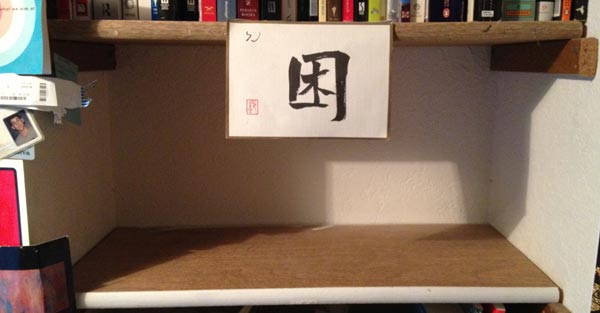
The photo below explains my ambition: I’m working to fill this shelf with books I’ve written. I want an interesting life which requires doing unusual things and having unusual goals. This is mine. Will I achieve this? I really don’t know, but in having this goal I believe I’ll live the kind of life that I want. What’s your big goal? How do you remind yourself of what it is? I find both these questions fascinating and I thought I’d share my answers as it might be helpful to help you figure out yours.
When I quit my first career as a tech manager in 2003, I primarily wanted to try another way to earn a living. I was afraid if I didn’t try I’d have the same career forever and that scared me. What else is out there? I felt I owed it to myself to try and see what I could possibly do and who I could I might become. I was lucky that I had a window of opportunity to try (no kids yet, little debt) and thought those that don’t would probably tell me I was foolish not to take a shot.
Books had changed my life many times and I wanted, hopefully, to write books that helped other people in a similar ways. Since I saw the shelf many times a day (it’s to my right as I type this) I decided it was the perfect spot to have some kind of reminder. Even when I finished a new book, the reminder would always be there. When my first book was published in 2005 I put this simple photo above on the author bio page.
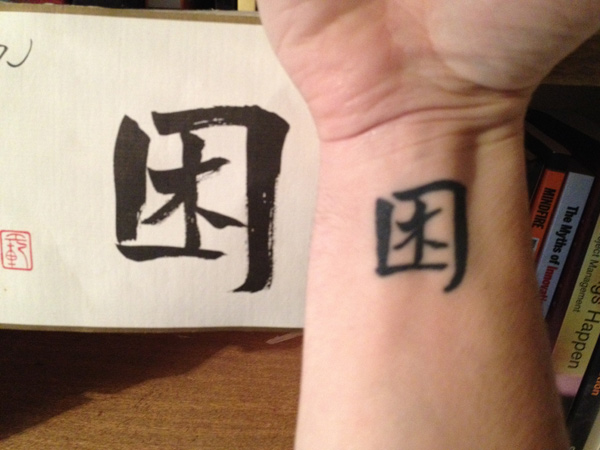
It’s a cliche for Americans to swoon over Chinese symbols, misunderstanding what they mean and not bothering to study their meaning or context. As my Chinese speaking friend Jeff likes to joke, “Uh, that symbol tattooed on your arm doesn’t mean Great Love, it means soup dumplings.” I did my homework and understand its legitimate meaning (often used to mean sleepy, or something that’s kept hidden or locked away), but it also has a specific meaning to me.
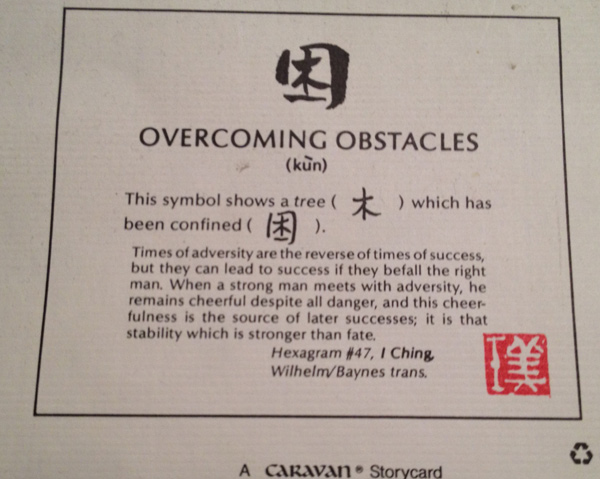
Around the time I decided to quit, which took me over a year to work up the courage to do, I found this card at Uwajamaya in Seattle around the time I quit my job. I liked what it claimed the symbol meant (see below). I love the quiet strength of trees and it matched how I needed to be to reach my goal. The I Ching references the symbol as Hexagram #47, which has various meanings, including the one on the card. I’ve learned in common Chinese the symbol/word is often used to means confinement (one of the other meanings suggested by the I Ching), trouble or sleepy more than overcoming, but that’s OK. The symbol has adorned my shelf for so long it means something specific to me regardless of its common meaning.
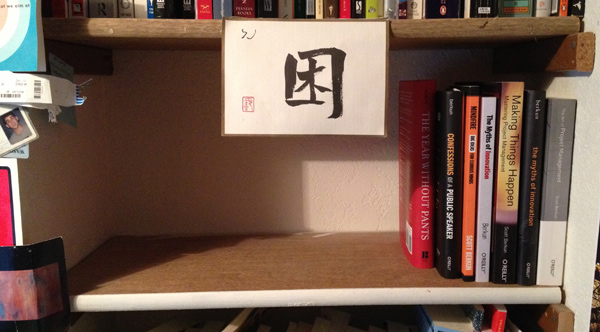
Years later I’ve written 5 books, [8 as of 2020], and the shelf looks like this (see below). I have a long way to go. Translated editions don’t count, as that’d be cheating, right? I’ll need to write about 25 books to fill the shelf which will likely demand most of my working life. That’s fine. I have nowhere else to go and no goal as meaningful as this one.
Although it’s a volume goal, I have no interest in writing bad books. I also have no interest in writing unnecessarily long ones. My essay collection Mindfire is comprised of revised essays from this blog, but I’d feel it was cheating if most of the shelf was recycled material. One book in five seems a fine pace for compilations and such.
Occasionally I’m very fortunate to have people interested in hiring me for very nice conventional jobs where I’d have more security and income, but then I look at the shelf. More security and income are desirable, but they have limited bearing on my ability to fill the shelf. So as tempted as I might be, I say no (The Year Without Pants was a notable exception). Writing and speaking are my only means of income.
Another reason I like this goal is writing books demands many things:
Polymathic thinking
Study
Curiosity
Passion
Connecting with friends and colleagues
Making new friends and relationships
Commitment to an idea
In the process of writing a book I’m forced to do many things in line with the kind of life that I want: An interesting one. As long as I focus on the shelf, many other good choices are forced naturally.
Most authors repeat themselves, writing the same kind of book repeatedly. The marketplace rewards familiarity and a writing life is hard enough, so I understand why it’s common. Many of our most popular authors publish in narrow ranges. This is wise and lucrative, but also limiting (the most curious perhaps are authors who exclusively write about creativity, which in a way is not very creative). I’m taking the opposite approach for as long as I can. I’ve never written a sequel, because we all know how underwhelming sequels often are. I have no shortage of ideas for books and I’ll keep moving forward until I’m forced to be more conservative, if that’s even possible.
I want to be a writer in the largest sense. I want to be an artist. I want to take big risks with my skills, which will help me discover exactly what abilities I have or don’t have and what good they can do in this world.
Last year I got my first and only tattoo. It serves as an additional reminder to me about why I’m here and what my goal is. I’m a writer which means I work with my hands. I wanted to keep the symbol with me, near my hands, all the time.
That’s my story. If you see me speak and notice the tattoo, now you know why it’s there and what it means.
Follow As I Chase The Goal
Any encouragement is encouraged. Praise the crazy writer man! And thanks for supporting my work. Best wishes to you on your own goals.
‘There are two motives for reading a book; one, that you enjoy it; the other, that you can boast about it.” – Bertrand Russell
Life is not a race. Speed is good for things you want to get past, not for important things you enjoy. “It was an efficient meal.” “I had a quick life.” If you are doing something meaningful you’d want the experience to last. You would try to savor and consider every single moment to extract the maximum value from it.
Sometimes people brag to me about how many books they read each year. “I read 40 books” or “I read 60 books.” My first thought is they’re probably reading the wrong books. Or reading them the wrong way. Any book I feel the urge to speed through means it’s either not very good or I’m not very interested. Skimming has its place but who wants to skim through most of life?
You could drive by the Grand Canyon at 100mph. “I saw 20 landmarks today.” “Oh, really, I saw 45”. But did they see anything? Did they experience anything? They’d have felt and learned far more if they had tried to do far less. You can race through a foreign nation checking items off a list of “must-sees” or you can dig in deeper and actually experience something of the culture you’ve taken so much trouble to go and visit. Books, art, movies and meals are no different. Two people can see the same exact thing in the same moment and have entirely opposite experiences simply because of how quickly or slowly they pay attention.
The faster you read, the less you read between the lines.
Intimacy is slow. Depth takes time. If you want intimate thoughts, intimate friends, intimate experiences it can’t happen quickly. Some people tell me they have great reading comprehension even at speed. They challenge me to test them about information from the book. But I don’t care what they can recall. Being able to recall a fact does not mean they’ve considered it, examined it, or used it to change their thinking or how they feel about the world (which suggests that book clubs can help get the most out of the books you do read). Reading comprehension does not equal reading wisdom. Comprehension is for a test, wisdom is for your life.
Volume is easy. Speed is easy. Speed reading is measured in words, but a good book is defined by how deeply you are effected by its ideas. It’s quality that’s hard. It’s thinking that’s a challenge. “I read a 1000 books a year.” Who the hell cares? If you are doing it that fast it is an activity far different than what I do when I’m reading a book. Books aren’t just trophies to hang on your wall or to stroke your ego with.
Good writing, or good anything, offers us the chance to pause and reflect. It’s good to read a good book slowly. To take time to consider the new ideas you’re taking in. To ask questions with other smart people about what you’re reading as you read it. If you’re reading to learn you want to read thoughtfully. If you are reading good books you will be engaged and have little concern about how long it’s taking or how long they are. “The book is 500 pages? Forget it, I don’t have time.” That’s foolish. You’d rather read five 100 page books that suck? Would you reject a 7 course meal at your favorite restaurant in favor of a 3 course one? If it’s a great book you should be glad the experience can be longer. It’s bad books of any length that should be avoided. It’s quality not quantity that matters.
I remember as a college student reading to study for tests. I’d read and read with the singular intention of trying to extract answers to the questions I thought would be asked. This was shallow reading. Many books were unworthy but even for ones that were I raced past the most valuable opportunities those books offered as I was hunting something much more shallow. What are you hunting for? You should slow down when you find it. If you never find it, change how you hunt.
From what I can tell, you are a voracious reader. Do you read just one book at a time, or multiple books at a time? Advantages or disadvantages to either?
I read 20 to 30 books a year, sometimes more if I’m working on a new book and there’s research I need to do. I don’t worry much about what I read. I keep a big supply of good books around and what I read on a given day is driven more by whim that anything. If I buy good books, which one I’m currently reading doesn’t matter.
I read primarily on my iPad through Kindle. It’s convenient given that I travel often, it’s easy to buy new books on the fly, and I like their highlighting system. But I’m not particular: I read print books often too.
I try hard to read one book at a time. It’s very tempting not to, but like all multitasking you waste energy when you switch as it takes time to recall everything that was in the book up until the point you reached last time. If I switch away from a book it’s a good sign I should abandon it completely. If I’m not convinced by the 50 page mark I will abandon a book with no regrets. I used to have 3 or 4 partially read books around but I’ve gotten much better at avoiding that trap.
As long as I’m reading frequently I don’t worry much about what the particular books are. But if you forced me to make it into a formula it’d be something like this:
Books I should read. I’m interested in writing books that will be read long into the future and I read old books that are still read today to learn something about how it’s done. I read many books that were published decades ago and largely avoid trendy topics or bestsellers. There’s plenty of classic literature I’ve never read and I try to knock off one or two of those a year. Some books are purely recommendations from friends who know the kinds of books I love.
Books related to a book I’m thinking of writing. I have a table in my office with 5 piles of books, each pile represents a future book project. I don’t know exactly when I’ll get to these projects, but I do look for books that line up with future ideas I have for my own projects. Sometimes I put them aside, other times I bump them to the head of the queue.
Books in different subjects. My strength as a thinker is I have wide interests and I grow that strength by reading books in many different subjects. The last few books I’ve finished include Glittering Images by Paglia,The Origin of Satan by Pagels, A Drive Into The Gap by Guilfoile, and Broken Music by Sting. I rarely read books about management or creativity anymore as I have far less to learn in those subjects than I do about art, religion, sociology and dozens of other ways of looking at the world. I also believe I become a better expert at what I already know by reading different subjects as there are always ideas from one field that can be applied to others and that’s where many breakthroughs come from.
I rarely read bestsellers and seek more challenging books. The bestseller list is conservative in the kinds of authors and topics that will be widely popular immediately on the book’s release. Plus it’s not a level playing field, which is a surprise to most people. I prefer more ambitious books that are too challenging to ever see this kind of popularity. Zeldin’s An Intimate History of Humanity or The Great Big Book of Horrible Things are good examples. I love books where a smart expert who writes well takes on a big subject without ever claiming a gimmicky solution to all the world’s problems (a sad cliche of the non-fiction bestseller lists).
I read good writers. I sometimes read books purely because of the talents of who wrote them or the approach they took. Writing is a craft and I want to learn from other craftspeople. I’m a regular reader of The Best American Essay series since it’s an easy way to find new writers and essays are short enough that if I don’t like one I can just skip to the next one.
It’s common in December to see lists of “best of the year” for books and films. I read 20 to 30 books a year but rarely do I read books published in the current year. I don’t have anything against new books, I certainly buy many of them, but I’m drawn to books that have been around awhile and still interest me. Perhaps these books ask deeper questions and provide deeper answers? Or maybe I’m merely trying to combat the cultural pull towards neophillia and the rejection of things purely because of their age.
Since most people read only a handful of books a year it’s silly not to include books simply because of when they were published. Odds are high that even if you check out the NYTimes best books of 2013, you still haven’t read most of the books they recommended from 2012, or 2005, or 1905.
With this in mind, here are the three best books I read in 2013, regardless of when they were published:
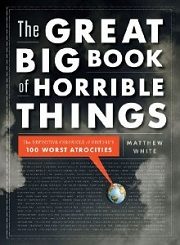
The Great Big Book of Horrible Things, by Matthew White (2011) – It sounds like a children’s book, but it’s far from it. With great style and flair White takes an unconventional approach to explaining the history of civilization. He uses the worst atrocities, from genocides to wars, to explore the history of the World. My world history has always been spotty and I found this book to be a tour de force, making a laundry list of facts and events I’d never understood comprehendible and fascinating. The lists of his rankings of the worst atrocities, and their most frequent causes (religious wars? politics?) are worth the price of admission alone (my full review).
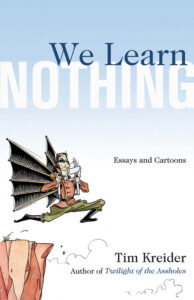
We Learn Nothing, by Tim Krieder (2013) – This collection of essays, with a few illustrations, does what all writers wish they could do: invite just about any reader into an intelligent, conversational exploration of some universal themes like friendship, belief and identity. It’s the kind of book you can give to just about any adult and they’ll respond with stories of their own and new questions about various notions they’ve held close, but unexplored until now. (my full review)
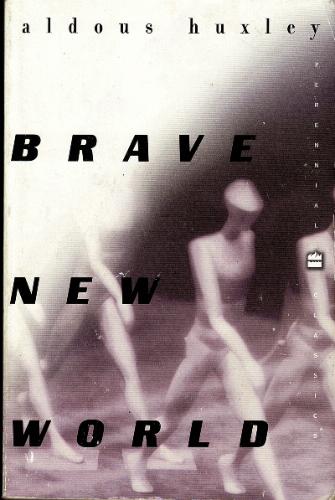
Brave New World, by Aldus Huxley (1931). I am a big fan of dystopian novels, and although I’ve read 1984 many times I’d never read Huxley. I was surprised to learn Brave New World predated 1984, first published in the 1930s, more than a decade before Orwell’s book. It was a true surprise how bold and prescient Huxley was, even though I knew many elements of the story through literary osmosis. And although the structure of BNW can be challenging at times, I’ve found myself thinking about it often since I read it (Related: this fantastic comic comparing the predictions of 1984 with BNW)
We read for different reasons, but we often write reviews as if everyone in the world is just like us.
A review that says “I hated this book” suggests the book is bad, but if the reviewer is a Yankee fan and the book is about how awesome the Boston Red Sox are, it likely reflects their biases more than anything about the book. And of course a review that says “This is the best book ever” written by the mother of the author is cute, but has enough positive bias to be useless.
A good reviewer frames their opinion with context so you can see if your sensibilities and needs match theirs. Some readers like to be challenged, some don’t. Some readers want an introductory book, others want something very advanced. If you’re in one group and base your decisions on reviews written by the other, you’ll miss books that might be perfect for you.
Since most book reviews are narrowly written we’re responsible for asking the clarifying questions ourselves.
Before you let an amazon review influence you, consider:
Does the reviewer have a strong point of view? How does it match yours?
What level of expertise did they have compared to you?
Are they rating on how inspired they feel or what they learned?
Are they rating because they were entertained or because they got value?
Do they emphasize their response to the concept of the book, or it’s execution?
Did a single minor disappointment that you might not care about distort their perception of the book?
How is their star rating calibrated? Do they often give 5 stars or 1 star reviews? Or is a 4 star review exceptional for them?
What other questions do you ask to get the most out of amazon.com reviews for a book?
I used to feel guilty about books I own but haven’t read. They’d sit in piles making me feel unworthy as a writer, and reader. And no matter how many books I’d read in a year, I’d always find myself buying more. I couldn’t win. It was a destructive cycle and it drove me mad. It was yet another kind of information I seemed to be drowning in.
One day I realized there was another way to frame my behavior. The goal should not be efficiency because efficiency makes you conservative. As a writer I need an ambitious curiosity, not a safe one. It’s good to take bets on books at the limits of my comfort zone. That willingness to buy books signals to myself there are new worlds other creators make, and for the price of a meal I can purchase the opportunity to discover them. I can’t penalize myself for trying. If I never read any of the books that might be a problem, but merely not reading some of them is entirely sensible. The clothes we buy mostly sit unworn. Our couches are mostly not sat in. It’s rare for a thing to be used as much as it could be.
Buying books also has these larger effects:
Purchases signal the creator that I’m interested in what they made.
It’s a bestseller list – not a best read list – buying a book signals agents, editors and publishers.
It provisions future curiosity, since in 3 months or years I can easily read that book.
Seeing a good writer’s name and knowing I helped their career feels good (hint hint).
I feel no guilt now in abandoning books either. They’re not children, they’re invented things. If I don’t like it after 50 pages I owe the author nothing. In fact since I bought the book, I paid for the right to read as much or little as I please. Never finishing books is a different problem, and the solution for that is buying better books.
Not sold yet? How about this: on the day I was born there were already more books published that I could ever read. There was never the potential to read everything. I have to abandon the expectation of perfection in my book purchases, for the same reasons I need to abandon the expectation of perfection in everything. Books are cheap, my literary inefficiencies doesn’t cost much in the long run, especially if those bets and gambles help me find a book or two a year that changes my life.
Related:
Tsundoku (積ん読) is a Japanese word that means ‘stacked readings’ or books you’ve bought but haven’t read.
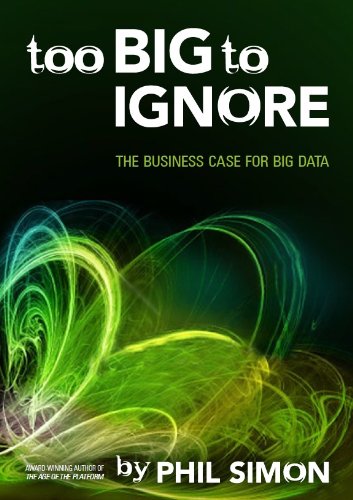
I’ve known Phil Simon since college and he’s one of the only people I’ve known that long that’s taken on a similar writing ambition: he’s written five books, including his latest Too Big Too Ignore: The Business Case for Big Data. The term ‘big data’ is popular, but on the verge of becoming jargon and I couldn’t resist interviewing Simon in the hopes he’d clarify what the hype is about and how his book helps people trying to sort it out for themselves.
Q: How is Big Data, which has now become a trendy term, different from the kind of analytics companies have used for decades?
PS: It’s definitely a trendy term. Analytics have been with us for a long time, and they’re still essential. Historically, organizations have used only structured, transactional data to drive analytics. Business Intelligence (BI) and key performance indicators (KPIs) were the rage in the mid-1990s and 2000s. They still matter today. The new boss isn’t totally different than the new boss.
So, what’s different? The types and sources of data behind these metrics. No longer are analytics based solely on structured or transactional data. For example, knowing which customers buy which products remains important. However, there’s a new source driving better metrics: unstructured data brought by Web 2.0, mobility, and the cloud. Now companies can determine what consumers are blogging, tweeting, and writing about on review sites. Amazon, Netflix, and scores of companies use unstructured data to increase sales, innovate faster, and find new insights into consumer behavior.
This unstructured information comprises a great deal of what we are calling Big Data. Analytics still matter, but now organizations have the tools to capture, store, access, and analyze new and critical types of information—and do some pretty amazing things.
Q: This is your fifth book. How did you / are you using big data to help you research and market your work?
I used Google Trends early on to gauge the popularity of Big Data vis-à-vis other terms like Business Intelligence. I wanted to run an A/B test on the title and subtitle of the book but my publisher didn’t like the idea. Eric Reis did that for The Lean Startup.
Rather than download tools and play with them myself, I went old school. I attended conferences, followed people on Twitter, and interviewed real-life practitioners who are actually doing this stuff. In a sense, it was a very different approach than my first book, Why New Systems Fail.
Q: What was the biggest surprise about organizations that have bet on using Big Data?
Big Data has no shortage of myths. The biggest is you have to be a big company to harness the power of Big Data. Not true. Sure, Amazon, Apple, Facebook, Twitter, Google, IBM, and other behemoths are utilizing Big Data, but company size doesn’t really matter.
In the book, I write about a number of small companies and government agencies leveraging Big Data. Quantcast and Explorys are anything but big companies, and NASA (even with a $18 billion budget) still acts small by running contests through gamification sites like TopCoder. It’s possible to get a little bit pregnant with Big Data, something that I recommend to organizations not sold on its power.
Q: What is one of the common mistakes you’ve seen people make as they try to adopt your advice?
For one, don’t boil the ocean with Big Data. It’s simply not possible to get all of the information—and you don’t need it anyway. Even Google doesn’t index the entire web. The Deep Web remains largely a mystery It’s a journey, not a marathon. You’re not going to “implement” Big Data in a week. It’s the antithesis of set-it-and-forget-it. It’s an ongoing process, one that requires the willingness to embrace the unknown.
As I’ve seen in my consulting career, strategy eats culture for lunch. Big Data is not an IT initiative. If an organization resists integrating information into its decision-making, it’s unlikely that it will realize benefits from any data—big or small.
Q: How can readers separate the hype from the truth in experts talking about Big Data?
It’s a challenge, but I hope my book will help. I wrote a vendor-agnostic text that covers a panoply of companies. I have no horse in this race.
Although I list some solid rules of thumb in the book, realize that there’s no one “right” way to do Big Data. There are many tools, viewpoints, methodologies, vendors, consultancies, and talking heads with more than a little skin in the game. Every organization wants to be “uniquely positioned” to handle what is a burgeoning area. Take vendor claims with a 50-pound bag of salt.
Finally, understand that many things are still playing out. Big Data tools like Hadoop, NoSQL databases, and the like are relatively new. Yes, there are case studies, but this is evolving at warp speed.
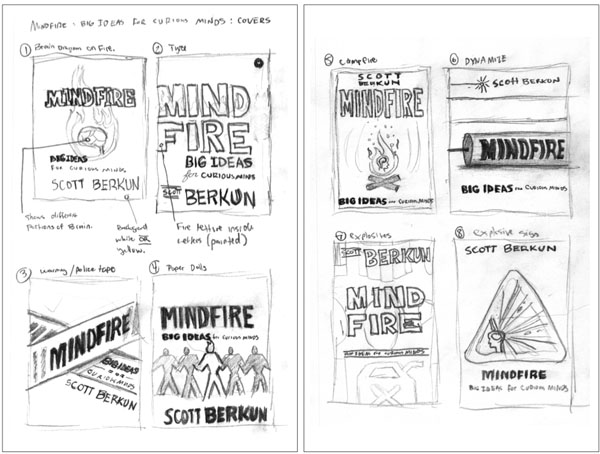
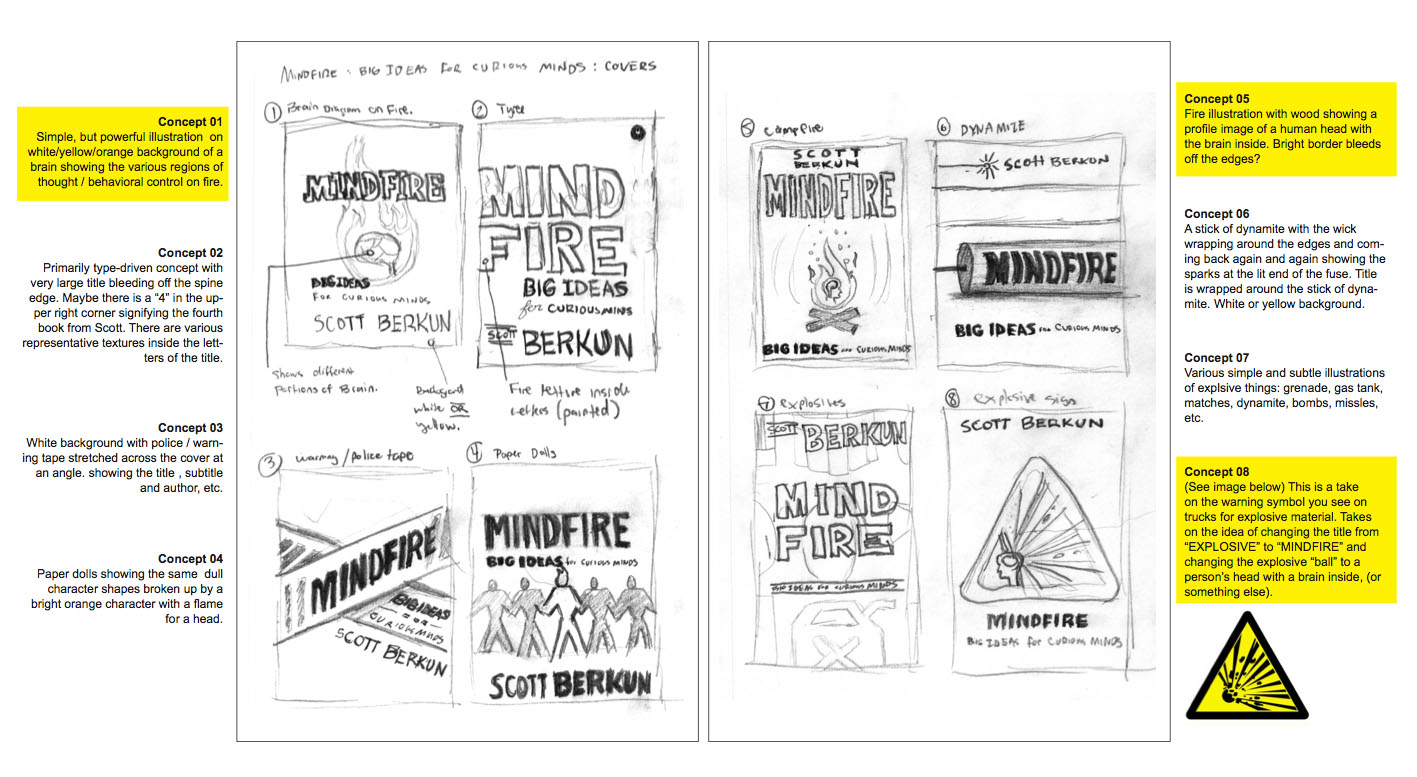
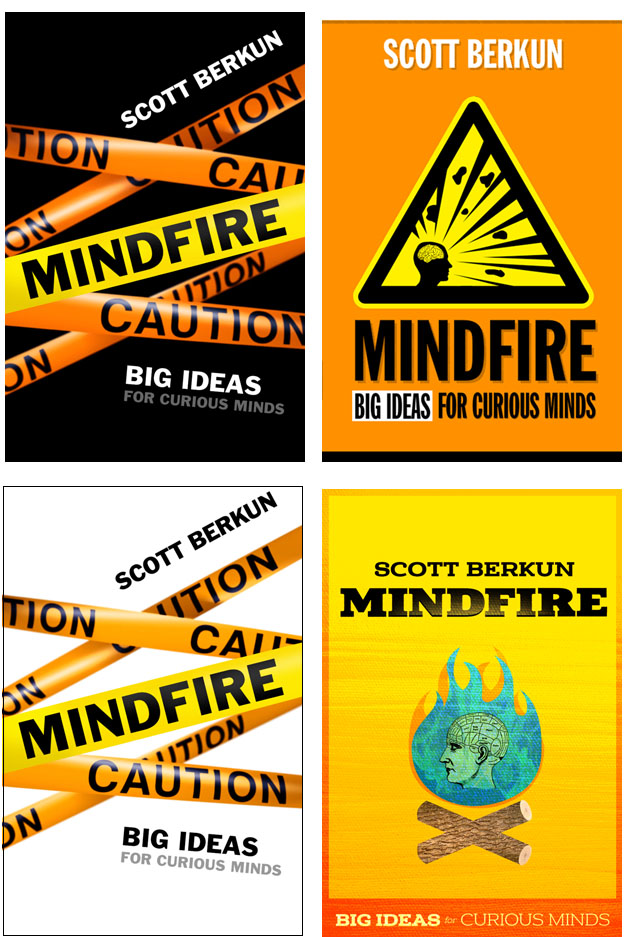
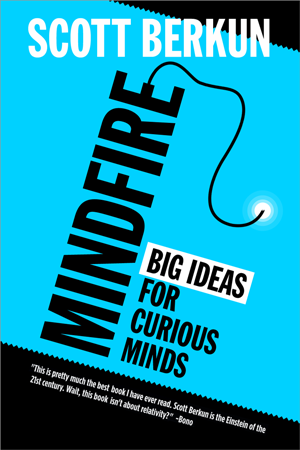
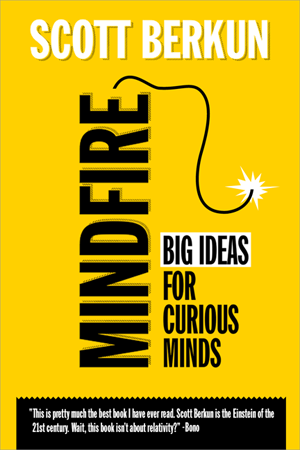
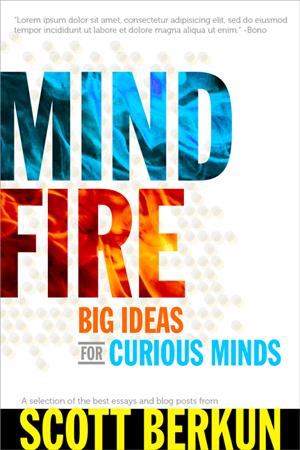
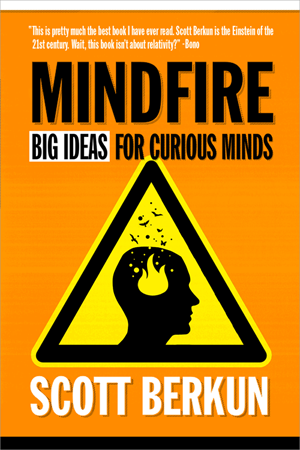
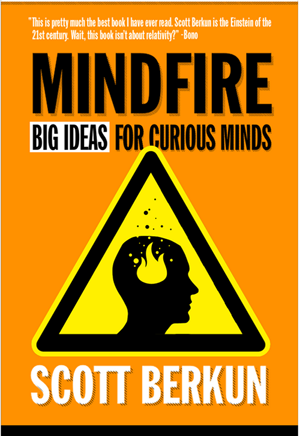
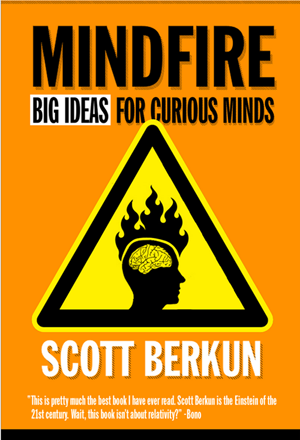
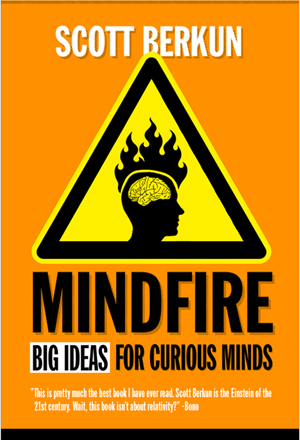
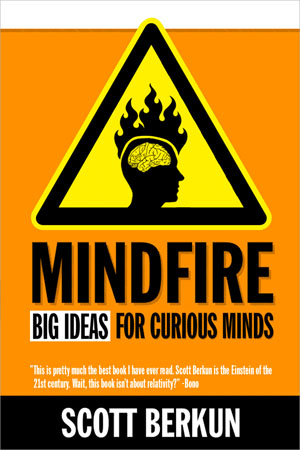
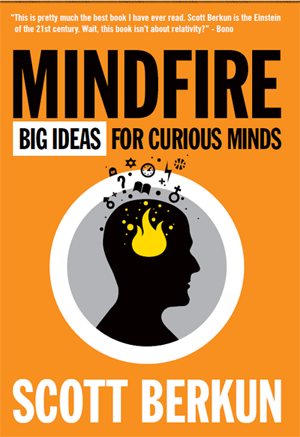
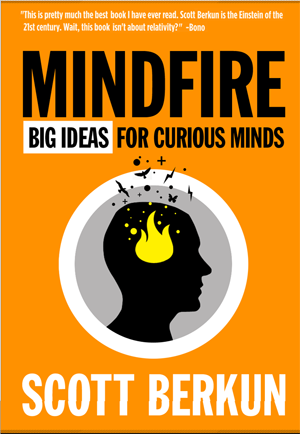
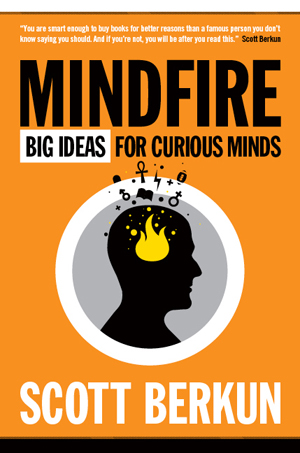
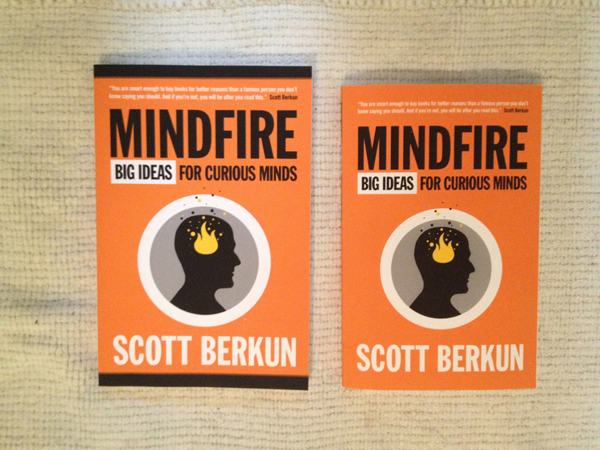
The 1.1 edition of Mindfire: Big Ideas for Curious Minds, a collection of my best essays, was officially released. Here’s a behind the scenes story on how the cover was designed.
After vetting more than 30 designers who applied, I hired Tim Kordik. And I’m glad I did. I wanted not just a graphic designer, but someone who was interested in helping define the book end to end, from the interior design, to the title, the content and of course, the cover.
I wrote up a short design brief that’s good for any book cover:
Bet big on one visual concept
Title should be readable in thumbnail / 10 feet away
Simplicity wins
Be bold
We brainstormed for an hour and Kordik went off and put some early sketches together. I made clear I was comfortable working low-fidelity so we could try things quickly and throw aways ideas without sunk cost feelings. He was all for it.
Round one
Here was the first round of concept sketches:
Tim paired each sketch with a brief description to help explain the idea, in case I missed it.
Round two
We discussed which directions we thought were strongest, and he did a second round. We killed some concepts and added a couple of new ones. The entire round was higher fidelity than last time:
The vote was used to inform our thinking, but not to drive it. Many of the comments people left were useful and Kordik and I discussed them. We didn’t agree with some of it, but it did help us step back and look and what we’d done differently.
Round Three
We narrowed the field to one concept. We did a couple of one-off last attempts at other concepts, but they didn’t pan out so we killed those paths.
I loved the idea of a book’s central image being a warning label of some kind. But round three revealed the challenges of the triangle for the central element. It left too much trapped whitespace, and the top angle of the triangle always felt strange.
But I loved how playful Kordik was in trying out different options. It let us look at alternatives instead of trying to imagine them.
Round four
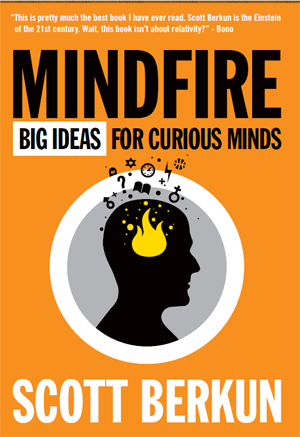
Moving to a circle, the simplest shape, made sense and we ran with it. Tim came up with the bullseye grey/white effect which is powerful and striking.
We moved on to the next level of detail down: the fire and the objects coming out of the fire. Kordik tried many different sets of images. We tried at first to pull images that matched the essays (life, death, time, inspiration, etc.), but it was hard to arrange them without it feeling cluttered. Kordik tried many variations and probably wanted to strangle me.
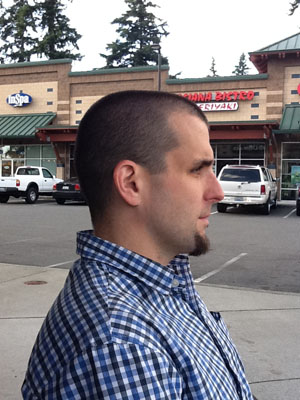
During one meeting, Kordik thought using my profile for the cover might work. I resisted at first: I hate books with pictures of authors in them. Why should readers care what the author looks like? But I figured I had nothing to lose by letting him take the photo.
Kordik did a great job, making it subtle enough that few would notice (I love books with secrets). It worked great and all future mockups had my profile as the silhouette. Here’s the picture the profile is from. He gratefully edited our the WordPress beard I had.
As much as I had pushed for all of the icons in the belief those little details mattered, the simple bubbles were cleaner, simpler and stronger, and gave more whitespace to the design.
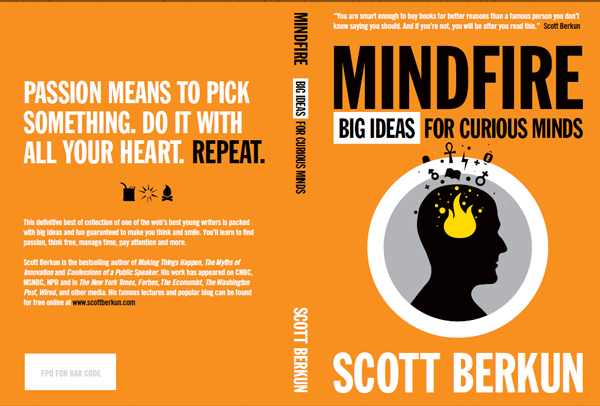
We were close enough that Kordik finished up the full jacket design.
The blurb:
Blurbs are silly things (see the secret life of blurbs). Since I was self-publishing I decided to be honest and have some fun.
Final cover for First Edition:
After months of work, and dozens of itterations, we arrived at the final cover design. I loved it. It’s the strongest cover design of all of my books, and I’m convinced it’s because of Kordik’s willingness to experiment and not fear exploring alternatives.
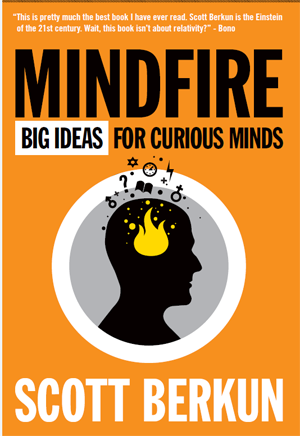
Final cover for 1.1 Edition:
For the upcoming 1.1 edition we made the book size smaller, down from 9×6 to 8×5. We simplified the cover by dropping the black/white strips on top and bottom.
Hope you found this behind the scenes post interesting, buy the book!
Why didn’t you self-publish? I considered it. If I could I preferred to find to a publisher that could help bring the book to a wider business audience than I could alone. I’m hoping I can connect directly with the WordPress community and my own audience about why they’ll want to read the book. But for the truly general business audience, beyond just the tech sector, my reach is limited. Jossey-Bass’s track record can help there. Working with a publisher again is also a chance to learn some new tricks.
Why did you get an agent? I’d looked for agents before, but never found one that I liked and who was interested in the book I was working on. Both of those things changed when I talked with David. I managed to get offers on the book myself but he helped look for others, advised me on the book proposal, and took over negotiation and contract details, which I was happy not to have to do myself for once.
Why didn’t you go with O’Reilly? I did talk with them, but for the same reasons in #1 they weren’t the ideal choice for the book, as their reach, while much greater than mine, hits the same tech-business crowd I can reach myself. I think they’re an excellent publisher and I bet I work with them again.
More on the book soon. I’m on the homestretch of the first draft and hope to be finished within the next two weeks.
If you have other questions, leave a comment.
I love books comprised of essays as they free writers to go in a wide range of directions and styles, unhinged from the burden of a single narrative theme. When I heard Nancy Pearl mention it offhand in her list of the year’s best books, I picked it up (its actually the first book I’ve purchased because of Pearl – I don’t listen to her regularly, and it just happened to be the first essay collection I’ve heard her mention).
The book We Learn Nothing, by cartoonist and essayist Tim Krieder, has some of the sharpest, most insightful writing about people, life and politics I’ve read in some time. I’m not familiar with his cartoons (the book explains he was a liberal critic of the G.W. Bush administration), but I did very much enjoy this book.
Many of the essays explore questions about life through the filter of his own, using his friends, his career, and his family as the landscape for asking and answering questions we all have. His writing is sharp, intellectually provocative, and at times funny, even charming. The format of the book lends itself to a certain egoism as he is a central character in many of the essays, and many of the cartoons (the book is mostly essays, with the occasional series of drawings).
Here are some choice quotes from the book:
On our deepest secrets and our friends:
Each of us has a Soul Toupee. The Soul Toupee is that thing about ourselves we are most deeply embarrassed by and like to think we have cunningly concealed from the world, but which is, in fact, pitifully obvious to everybody who knows us. Contemplating one’s own Soul Toupee is not an exercise for the fainthearted. Most of the time other people don’t even get why our Soul Toupee is any big deal or a cause of such evident deep shame to us but they can tell that it is because of our inept, transparent efforts to cover it up, which only call more attention to it and to our self-consciousness about it, and so they gently pretend not to notice it.
Meanwhile we’re standing there with our little rigid spongelike square of hair pasted on our heads thinking: Heh—got ’em all fooled! What’s so ironic and sad about this is that the very parts of ourselves that we’re most ashamed of and eager to conceal are not only obvious to everyone but are also, quite often, the parts of us they love best.
On the addictive nature of complaints:
It seems like most of the fragments of conversation you overhear in public consist of rehearsals for or reenactments of just such speeches: shrill, injured litanies of injustice, affronts to common sense and basic human decency almost too grotesque to be borne: “And she does this shit all the time! I’ve just had it!” You don’t even have to bother eavesdropping; just listen for that unmistakable high, whining tone of incredulous aggrievement. It sounds like we’re all telling ourselves the same story over and over: How They Tried to Fuck Me Over, sometimes with the happy denouement: But I Showed Them!
So many letters to the editor and comments on the Internet have this same tone of thrilled vindication: these are people who have been vigilantly on the lookout for something to be offended by, and found it. We tend to make up these stories in the same circumstances in which people come up with conspiracy theories: ignorance and powerlessness. And they share the same flawed premise as most conspiracy theories: that the world is way more well planned and organized than it really is. They ascribe a malevolent intentionality to what is more likely simple ineptitude or neglect.
Most people are just too self-absorbed, well-meaning, and lazy to bother orchestrating Machiavellian plans to slight or insult us. It’s more often a boring, complicated story of wrong assumptions, miscommunication, bad administration, and cover-ups—people trying, and mostly failing, to do the right thing, hurting each other not because that’s their intention but because it’s impossible to avoid. Obviously, some part of us loves feeling 1) right and 2) wronged.
But outrage is like a lot of other things that feel good but, over time, devour us from the inside out. Except it’s even more insidious than most vices because we don’t even consciously acknowledge that it’s a pleasure. We prefer to think of it as a disagreeable but fundamentally healthy reaction to negative stimuli, like pain or nausea, rather than admit that it’s a shameful kick we eagerly indulge again and again
On the sad commonalities of political parties:
The truth is, there are not two kinds of people. There’s only one: the kind that loves to divide up into gangs who hate each other’s guts. Both conservatives and liberals agree among themselves, on their respective message boards, in uncannily identical language, that their opponents lack any self-awareness or empathy, the ability to see the other side of an argument or to laugh at themselves. Which would seem to suggest that they’re both correct.
It was one of the best written books in terms of insight and style I’ve read in some time. Get the book here: We Learn Nothing.
My friend Ramez Naam’s first novel, Nexus, just released and it’s getting great reviews. I haven’t read it yet, but here’s some of the feedback it has earned so far:
Wired says “Good. Scary good… stop reading now and have a great time reading a bleeding edge technical thriller that is full of surprises.”
I’ve been hard at work on book #5. It’s about the year I spent working at WordPress.com. I want you readers to be more involved: an easy place to start is helping pick the title for the book.
Book Synopsis: WordPress.com, the planet’s 15th most popular website, has no headquarters: everyone works from wherever they want in the world. They don’t use email and have an open vacation policy. New work ships dozens of times a day to a live website used by millions of users. How is all this possible? What can other companies learn from their radical methods? In this book you’ll learn insights into leadership, management and the nature of work by following Berkun, bestselling author and former Microsoft manager from the early web, as he tells his story of trying to lead a team of young programmers and designers at the heart of this fascinating, brilliant company.
How voting works: This is the first round. There might be a second round. If you have a write-in candidate for title or sub-title, please vote anyway and leave your candidate in the comments. (My general theory on book titles)
[polldaddy poll=6719915]
And which subtitle?
[polldaddy poll=6733401]
If you want to be notified when the book is out: Leave a comment that says “I want to knooooooow when it’s out! WOOT” or something similarly ridiculous. And you’ll get an email when the time is right. Or just subscribe to the blog via the sidebar on the left.
Thanks folks. I’ll be writing more about the book over the next few weeks – stay tuned.
 Many books are made into movies, but most movies aren’t very good. Movies are hard to make, period. Even with a great book (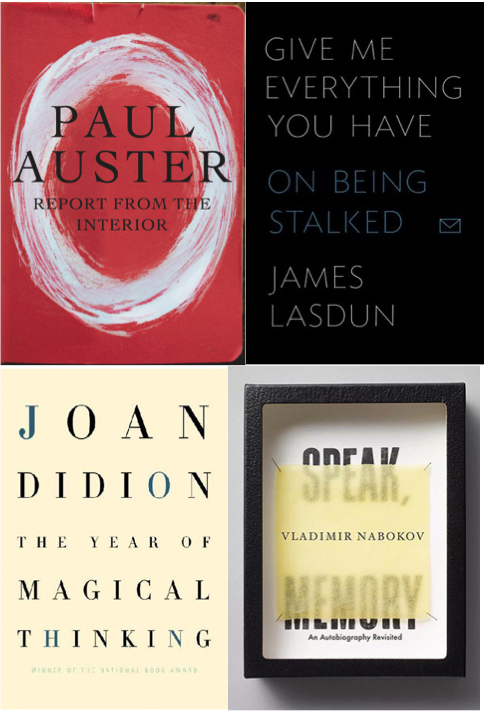






 We Learn Nothing