We take great works for granted. We forget, but the fate of even our most famous ideas and creations was far from certain at the time they were proposed. A powerful exercise anyone can do is to pick a famous creation and go back in history to the days before it was made. Only then can you see what the makers themselves truly experienced, and learn from the surprising challenges they faced and overcame. Here are some lessons we can all learn from the wonders of Eiffel’s Tower.
1. All Ideas Are Made From Other Ideas
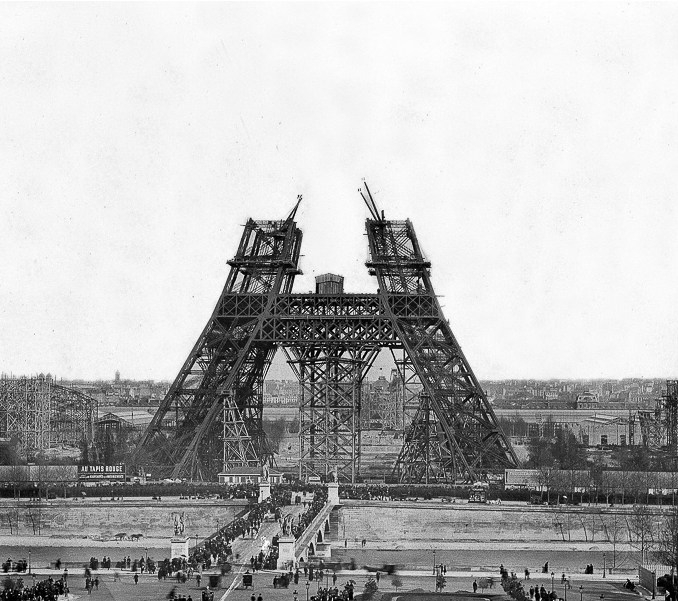
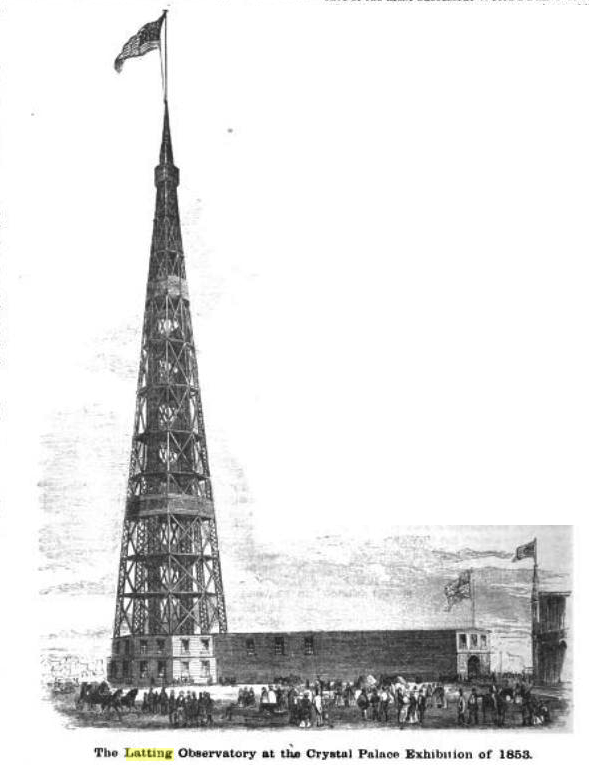
Eiffel was inspired by the Latting Observatory, among other works. This tower, built in 1853, was taller than any other building in NYC, that is, until it burned down in 1856 (wood was still the primary construction material at the time, a fact Eiffel wanted to change). Eiffel also used engineering techniques found in nature to reduce weight and retain strength, essential concepts for constructing the tallest building in the world at the time. If you’re struggling to come up with good ideas, dig deeper into the surprising history of the major ideas in your own field. You’ll learn how they borrowed, reused and found inspiration from existing ideas.
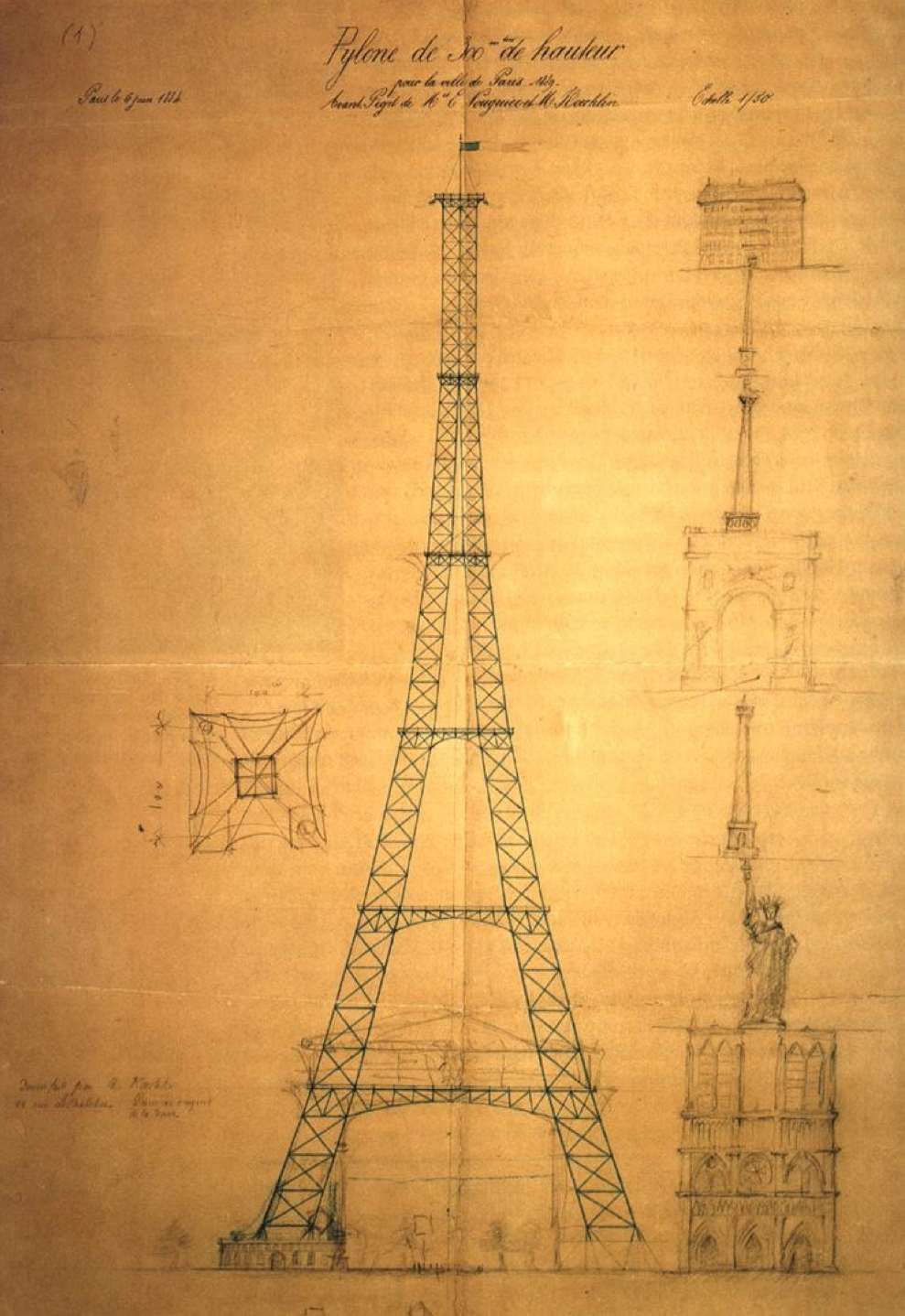
The design of the Eiffel tower was a wonderful combination of aesthetics and engineering (similar in this regard to the Brooklyn Bridge). But the plan for its style and construction evolved over time with contributions from at least four engineers. Maurice Koechlin and Émile Nouguier had the initial concept and drafted the first design (below), but it was rejected at first by Eiffel. They invited a third engineer, Stephen Sauvestre, who made several improvements, including the detailed latticework the tower would become famous for. Their revised design was finally accepted by Eiffel and proposed for the 1889 worlds fair (Exposition Universelle). Although the project bears his name, as only Eiffel had the reputation and finances to lead the project, the design of the tower had major contributions from others.
2. Conviction moves ideas forward
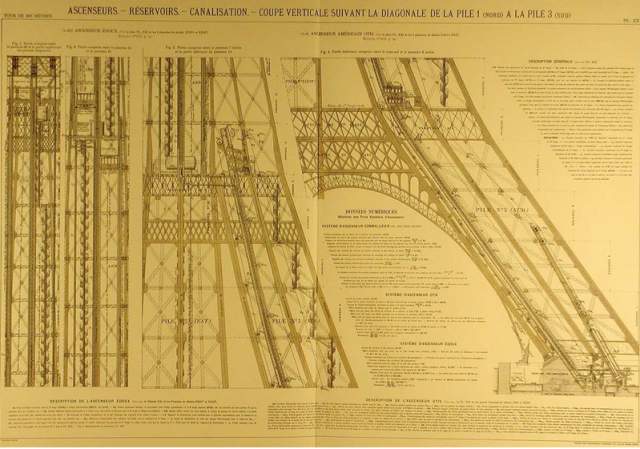
There were over 700 competing design submissions for the world’s fair tower (including this one from Bourdais, a major rival). Eiffel was fortunate to win, but the victory led to more challenges. The government surprised him by only offering $300k, a fraction of what his proposed budget required. Eiffel chose to put in the remaining $1.3 million (5 million francs) himself. In return, he asked for a 20-year lease and control over some of the pavilion area near the tower. This shrewd arrangement gave him the ability to advertise the other works his firm did, assuming of course that the tower itself was successful.
If your idea is turned down, what are you willing to put at stake as collateral (money or reputation) to make the project happen? If the person with the idea won’t stand behind it, why should they expect anyone else to?
Commitment to your own ideas is paramount. But also remember Franz Reichelt, as an example of conviction in an idea gone too far. He jumped from the Eiffel tower in 1912 to prove to the world that his parachute design worked, and fell to his death. You can even watch a film of his fatal attempt.
3. Even the best ideas meet resistance
Before the tower’s construction had begun, the French elite rejected its design. Soon 300 of the most well-known artists and poets of Paris joined together as “The Committee of Three Hundred” to write an open letter to Eiffel and the city, demanding the project be stopped:
We, writers, painters, sculptors, architects and passionate devotees of the hitherto untouched beauty of Paris, protest with all our strength, with all our indignation in the name of slighted French taste, against the erection […] of this useless and monstrous Eiffel Tower… imagine for a moment a giddy, ridiculous tower dominating Paris like a gigantic black smokestack, crushing under its barbaric bulk Notre Dame, the Tour Saint-Jacques, the Louvre, the Dome of les Invalides, the Arc de Triomphe, all of our humiliated monuments will disappear in this ghastly dream… we shall see stretching like a blot of ink the hateful shadow of the hateful column of bolted sheet metal.
Even our wisest and best people, by human nature, resist new ideas. We forget that some of the greatest ideas we’ve had as a species faced great doubt on their long road towards acceptance. This means anyone with big ideas needs to understand that the best ideas don’t always win. Merit is not enough. It’s wise to expect resistance, invest in skills of persuasion and try to learn from the feedback you hear before you dismiss it. The reason why Eiffel won is, in part, due to the relationships he built the society of civil engineers, and the investments he made in explaining to them why his design was superior to others.
4. Long-term commitments make history
The original agreement for the tower was that it would be torn down in 20 years. Part of the criteria for the design competition was that the tower must be engineered in a fashion that would make it easy to take apart. But Eiffel made careful investments in an attempt to prove the long-term value of the tower. He never wanted it simply to be a decorative delight. Instead, he imagined it as both a symbolic and practical embodiment of the future of science and technology.
He financed experiments in wireless telegraphy and radio, including the installation of one of the first antennas in France. This antenna proved sufficiently useful that it justified keeping the tower intact instead of destroying it, allowing it to remain the tallest building in the world for nearly 40 years. Eiffel even had a science laboratory installed not long after opening day, where experiments in meteorology, astronomy, and even aerodynamics were conducted. His commitment to the long-term vision of his idea is a major part of why the building still stands today and is loved by so many people for so many different reasons.
The Brooklyn Bridge is one of my favorite buildings. I’ve studied its history and the story of how it was built is also a favorite.
Here’s a great quote from one of the bridge’s engineers:
Man is after all a finite being in capacities and powers of doing actual work. but when it comes to planning, one mind can in a few hours think out enough work to keep a thousand men employed for years. -Washington Roebling
I’m an introvert. I like being an introvert. I’m glad someone is clarifying what introverts are or are not, which is part of what Susan Cain does in her New York Times Article, The rise of the new Groupthink. However she’s careless in how she makes her case (even though I agree with some of it).
For starters to say “I’m an intro/extrovert” is an overstatement. We all behave differently in different situations and can be more or less extroverted for many different reasons. Many people think I’m an extrovert because I give lectures, like fun debate over beers, and can be a big part of a conversation or a party. But often I’m not that way, and can sit a corner and happily observe or read for hours. I’m the same person in both cases, just in a different mood, situation or atmosphere. It’s a false dichotomy to assume because I am introverted in one situation that I am introverted in all. The main factor is if I’m around people I know and like or not, which speaks volumes about coworkers and shared workspaces.
She writes:
Our companies, our schools and our culture are in thrall to an idea I call the New Groupthink, which holds that creativity and achievement come from an oddly gregarious place. Most of us now work in teams, in offices without walls, for managers who prize people skills above all. Lone geniuses are out. Collaboration is in.
Groupthink is a term coined in 1972 by Irving Janis. He described it as: “A mode of thinking that people engage in when they are deeply involved in a cohesive group, when the members’ strivings for unanimity override their motivation to realistically appraise alternative courses of action”.
First, you’ll find his definition and Cain’s diverge. He focused on crisises caused by groupthink (especially military ones, like Pearl Harbor and The Bay of Pigs Invasion), rather than the passive negative effects it has on a culture at large (which is what Cain is after). But this passive cultural notion is what has become the popular use of the term for a long time.
However, I don’t recall there being a time between 1972 and 2012, or possibly ever, when the culture in the business world had swung heavily towards radical individualism. The was no period of “Solothink”, where we went too far towards individual isolated creativity, and are now trending back the other way to a “New Groupthink”. Staking claims of big trends is self-aggrandizing and is a good way to get attention for selling books or getting web traffic, but that’s about it. Collectivism is a natural consequence of being social creatures that lived for eons in tribes.
Second, lone geniuses have never been “in”. Not in science. Not in art. Not anywhere. Lone geniuses have always had a hard time because they were loners, and for any idea to gain traction requires other people to want to listen to you, listening being something we more easily grant to people we know and like. Lone geniuses have always been more prone to being outcasts since great ideas force change, and most cultures, and the powerful people in those cultures, naturally want status quo. The lone geniuses whose names we know had teachers, partners, agents and supporters who made their work known: even the most introverted loner genius we know of was not truly alone.
Cain writes:
Research strongly suggests that people are more creative when they enjoy privacy and freedom from interruption. And the most spectacularly creative people in many fields are often introverted, according to studies by the psychologists Mihaly Csikszentmihalyi and Gregory Feist.In other words, a person sitting quietly under a tree in the backyard, while everyone else is clinking glasses on the patio, is more likely to have an apple land on his head. (Newton was one of the world’s great introverts: William Wordsworth described him as “A mind for ever/ Voyaging through strange seas of Thought, alone.”)
But I couldn’t find the Csikszentmihalyi study she mentions (no specific reference is offered). Having read some of his work, I know he has found many creatives show both introverted and extroverted tendencies, just as most people do. But to her main point, she is overstating her claims. It’s definitely true some people are more creative when they are alone. But everyone is different. Many great creators were collaborators, and had their most famous ideas in the presence of their partners. For many it’s the back and forth of time alone, and time with others, that fuels most creative fires.
She presents another false dichotomy. There is no reason a person can’t have both solitude and interaction with others in balance. It’s not one or the other, ever. Or even as Alan Cooper has suggested, simply split the difference and work on creative projects in pairs.
She mentions Mr. Wozniak’s invention of the Apple computer, and his advice:
“the very best of them are artists. And artists work best alone …. I’m going to give you some advice that might be hard to take. That advice is: Work alone… Not on a committee. Not on a team.”
This is an anecdote from someone who prefers to work alone. I have no idea how much he has considered other people might be different from him or not, or which artists he’s talked to or studied. Artists in unavoidably collaborative fields like music and film would disagree with him.
There is a long and rich history of artists working together in shared spaces. Artist communes, artists retreats, artist studios. Edison’s Menlo park lab was filled with people much like Wozniak, and for most of them it was the most productive and creative period of their entire lives. Pick any garage based startup company in the history of Silicon Valley, and you’ll find a story of people working together, in confined spaces. I’m sure many of them needed more solitude at times than others, but to cast it as a binary choice, either work alone and be a genius, or work in an office and fail, isn’t based on any reasonable accouting of the history of invention or of art.
Anyone can go outside, or for a walk, or find some of their solitude on their own time. Better bosses wisely give employees control over environment (e.g. work from home, which is done by more U.S. employees now than ever before) and hours if it makes them more productive (including creative production), but good bosses of any kind are rare. I wouldn’t call this the rise of “The New Bossthink” epidemic, but there are some basic certainties undercutting her core premise.
And yet. The New Groupthink has overtaken our workplaces, our schools and our religious institutions. Anyone who has ever needed noise-canceling headphones in her own office or marked an online calendar with a fake meeting in order to escape yet another real one knows what I’m talking about. Virtually all American workers now spend time on teams and some 70 percent inhabit open-plan offices, in which no one has “a room of one’s own.” During the last decades, the average amount of space allotted to each employee shrank 300 square feet, from 500 square feet in the 1970s to 200 square feet in 2010.
It has not “overtaken our workplaces or schools”. Throughout the history of the U.S. high school class sizes in major urban areas have likely never averaged less than 20 people in this half century. By sheer logistics of the number of students, or employees, we have always been housed together in small spaces. She doesn’t cite her sources for office size, and the trend may be for the worse, but the basic notion we share space with other people is quite stable and old. Colleges, universities, and cities like NYC are so dense with people it’s very hard to find solitude relative to most of the planet. But all three are well known environments for creative cultures. Exactly how much solitude qualifies? Is it a coffeeshop? A table at the library? Or is a good pair of headphones, great tunes, and a comfortable chair sufficient for some people to achieve it? Solitude is personal, and that’s the problem with all the studies. They try to take an averaging of everyone, but there is no average person.
They might be a minority, but there are many examples of very creative output from companies that work in shared, open spaces. Valve, the game company known for Portal and Half-Life, has teams work in large shared rooms (video of their office here). Menlo park, Google, Facebook, Hewlett Packard, all worked in cramped group spaces, at least at first. Since there are some examples, the physical environment can’t be the only variable. What is it about Valve or other successful places that allows them to thrive independent of all the research Cain offers? I have my ideas, but I wish Cain offered hers.
The New Groupthink also shapes some of our most influential religious institutions. Many mega-churches feature extracurricular groups organized around every conceivable activity, from parenting to skateboarding to real estate, and expect worshipers to join in.
Churches and religious institutions are odd examples of independent thinking. People join churches to explicitly participate in group thinking, with shared beliefs and codes. They may be even more tightly controlled today, but the core basis for the church in the first place is a fundamental interest to share well defined and old thoughts/beliefs with others.
But decades of research show that individuals almost always perform better than groups in both quality and quantity, and group performance gets worse as group size increases. The “evidence from science suggests that business people must be insane to use brainstorming groups,” wrote the organizational psychologist Adrian Furnham. “If you have talented and motivated people, they should be encouraged to work alone when creativity or efficiency is the highest priority.”
She doesn’t cite a specific study. At least Lehrer named the authors and the publication year for the studies he based his argument on. If a writer refers to a study, they should be obligated to allow the reader to follow their tracks (A name, a university, a year. Something). If they don’t want to bother then they can offer their own opinion, which would be fine. But to say “decades of research says” and give no references is problematic. Perhaps her book offers more support.
She ends with a moderate and balanced position which I can agree with:
To harness the energy that fuels both these drives, we need to move beyond the New Groupthink and embrace a more nuanced approach to creativity and learning. Our offices should encourage casual, cafe-style interactions, but allow people to disappear into personalized, private spaces when they want to be alone. Our schools should teach children to work with others, but also to work on their own for sustained periods of time. And we must recognize that introverts like Steve Wozniak need extra quiet and privacy to do their best work.
I saw his weather project at the Tate museum in London years ago and it blew my mind. See this video:
I got back from NYC last night – that city will always be my true home. More on that later.
I did see the waterfalls – hard to love these things, as they’re so far away that their scale works against them. They just sit out on the horizon and seem small compared to the major landmarks nearby. Driving on the FDR gives the only decent view of the largest one, the one off the Brooklyn bridge – and even then it’s somehow underwhelming. The Brooklyn bridge holds more than its own, and its hard to be impressed by a line of water falling from the bridge deck.
I watched a great episode of PBS’s Nova the other night about the design of the Parthenon. Heard lots of surprises of interest to designers and creators. It’s another example of how many innovations from history we take for granted without even understanding what they are.
What’s also amazing is how many different uses the building has had over 2500 years. It was a temple for Athena, a Christian church, a mosque, and an ammunition depot. It was bombed in several different wars, was stripped of marble and artwork by both the Turks and the British, and was seriously damaged by the first attempts to restore it in the 1890s.
They cheated on symmetry. Their understanding of aesthetics was so good they realized at the scale of the building several non-symetrical elements had to be added to make it look symmetrical. The middle section of the ground level is curved, and is six inches higher than the sides. Also the columns are tapered and few elements actually use the golden ratio.
We can’t replicate their quality of work. A $100 million renovation project is underway to repair 2000 years of damage, but they’re struggling to replicate the precision of craftsmanship. What took the Greeks ~9 years to build has already taken more than 30 years to repair, and is not finished yet. Without a computer or electric power, the Greeks had many clever innovations that were lost and are being rediscovered.
You can watch the video online and I highly recommend it if you’re into design history, architecture as technology, and the history of innovation.
Rather than torture y’all with my first foray into liveblogging, I’m writing live comments, insights, and brlliant notes on each and every session.
Slate has a nice slide show by the famed architecture critic Witold_Rybczynski about major works of architecture that were big failures. It’s a good runthrough of some large scale works, with Cliff’s notes like commentary from Rybczynski on where things went wrong.
I don’t agree with his opinions on some (I’ve been to half of them): EMP is ugly, but still breathtaking. The Montreal stadium is a functional failure, but has amazing aesthetics, and the Getty museum rocks a free escape from the USA, a magic otherworldly garden up on a huge hill, looking down on LA.
I wonder what a slide show of greatest software duds might include? And what would we say about each one?
The authors of Peopleware and Joel Spolsky have long written about the importance of workspaces in productivity and human performance, but there’s no better example of a major company investing in environment. I know many small companies that do it right, but it seems once they hit the 200 or 500 person mark, many of those perks go out the window (har har).
I’ve been to the Google campus a few times – it’s the creative spaces and strong use of color that charmed me. The ceilings are high. The spaces are non rectilinear. And I never had the quick sense of repetition that dominates most offices everywhere (Office, office, office, hall. Office, office, office, hall) Even the training and lecture rooms have character and dimensions that generate some kind of response.
At the right of the essay is an index of photos, giving a great sense of their approach to office design. Not for everybody, but sure gets you thinking about your environment.
Note: For those old enough to remember, the Google buildings were originally the home of SGI (Silicon Graphics Inc.) The first time I was on campus I kept thinking I’d been there before and eventually figured out why.
As part of the GEL 2006 conference I ran an architectural tour through NYC, focusing on sacred places. What makes a place sacred? Answering that question was part of the challenge of the day. Half of the stops had some religious affiliation, but the other half were secular (A park, a train station and a square). Since the goal of the tour was to explore these powerful places as designers, I wanted a wide definition for what a sacred place is.
Questions we asked:
What feelings did the architects want people to have when inside? When entering? When leaving?
How does the design achieve those effects?
What is the visual focal point of the space? How is it supported?
How are rhythm and symmetry used?
What senses are activated by how the space is designed?
What are the sacred places in your home? How do you use and honor them?
In my studies of architecture, especially sacred architecture, I realized that churches, shrines, and temples are all designed by people. There are no blueprints, and few descriptions, for them in most bibles or holy texts – so what you see in them is an expression of design imagination and talent, as much as anything else. I’m confident that most people can appreciate these buildings and designs in a non-religious way, if they choose to.
Where we went
We only had half a day, and NYC has several hundred sacred places. Here’s the list of stops we made:
1. St Vincent Ferrer
2. Christ Church
3. Central Park
4. Strawberry Fields
5. Times Square
6. Grand Central Station
7. Central Synagogue
8. St. Thomas Church
9. St Patrick’s Cathedral
We also took time for a few impromtu stops at interesting buildings on Park Avenue, W44th and elsewhere. There are so many interesting buildings and I wanted to make some side stops along the way based on what the people in the group seemed interested in.
Sacred brochures and paying attention
To help set the mood and get people’s attention, I worked with designer Jill Stutzman to design a brochure for the tour. We made something simple, functional, but that presented itself as a sacred thing. We wrapped it in vellum, and sealed it with wax: two things that signify a gift or something personal that should be handled carefully.
But we didn’t want to go too far: after all this handout was supposed to support them on the tour, and it should feel ok to put it in a back pocket (note the 3.5″ width) or write some notes on the inside. One trap all designers can fall into is making things too pretty, which can kill the comfort level people have with actually using the thing for its intended purpose.
What we did
I confess I hate guided tours. They treat you like children, lecture you to death, and bury the pleasure of discovery and learning under the weight of itinerary. I think anti-tour tours are the best possible experience. And since this was a group of designers, people who know how to look at things, I planned to provide some context, teach a few architectural concepts, but mostly get out of their way and maximize people’s time exploring on their own.
The brochure gave background info on each place for those than wanted it, and I pointed cool things to look for and brief explanations of architectural theory (positive/negative space, form, flow, etc.) to round the experience out.
Tour design challenges
I found the challenge of tour design echoed the common issues designers face: tradeoffs, compromises, logistics. The challenges of moving 16 people around NYC forced me to concentrate the locations we picked.
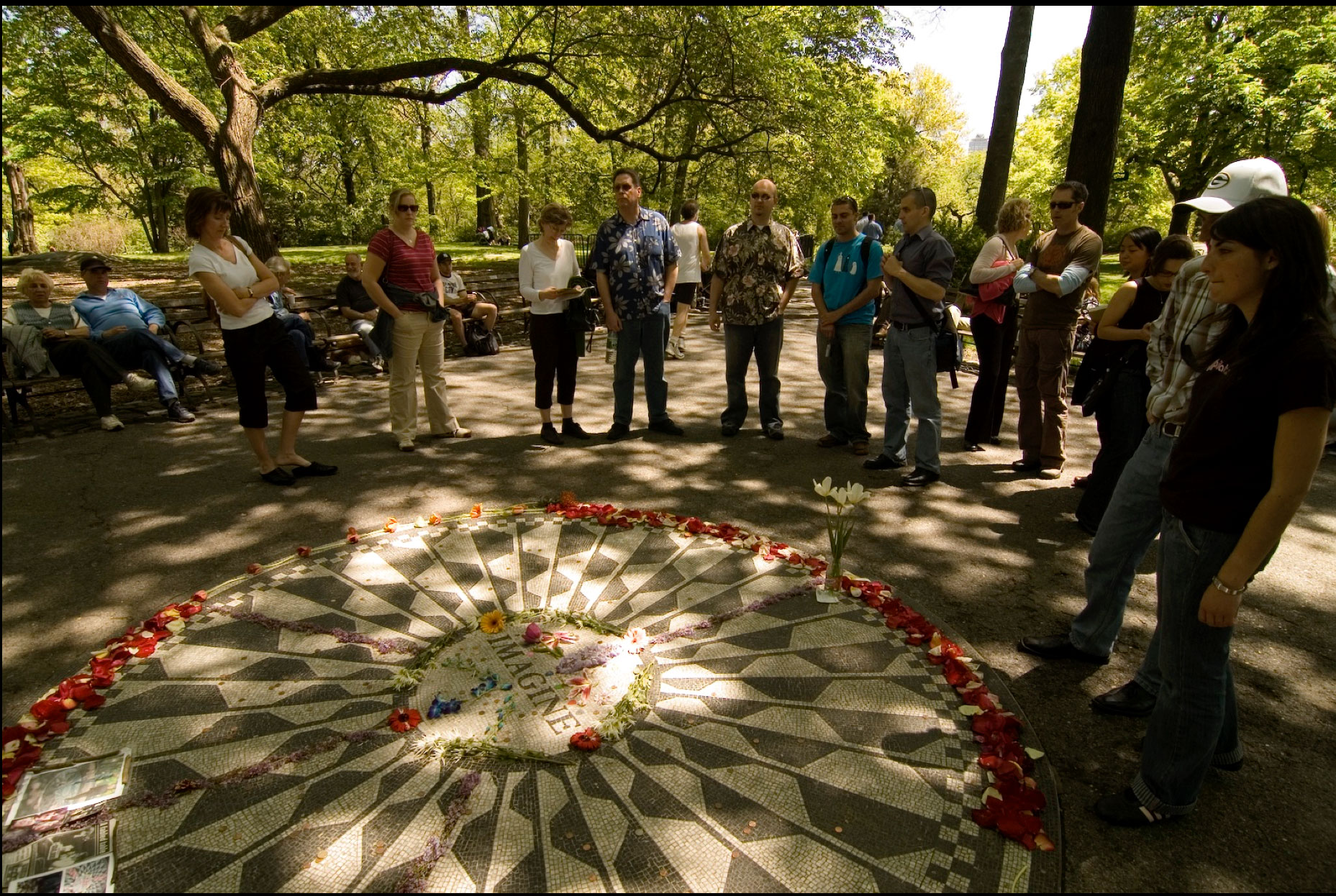
I had to dry-run each location and make sure they were open (churches have services, receptions, etc.) and, in the case of secular places, had spots suitable for a large group to stop and talk together (see photo).
If you look at the map above we hovered around midtown. I had wanted to hit more contrasts, and visit a Mosque (The Islamic center at Lex/96th is awesome), a Synagogue, and a Buddhist temple, but the most interesting buildings were too far apart to fit a half day.
Then there was the question of lunch: turns out there is a pizza place built out of an old church near the Village, but that would have meant another cab or subway trip, costing us valuable time. Instead we chose the relatively ordinary City Pie on 72nd.
I found it much more fun to talk and look at design you can step inside – it’s a more powerful way to explore design concepts than the flat 2d screens software and website provide.
If things work out for GEL ’07 and I do the tour again, I’m sure I’ll try another combination of places. Like all designed things there’s always another, hopefully better way, to make things work.
(Thanks to Kevin Fox and Kareem Mayan for the photos above)
Added 6/10/13: I found this route map, showing the order we used.
As part of the Gothamist empire of city blogs, Seattlest covers all that’s happening in the greater Seattle area. I’m psyched to report I’ll be writing short pieces for them on local design and architecture.
I’ve been to tons of conferences and often left disapointed. They’re often so similiar and despite the high prices, make it hard to have a good, interesting time. Design or experience related events are often more disapointing: they fail to make the conference itself a well designed experience for attendies.
With that in mind I strongly recommend GEL 2006. It’s a small two day conference focused on good experiences and how to make them. The speakers are diverse and the day is paced well and highly interactive. I attended in 2003, the first year, and have been trying to get back ever since.
You can read all about last year’s conference and see how diverse and interesting the pool of speakers and sessions are.
In related news: I’ve been lobbying Mark Hurst, the conference organizer, to let me speak there for years – and have failed every time 🙂 But this year I finally got somewhere – Day one of the event is a set of tours of user experiences in NYC. I’ll be running one called The experience of sacred places. We’ll be roaming around Manhattan breaking down how churches, temples, parks and other special places are designed to have the effects they do.


 Rather than torture y’all with my first foray into liveblogging, I’m writing live comments, insights, and brlliant notes on each and every session.


 As part of the
  We only had half a day, and NYC has several hundred sacred places. Here’s the list of stops we made:
 To help set the mood and get people’s attention, I worked with designer
 I confess I hate guided tours. They treat you like children, lecture you to death, and bury the pleasure of discovery and learning under the weight of itinerary. I think anti-tour tours are the best possible experience. And since this was a group of designers, people who know how to look at things, I planned to provide some context, teach a few architectural concepts, but mostly get out of their way and maximize people’s time exploring on their own.
 I found the challenge of tour design echoed the common issues designers face: tradeoffs, compromises, logistics. The challenges of moving 16 people around NYC forced me to concentrate the locations we picked.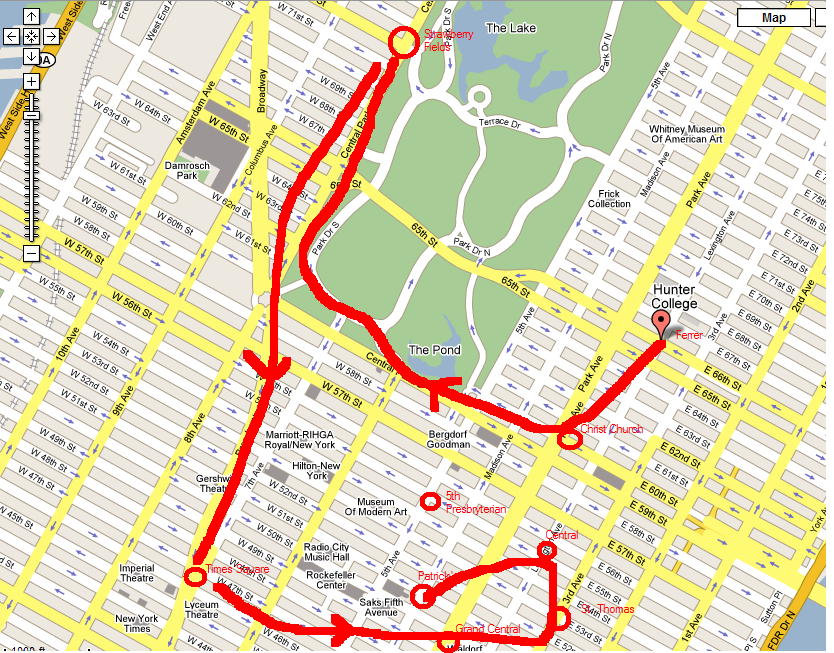

 I’ve been to tons of conferences and often left disapointed. They’re often so similiar and despite the high prices, make it hard to have a good, interesting time. Design or experience related events are often more disapointing: they fail to make the conference itself a well designed experience for attendies.