This one seems depressing at first. But I’ve been thinking about it for days, which suggests there are many interesting thoughts in here:
“I once thought that truth was eternal, that when you understood something it was with you forever. I know now that this isn’t so, that most truths are inherently unretainable, that we have to work hard all our lives to remember the most basic things. Society is no help; it tells us again and again that we can most be ourselves by looking like someone else, leaving our own face behind to turn into ghosts that will inevitably resent and haunt us.
It is no mistake that in movies and literature the dead sometimes only know they are dead only after they can no longer see themselves in the mirror; and as I sat there feeling the warmth of the cup against my palm, this small observation seemed like a great revelation to me. I wanted to tell the man I was with about it, but he was involved in his own topic and I did not want to interrupt him, so instead I looked with curiosity toward the window behind him, its night-darkened glass reflecting the whole café, to see if I could, now, recognize myself.”
-Lucy Grealy , Mirrorings
The backstory to this quote is that Lucy Grealy was disfigured due to illness as a child, and explored issues of identity in many of her writings.
The idea from this quote I’ve been pondering is the nature of truth. I agree with her truth is fleeting, or the sense of truth, and can’t be held onto for long. But different truths have different half-lifes, some last longer than others. I do think there are universal truths, but they can be less interesting than the truths waiting to be discovered about our friends, families, moods, desires, passions and flaws. Everything around us in motion and it follows that truth in most moments is in motion too.
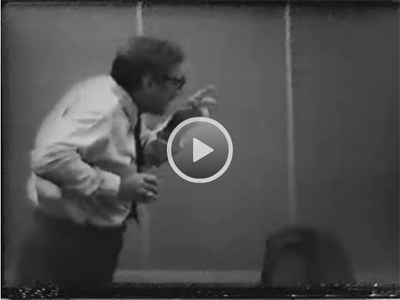
One famous speech in public speaking history is the Dr. Fox lecture. Researchers hired an actor to pose as an expert, and he gave a meaningless, but complex sounding, jargon filled speech to a group of true experts. The result? The majority of them were fooled into thinking they’d learned something, despite there being no substance to the lecture.
From the researchers:
The authors hypothesized that given a sufficiently impressive lecture paradigm, even experienced educators participating in a new learning experience can be seduced into feeling satisfied that they have learned despite irrelevant, conflicting, and meaningless content conveyed by the lecturer… The authors conclude by emphasizing that student satisfaction with learning may represent little more than the illusion of having learned.
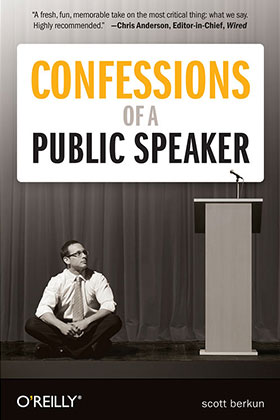
The problem is the lecture was impossible to find. During research for Confessions of a Public Speaker (Chapter 8 explores the implications of Dr. Fox for speakers and audiences), I couldn’t find a single person who had seen the video, much less had a copy. Thanks to Mikhail Simkin, it’s now online.
For centuries you and your peers have helped spread good ideas. For that, I like you. Events are important and organizing them is a thankless job. I’ve run my share of events, so I know. But there is an unspoken, often forgotten, problem I’m compelled to bring to your attention: most speakers do a bad job.
Some of this is not your fault. Good speakers are hard to find, especially ones who are available, affordable, and reputable. It’s challenging to fill an afternoon with great speakers, much less a 5 day, 3 track program. But it’s commonly forgotten in your trade, or by your sponsors, that speakers are the center of your event. They are the core of the agenda. They are what you advertise. And it’s what speakers promise to teach that gets people to pay to come. Yet once signed up to speak, they are often an afterthought, neglected behind the other critical tasks organizers have to manage.
There are simple and inexpensive ways to solve this problem.
Don’t forget speakers are the stars. Most professional events sell tickets based on what attendees will learn and experience from the speakers. The people on stage are the primary talent. It’s true there are dozens of other demanding tasks in planning an event, but don’t make the mistake of losing the speakers in the shuffle. Make choosing and supporting them a top priority. Pay them, at least to cover their travel and expenses and reduce bias, as you are benefiting from the many hours they will put in.
Provide speaker training. Unless you event is packed with pro level speakers, partner with a speaking coach to make it easy for your speakers to get the coaching they need. Even if you can’t pay for it, by making it easy for them to hire a coach signifies you care about their skills and want them to do their best. There are many great books on public speaking and books are cheap. Send them to your speakers, and far enough in advance to be useful. Presentation Zen, which focuses on slide design, and my own book, Confessions of a Public Speaker, which covers everything else, make excellent companions. Many major events and corporations hire speaker coaches, as speaking is a performance skill that takes practice and critique from experts to improve.
Give them a rundown sheet or a checklist. There are many details speakers have to take care of, and it’s in your interested speakers do as many of them as possible. If you give a rundown sheet, listing where they need to be and when, contact phone numbers, addresses, and confirmation numbers, odds go up they’ll do fewer stupid things (which I admit, speakers sometimes do). And a great checklist for preparing to speak, helps remind them of the little things that make a big difference.
Provide audience demographics. Make it easy for speakers to make the right assumptions about your audience. Give a sheet listing: age breakdown, job titles, gender breakdown, reasons for attending, and more. Most events have this information for marketing purposes, but rarely provide it to the speakers who need it the most. If nothing else providing this data helps reminds speakers it’s the audience that matters, not their egos.
After the event, collect feedback and share helpful critiques. Speakers rarely get useful feedback on how they performed. Everyone is polite and tells them they were great, even when they bombed. Most events do surveys after each session, but it oddly never makes it to the speakers. This is broken. Even a simple stack ranking tells every speaker how they compared against their peers (e.g. “You were the 5th best speaker out of 10, based on audience surveys”) is a potent motivator for them to examine their skills, and to pay attention to what the “better” speakers did differently. Have a best session award, so everyone sees the feedback loop in action. UIE events even pays speakers a bonus that gets larger the better they scored. Shouldn’t pay be tied to performance for speakers too? Of course metrics and ratings can distort true value if not handled carefully, but nothing prevents an organizer from giving constructive feedback based on their own opinions of what they saw.
Send example videos from previous years (show instead of tell). Talking about presenting and watching a good presenter present are different things. Give people a sense of what you, as an organizer, hope they achieve. It will also familiarize them with what attendees saw, and how they responded, in previous years.
Let speakers use their own laptops, and slide designs. Speakers are performers and you want them as comfortable as possible (both Keynote and Powerpoint provide a special view that shows the next slide, time elapsed, and other performance-enhancing features that they may depend on). Moving slide decks between computers often breaks fonts and other formatting, problems organizers rarely notice, but can be devastating to even a well-prepared speaker. Give a basic template to speakers as an option if you must, or as a headstart for first-time speakers, but that’s the limit of the value of slide templates. The audience is sitting there all day and knows where they are. Have an interstitial slide with your branding or event info, but make that your task, not the speakers.
Schedule a walkthrough / tech-check for each speaker. We know how fear works – unfamiliar rooms and spaces increase people’s nervousness. If you schedule a 15-minute slot early in the day, or the day before, for speakers to go to the room, try out their gear, and get comfortable, everyone wins. This reduces the risks of letting speakers use their own laptops, as you’ve tested their gear before they speak. It’s also insurance against any compatibility issues (projectors vs. laptops), as there is nothing worse than discovering these problems in front of a live crowd.
Have a volunteer in the room during the session. Every room should have a volunteer who can assist the speaker for any last minute needs or problems. This includes assisting with tech problems, getting water, helping with Q&A at the end and more. For a free ticket, many people will be happy to play this role, so everyone wins.
Provide confidence monitors in every room. One distracting habit among many speakers is they look at their slides, annoying the audience. Some of this is lack of practice, but part of the problem is room design. If you put a confidence monitor in the front of the room, facing the speaker, so they can see their own slides while looking at the audience, everyone wins. It’s not expensive, has clear benefits and increases every speaker’s ability to do a good job. Events like Ignite Seattle consistently do this, which helps explain why so many good talks have happened there.
Have a speaker’s dinner or happy hour. Have an evening before, or early in, the event where speakers can meet each other, and the organizers, and make some social connections. You want the speakers to be happy and friendly at the event, as it’s the interactions they have with your customers between sessions that are likely to be the most memorable for them. The more social you are with speakers, the more social they will be with your attendees. And some speakers are dying to meet some of the other speakers and that’s made easier if you lead the way. This also allows your less experienced speakers to get to know your veterans, which can lead to informal coaching and support.
Please consider these simple things. You, your audience and your speakers all benefit at the same time. Perhaps you know better ways that the ones in this list – that’s fantastic and I’d love to hear about them, and I’d be happy to help promote their use to other organizers.
I mentioned yesterday work on my fourth book is moving along. One key decision I need your help with right away is the title. Everyone has opinions on titles after a book is out. And I’m trying to be smart by getting your input now while I can do something with it 🙂
Which one is the strongest? Don’t worry much about the subtitle, we’ll focus on that in round 2. Leave comments if you have specific suggestions. Thanks.
[polldaddy poll=4484907]
It’s been awhile since I’ve said anything about my next book. Time for an update.
The book’s primary theme is: Intelligent Provocation.
What does this mean? These days, discourse is heavily polarized. We rarely see or hear intelligent arguments. Many of our popular voices are not thoughtful about how they express their thoughts.
The goal of the book is to take on big questions, provocative ones, in a thoughtful but challenging way. Much of the book will be heavily revised essays and posts I’ve already published, with 1/3rd or more of new material written to make the entire project work well as single great read.
Since I plan to write many books in my life, I need this one to be self-published. I’m sure in the future I’ll want to write books publishers will be afraid of, and I can only do that if I do it myself. I need to start somewhere, and this book is a great place to start.
Weeks ago I hired an editor, Krista Stevens, and recently I hired Tim Kordik to join the project as the book designer (and yes, he’s being paid). We are officially on a roll. We have a complete outline, some draft sections finished – things are well on their way. The current plan is for the book to be out late spring of this year.
I’m working on ways to involve you readers in the process. So stay tuned!
To help celebrate the recent release of the paperback edition of Confessions of a Public Speaker, as well as it’s 100th review on amazon.com, here’s a checklist you can use to help make sure things go well at your next presentation.
Can you look at last year’s programs? Were there reviews of the event on blogs?
What are other speakers speaking about?
Will this be a keynote lecture (more scripted) or small (more interactive)?
Create a list of questions audience will want answered in the talk
Prioritize the list and sketch out stories / ideas / points
Budget at least 10x time to prepare ( 1 hour talk will take roughly 10 hours of preparation)
Develop ten minutes of rough draft material
Practice the ten minutes. Do not procrastinate.
Revise material when it doesn’t work, then practice again from beginning. Repeat as necessary. (See Chapter 5 of Confessions for a full description of how I prepare)
Do a test run in front of people who will give honest feedback (Or videotape and watch).
Practice with a clock with goal to end reliably with an extra 5 minutes.
Ask for emergency contact cell phone#, give organizer yours
Get directions to the venue, including office-park insanity, and within building insanity
If appropriate, post slides to web, include URL at end of talk
Leaving for the event
Get an hour of exercise that morning or night before.
Check laptop: do you have all cables? Is it working fine? Are slides on it? Battery charged?
Bring backup slides on flash drive / Extra-backup online somewhere / Print back-up of slides
Bring remote control: Check battery
Shower, shave, prune, scrub, brush, deodorize
Ensure you avoid all avoidable stress (get there early no matter what)
At the event
Register and let organizer know you’ve arrived (txt message if necessary)
Find your room and watch another speaker speak in it. Notice anything?
If time allows, mingle and meet people who might be in your audience
Return to room to catch (at least) tail end of last speaker before you – maximize time to set up.
Get laptop hooked up to projector immediately. Most problems occur here.
Find tech person, or call organizer – you’ll need their help to get microphone set up, or to deal with any tech issues.
Test remote. Test any fancy videos or fancy anything.
Walk the stage. Get your body comfortable with the room. Run through your first few slides or minutes and ask someone to look at you, your clothes, and your slides to flag any issues.
Make sure you have a glass of water or preferred beverage at the lectern.
Sit in the back row for a few seconds, and imagine yourself on stage. Also check that the text on your slides is readable from back there.
Relax. You’re prepared and all set. Nothing left to do. Nothing you do now will change anything. Either you prepared well or you didn’t. Enjoy the ride.
If needed, distract yourself by going for a walk or other physical activity
After the event
If a speaker follows you in the room, get out of their way so they can get set up
Make yourself visible so people can find you to ask questions about your talk
Write questions from attendees on their business cards so you can answer in email later
Post slides online or to slideshare if appropriate
Email people who gave you their cards, answering their questions
Thank the organizer and ask for any feedback (positive/negative)
If your talk was videotaped, ask for a copy so you can watch and improve.
Read the national bestseller, with behind-the-scenes tales from the life of a successful public speaker, teaching you the inside view of how to be a great communicator. Recommended by the Wall Street Journal, Lifehacker, Wired and other media. Buy on Amazon / Read a free chapter
I’ve written before that we’d all be better off if people stopped saying Innovation. Calling something innovative doesn’t make it so – it’s just a word, a word that’s been abused to the point it has almost no meaning. History bears out many creative and successful organizations rarely use that word at all. They don’t need to. It’s often people who want to seem special, or creative, or productive, who use that word as a mask for their insecurities.
Recently I got unrequested email about a site called Innovation management. On their front page alone I counted more than 7o uses of the word. What a disappointment. It defeats their own purpose.
It’s not a surprise that the site seems designed to push PDF articles for sale, articles I presume, based on the site, suffer from an inability to use the age old innovation called a thesaurus.
Sometimes when people are trying to be helpful, all they can think to say is a platitude. Often this has the effect of making people feel worse, not better. Here’s a list of the most annoying platitudes people say.
It’s true that technically some of these are cliches, others are aphorisms, but they’re all used for similar reasons and can be equally irritating. It’s interesting to note how many of them conflict with each other.
There’s no I in Team (what about healthy teams that appreciate constructive individuality?)
Good things come to those who wait
It was meant to be (then why did we bother trying to make it not be?)
The definition of insanity is doing the same thing and expecting different results (sometimes you have to do the same exact thing many times to get the result you want – it’s called practice)
Time heals all wounds (how about losing a limb?)
Such is life
Forgive and forget
Everything happens for a reason (including suffering and early death?)
People are our most important asset
It is what it is
What the mind can conceive, it can achieve
Winners never quit
What doesn’t kill me will only make me stronger
I don’t want a team of champions, I want a champion team. (Note that there is an I in “champion team”)
Teamwork to make the Dream work
“C’est la vie”
Hard work always pays off
God has a plan for you
Great minds think alike
Money can’t buy happiness
Live each moment like it’s your last (not very pleasant)
If at first you don’t succeed, try try again (maybe you should try elsewhere)
Follow your passion
Follow your bliss (what if mine is cocaine?)
That’s just my personal opinion
Let’s not reinvent the wheel
It’s not rocket science
It’s all good
What goes up, goes down
After the storm the sun will shine
Don’t assume – it makes an ASS out of U and ME
Don’t be sad because it’s over, be glad that it happened
Love means never having to say you’re sorry (Then please don’t love me)
We are where we are
What goes around comes around
What’s done is done
Waste not want not
It has to be somewhere (as if this helps you find something that’s lost)
Nice guys finish last
Go with the flow
Only dead fish go with the flow
No offense, but…
Rome wasn’t built in a day
Work smarter, not harder
There’s no I in team
Life doesn’t give you things you can’t handle (depends on what life gives you, doesn’t it?)
You’re as young as you feel
Age is just a number
It’s just software
We’re all in this together
Everything always works out in the end
Time heals all wounds
We’ll all be laughing about this soon
It’s doesn’t matter if you win or lose, only that you try
Tomorrow is another day
It could be worse
You are what you eat
It’s neither here nor there
Think outside the box
It will all look better in the morning
Take the lemons and make lemonade
The best things in life are free
It wasn’t meant to be
Better to have loved and lost…
That’s for me to know and you to find out
Better late than never
With all due respect
The road to hell is paved with good intentions (so I should have bad intentions then? is that how the road to heaven is paved?)
Gossip is the devil’s radio
Laugh and the world laughs with you
People regret the things they didn’t do
Beauty is only skin deep
You can’t judge a book by it’s cover
Work hard, play hard
Only the good die young
All’s fair in love and war
All men are created equal
There are plenty more fish in the sea
The more things change, the more they stay the same
It’s the darkest just before dawn (have you seen a dawn?)
Fail harder
Perception is reality (except when your perception is very bad)
you can be anything that you want to be
Patience is a virtue
I’m sorry that’s not what you want to hear
This will hurt me more than it hurts you (well lets switch places and find out)
The customer is always right
If you can’t stand the heat, get out of the kitchen (maybe we can make the kitchen better?)
Success is the ability to go from one failure to another with no loss of enthusiasm
Be careful what you wish for
With great power comes great responsibility
Just think about how much worse other people have it
God never gives us more than we can bear (see death, misery, history of suffering)
What comes to mind? Leave a comment (240+ already have below). Thanks.
Confessions of a Public Speaker has reached the sweet milestone of being republished in Paperback. It’s now cheaper, smaller, and friendlier. It won’t hurt your foot so much if you drop the book on it, and you can bend the cover in all kinds of creative ways to fit into bags, big pockets or tight corners.
It’s really an amazing little book, garnering nearly 100 reviews on amazon, 96 of them 4 or 5 stars.
If you’ve been waiting for the paperback edition to buy a zillion copies for your co-workers who regularly put you sleep with PowerPoint, or to find a volume slim enough to secretly slip under the office doors of your executive team, the time is now.
To celebrate the release of this new edition, I’ll be posting once a day this week on speaking.
O’Reilly Media has started a new blogger review program – If you’re willing to write a review, both on your blog and on amazon.com, you can get free copies of many of their books.
And of course you are free to write positive or negative reviews.
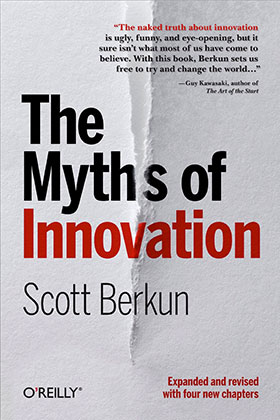
The paperback edition of my bestseller, The Myths of Innovation is, for a limited time, part of the program (They change which books are in or out frequently)
If you want to participate, head here now. Look forward to your review!
A person of good intelligence and of sensitivity cannot exist in this society very long without having some anger about the inequality – and it’s not just a bleeding-heart, knee-jerk, liberal kind of a thing – it is just a normal human reaction to a nonsensical set of values where we have cinnamon flavoured dental floss and there are people sleeping in the street.
I find this quote interesting because I’m intensely ambivalent about it.
On the one hand, compassion, or at least empathy, is good. I agree with Carlin there. Anyone of true Christian faith, or most faiths, is compelled to treat the poor well and it’s clear in most scriptures that helping those in need is one of the greatest, and holiest, things a person can do.
But the fact that we make cinnamon flavored dental floss (or not) has no relationship to whether there are poor people in the world, or how we go about handling poor people in our communities. There’s something naive in assuming one is causing or has any effect on the other.
Carlin himself was fond of explain how unfair and illogical the universe as a whole is, but here he’s equating a surplus in one area with being related to, or causing, a lack in another, which applies a kind of logic that isn’t necessarily inherent in the universe.
If anything, dental floss is cheap. Cinnamon flavoring is cheap. The $50 people spent to see Carlin perform is more of an extravagance than the fanciest dental floss. People worried about scratches in their $80,000 car, or getting stressed out about their summer vacation plans, as people around them can’t get their basic needs met is a better comparison of inequality that’s hard at times to comprehend.
[Charlie] Rose asked the question that scholars, pundits, and plaintiffs attorneys will be debating for years: “Should wise people have known better?” Of course they should have, Buffet replied, but there’s a “natural progression” to how good new ideas go badly wrong. He called this progression the “three Is.”
First come the innovators, who see opportunities that others don’t and champion new ideas that create genuine value. Then come the imitators, who copy what the innovators have done. Sometimes they improve on the original idea, often they tarnish it. Last come the idiots, whose avarice undermines the very innovations they are trying to exploit.
When conversations go wrong, there’s a moment right before it gets bad that something must have changed. What is it? What causes the transition from civil to adversarial?
I can think of five six reasons, but I’m sure there are more:
Someone feels they are not being heard. When we feel we’re not being listened to, most of us get louder. And if that doesn’t work, we get louder or more hostile, since we are seeking recognition more than anything. A negative feedback loop ensues, where each person tries to be heard by getting louder, causing the other person to do the same.
We confuse our identity with our point of view. An attack on an idea is not an attack on a person, unless that person can’t separate the two. Even if someone makes fun of another person’s point of view, is that necessarily an attack on their person? It is if they can’t separate themselves from their ideas. If I like blue, and you like green, who cares? Is there a name for the line in each of us between opinions we defend personally (abortion), and we don’t (favorite color)?
Cultures where walking away, being polite in the face of idiocy, is seen as weak. Arguing with someone who isn’t listening doesn’t make much sense. The wise thing to do would be to politely leave, but that’s often seen as giving in. The result is people won’t relent.
There is an unspoken argument. A previous debate has left unexpressed feelings in one party who insists on trying to vent those feelings from some other exchange during the current conversation. This inevitably makes the other person feel like they’re not being heard (#1).
There is no trusted mediator. There is always a third party that can be found that is trusted by everyone, who can step in and restore decorum. Without that third party, negative feedback loops can start and there’s no one who can step in to end them.
It’s on purpose. One party is deliberately trying to upset the other, and will use nearly any means to do it. Although this is uncommon, often part of the problem is that getting the other side upset is seen as a kind of victory, where the goal ceases to be to educate or convince, but instead to hurt, ridicule and violate. Many skills of rhetoric and debate hinge on manipulating language to ones own advantage even if it’s clearly unfair, or untrue, and when a person loses their self-respect they’re willing to take cheap shots.
“Nothing is original. Steal from anywhere that resonates with inspiration of fuels your imagination. Devour old films, new films, music, books, paintings, photographs, poems, dreams random conversation, architecture, bridges, street signs, trees, clouds, bodies of water, light and shadows. Select only things to steal from that speak directly to your soul.
If you do this, your work (and theft) will be authentic. Authenticity is invaluable; originality is non-existent. And don’t bother concealing your thievery- celebrate it if you feel like it. In any case, always remember what Jean-Luc Godard said: ‘it’s not where you take from, it’s where you take them to.”
Can we finally admit we live in the future?…Thanks to a combination of 3G internet, a touch-screen interface, and Wikipedia, the smartphone in my front pocket is pretty much the Hitchhiker’s Guide to the Galaxy. I can communicate with anyone anywhere at anytime…and then use the same touch-screen device to take a picture, deposit a check, and navigate the subway system. We live in the future, ladies and gentleman.
Having studied the idea of the future, I had two responses:
1. The future is a safe place we never want to believe is now. Something in our psychology likes to long for things. This includes the afterlife, the faith that the next raise will make us happy, or that when we lose 10lbs we’ll feel good about ourselves. The better future is a form of projection we need. In the present we need to believe something better awaits. You don’t need an iPhone to recognize how amazing the present is. Study the history of civil rights, personal wealth, or opportunity in America, and you’ll find much to be amazed about. We take most progress for granted.
2. Technological progress is not social progress. Are there fewer assholes in the world? Is there less greed? Do more people follow the Golden Rule? Technologies focus on a narrow aspect of progress, one we are good at. It’s the other kinds of progress that are harder to develop. If the only elements of a better future are improved technologies, prepare to be disappointed. Many things do not change with technology.
If you want to find new ideas, start by breaking existing ideas down into smaller ones. Only then can you see how to build your own.
It’s a little mantra you can say: Ideas are made of other ideas.
No genius in history invented their parents. No legendary artist created the idea of art. Mozart didn’t invent the piano and Picasso didn’t invent paint. We have always borrowed, reused, and remade, standing on the shoulders of ideas that came before us and we always will.
It’s impossible to find any idea that can’t be broken down into smaller ideas. Pick a song, an invention, a philosophy… they are all recombinations of other ideas. Sometimes the grandest ideas, once you ditch the romance, are the easiest to dissect. Until you can see the fact that all ideas are made of other ideas as an immutable law, you’re unlikely to create, since you see ideas in the world as fixed when in truth they are always in motion.
[use] the following simple definition: an idea is a combination of other ideas. Say it five times out loud. Say it to your cat. Yell it out you car window at strangers waiting for the bus. Every amazing creative thing you’ve ever seen, or idea you’ve ever heard can be broken down into smaller ideas that existed before.
An automobile? An engine + wheels. A telephone? Electricity and sound. Reese’s peanut butter cups? Peanut butter and chocolate. All great creative ideas, inventions, and theories are comprised of other ideas.
Why should you care? Here’s why: if you want to be a creator instead of a mere consumer you must see ideas currently in the world as fuel for your mind. You must stop seeing them as objects or functional things: they are combinations of ingredients waiting for reuse.
The inspirations aren’t just in the book’s design (a common failing in design books), but the stories, and challenging exercises even experienced designers can benefit from. It’s an easy book to use for team challenges, offsites and to teach old dogs some new things.
It includes exercises from a wide range of kinds of design, which is fun and challenging. Some are print based, others are interactive, or involve urban wayfinding, advertising, web apps, dishware, clothing, you name it. It fulfills the idea of forcing you to stretch your creative muscles.
Highly recommended for people who want to learn by making, and who have some design experience but want to grow and stretch their creative abilities. It’d make for a great team building book, where the entire team picks a challenge and does them together, doing a show and tell of their work each week.
There’s something familiar about Kobe Bryant’s description about the style his coach, Phil Jackson uses. As this article explains, his teamates sometimes get upset when Jackson zings players in the media, but Bryant says:
“…when you’ve been around Phil for as many years as I have, we all understand that he likes coaching publicly,” Bryant said. “I think it’s important for the new guys to understand that. Ron, Pau, guys that kind of have issues with that, that’s how he coaches. It’s fine. Just let him do his job and go about your business.”
When someone you trust conveys private messages in public, you are being abused. They are enlisting the shame and shock of hearing feedback for the first time in public as a way to to intimidate you into behaving the way they want. It’s both insecure and immature. It happens every day in some workplaces and families, where people with less power are constantly surprised and belittled in front of their peers.
It’s a weak way for people in power to abuse their influence. They are confusing the fear it creates in other people with respect. Victimizing those around you only makes everyone weaker.
A stronger way for someone in power to communicate is to speak directly and privately. Giving the other person a chance to consider and respond, things denied when messages are expressed for the first time in front of strangers.